All wealth myths are a collusion of non-consensus and compound interest
Original Title: "All Wealth Myths Are a Conspiracy of Non-Consensus and Compound Interest"
Original Authors: Sleepy.txt, 动察Beating
In 2017, Ant Financial first invested in Pop Mart and continued to add more funding in the following years. In December 2020, Pop Mart went public in Hong Kong with a market value exceeding HK$100 billion on its first day. Ant Financial achieved over a hundredfold return on investment, becoming a classic case in the Chinese consumer investment field.
In 2010, Sequoia Capital China Fund invested in Meituan, participated in multiple funding rounds, and ultimately realized over a 100-fold return when Meituan went public. This investment made Sequoia China one of the most successful institutions in the history of Chinese internet investment.
In the world of venture capital, a 10x return is considered good, while a 100x return is deemed legendary.
However, in Europe, there is a venture capital firm that achieved a nearly 1400x return on investment.
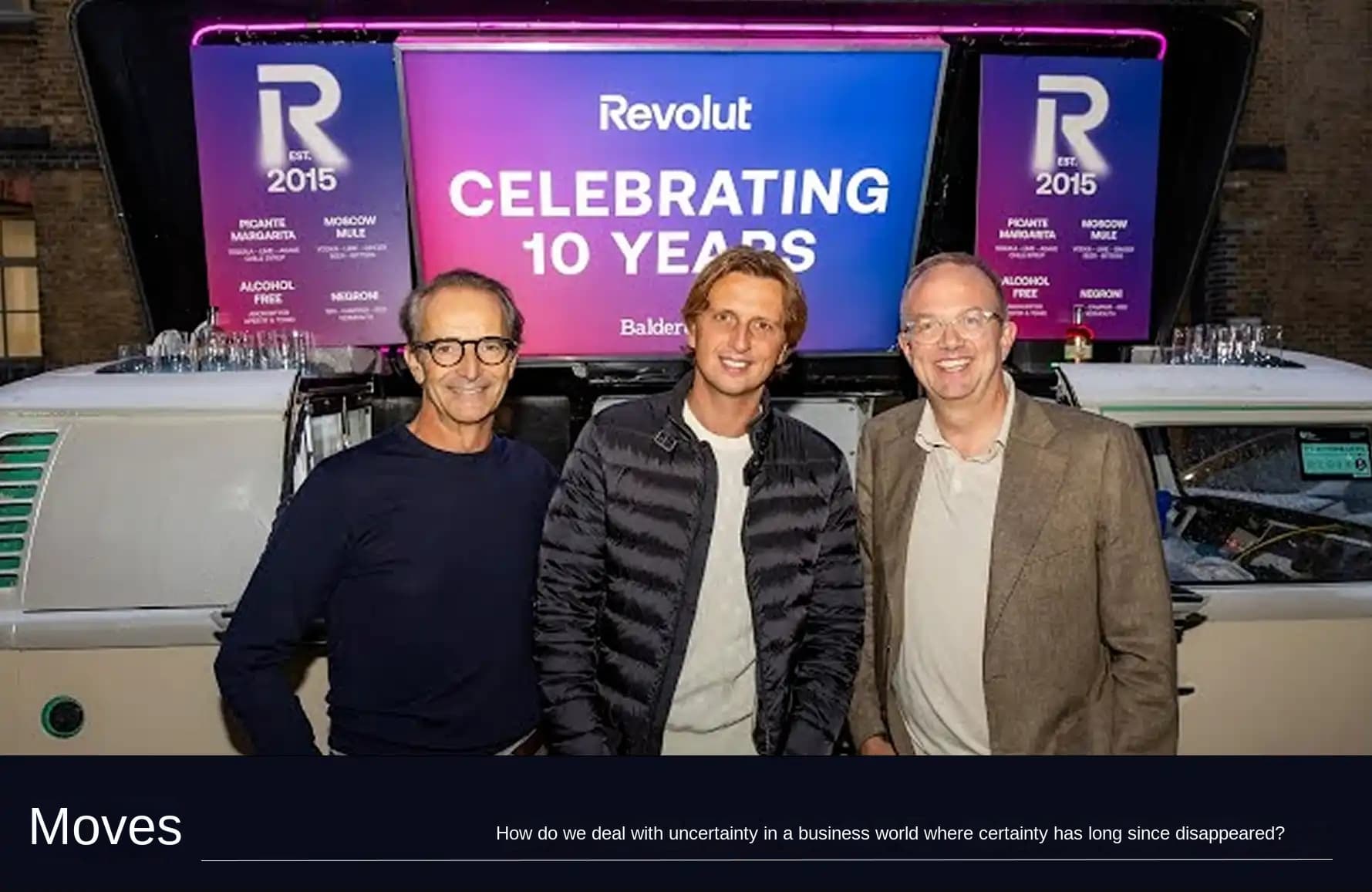
This firm is called Balderton Capital. In 2015, they led the seed round for the "European Alipay" Revolut, investing £1 million. Over the next 10 years, they continued to participate in multiple rounds, with a total investment of around £3 million.
In just 11 years, Revolut evolved from a grassroots project rejected by Y Combinator into a $75 billion fintech giant, hailed as the most valuable fintech company in Europe. Today, Revolut has over 65 million users globally, with annual revenue exceeding $4 billion, annual profit surpassing $1 billion, and processing billions of dollars in transactions every day.
By 2025, Balderton Capital had realized approximately $2 billion through continuous sales of their shares in Revolut. The remaining shares they held, based on the latest valuation, were still worth over $4 billion. This means that Balderton's total return on Revolut exceeded $6 billion, nearly 1400 times their initial investment.
Even more astonishingly, the fund holding Balderton's stake in Revolut—Balderton Capital Fund V, established in 2014 with a total fundraising size of only $305 million—had returned over 20 times the investment to its investors by 2025 through selling part of its Revolut shares. This implies that even if all other projects invested by this fund went to zero, its return multiple would still far exceed the industry's top fund average of 3 to 5 times.
This story tells the essence of venture capital. In a business world where certainty has long disappeared, how should we face uncertainty? When everyone sees the risk, where does the opportunity lie?
The starting point of this story is the encounter of two radically different individuals in early 2015.
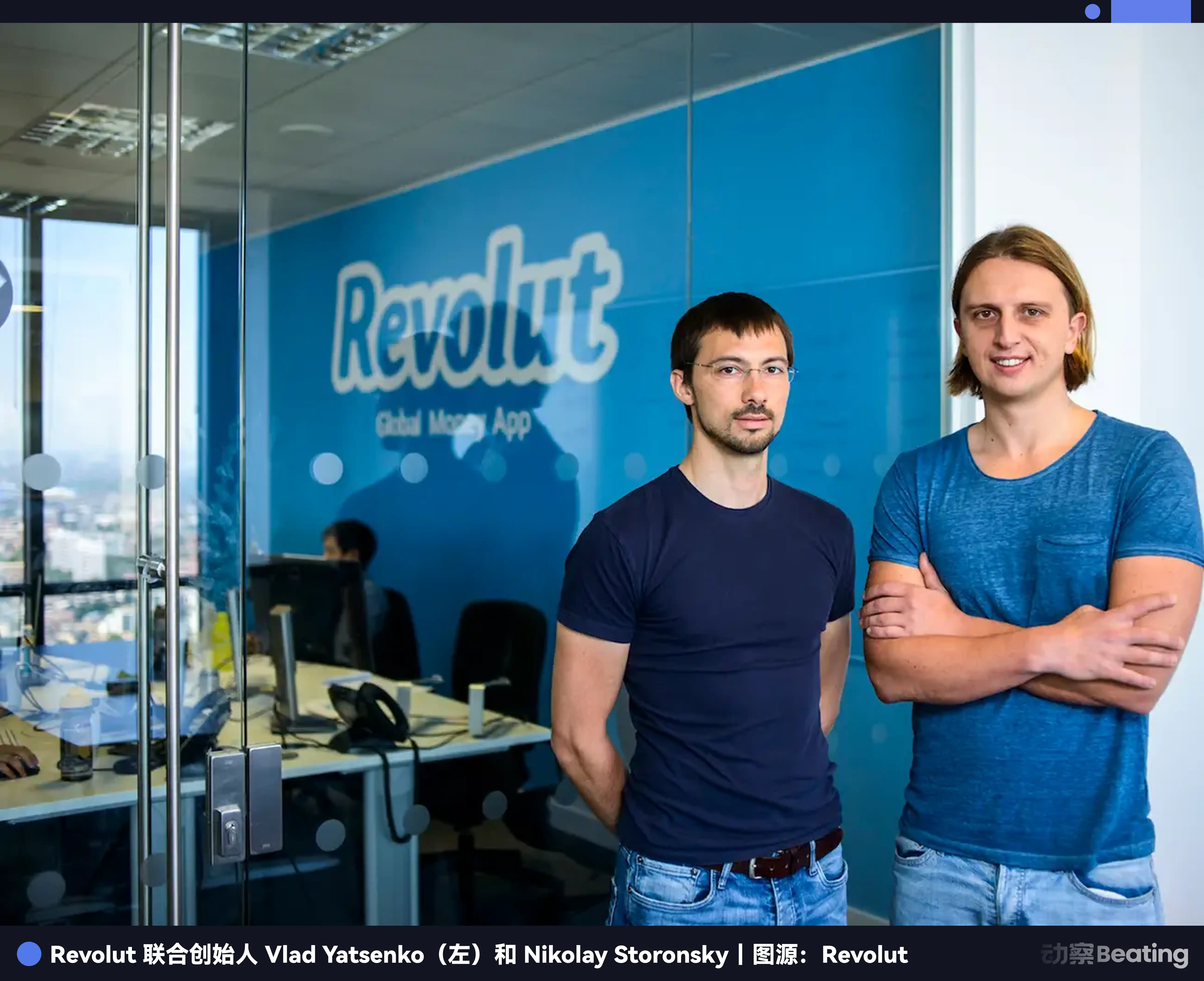
The first person is Nikolay Storonsky, a Russian man with a restless spirit. His father was an executive at Gazprom, the Russian natural gas giant, and he grew up in affluence. He holds dual master's degrees in physics from the Moscow Institute of Physics and Technology and in economics from the New Economic School. He is also a sports enthusiast, having been a national-level swimming champion and passionate about boxing and surfing.
In 2006, he moved to London and joined Lehman Brothers as a derivatives trader, dealing with billions of dollars in trades daily. Following Lehman Brothers' collapse in 2008, he moved to Credit Suisse. During frequent global travels, he would lose thousands of dollars each year due to exchange rate fees, which he found unreasonable and unfair.
Therefore, he reached out to Vlad Yatsenko, a software engineer who had worked at Credit Suisse and Deutsche Bank for 10 years, to tackle this issue.
In 2014, they founded Revolut at Level39, a fintech accelerator in London's Canary Wharf. Storonsky invested all his savings of £300,000, risking his future.
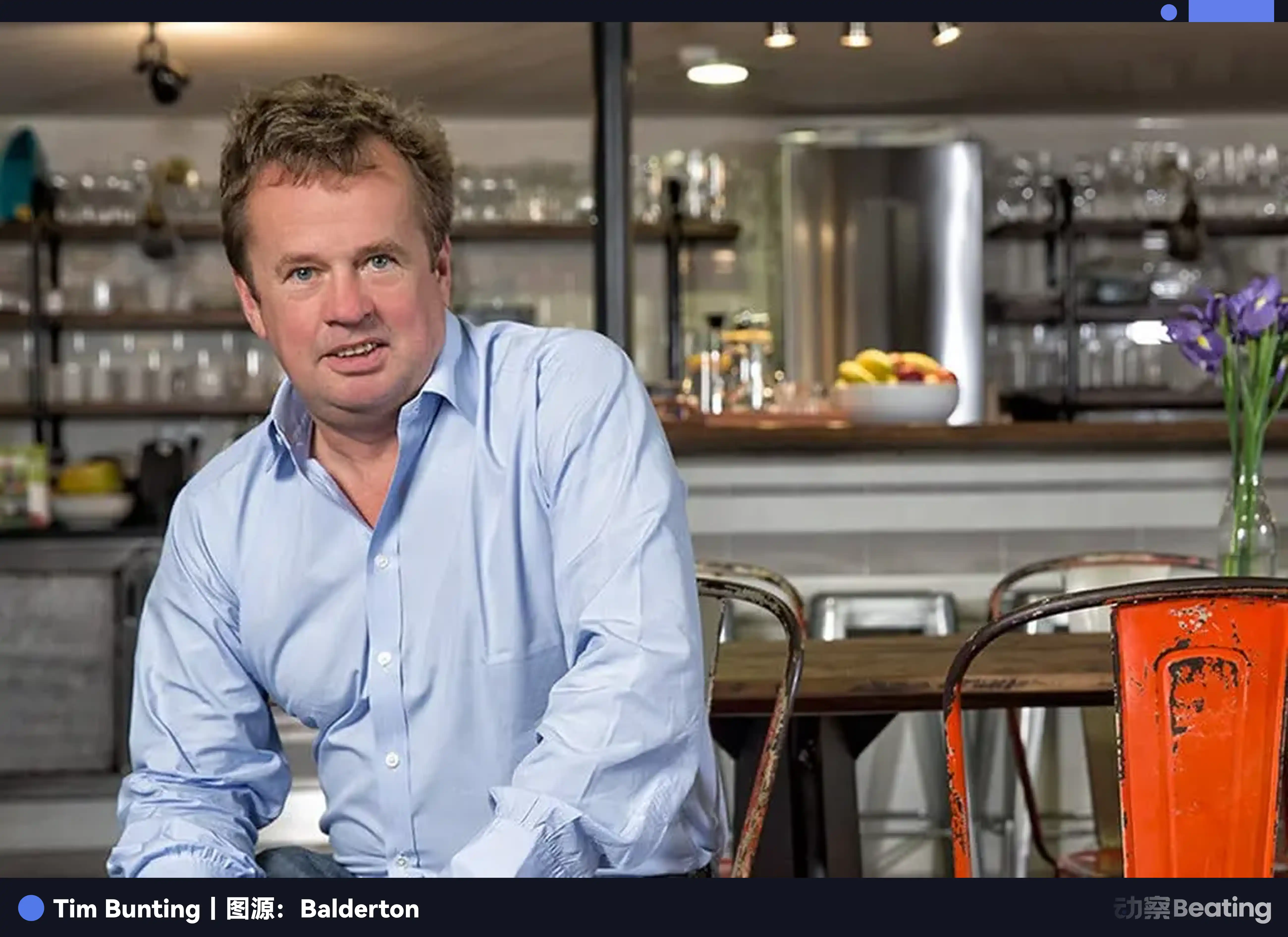
The second person he was about to meet, Tim Bunting, comes from a different world.
In 2007, at the age of 43, Bunting decided to leave Goldman Sachs.
Having spent 18 years at Goldman Sachs, rising to become global head of equity capital markets and international vice-chairman, he was one of the partners at Goldman Sachs. He stood atop a world of certainty, where every trade had precise models, every decision was data-rich, risks were quantified, and the future was forecast.
Yet, he chose to depart and venture into a vastly different world — venture capital.
He joined Balderton Capital. The essence of venture capital is to seek possibilities within uncertainty. Here, there are no perfect models, only ambiguous foresight and judgment of people.
When they met in February 2015, Revolut was in a dire state. Their product demo was struggling to work, and they had just been rejected by Y Combinator, Silicon Valley's most famous startup accelerator. In any normal investment decision-making process, this would have been an immediate no-go.
But Bond saw something different.
He later recalled that in Storonsky's eyes, he saw the ambition and drive to disrupt the entire European banking industry. At the same time, in technical co-founder Yatsenko, he saw steadiness and reliability. One understood finance, the other understood technology; one had drive, the other had composure — it was the perfect founder combination.
When everyone else saw risks, great investors saw opportunities. Consensus often only leads to mediocre returns; it is only through non-consensus that outsized returns become possible.
In July 2015, Balderton officially led Revolut's seed round, investing £1 million at a post-money valuation of £6.7 million.
However, are exceptional founders and bold investors all that is needed? Is there a greater force driving the miracle of a 1,400x return?
Behind Revolut's success were timing, luck, and people.
Firstly, it was the aftershock of the 2008 financial crisis, which nearly obliterated public trust in traditional banks.
According to Eurobarometer surveys, trust in banks among Europeans hit a historic low after the crisis. Banks themselves were mired in difficulties, with profitability plummeting. Data shows that the average Return on Equity (ROE) of the European banking sector dropped from around 11% before the crisis to 4%-5% around 2015, far below their American counterparts.
To survive, banks embarked on massive layoffs. From 2012 to 2015, over 10,000 bank branches were closed in Europe, and tens of thousands of employees were let go. This led to a sharp decline in banking service quality, abysmal customer experiences, and created a significant market opening for new challengers.
Meanwhile, the wave of technology was reshaping the market. In 2015, the smartphone penetration rate in Europe began to soar, and the adoption of mobile banking grew rapidly. Financial services transitioning from offline branches to mobile apps became an irreversible trend.
And the regulatory winds were also blowing in Revolut's favor. In late 2015, the European Union passed the second Payment Services Directive (PSD2), at the core of which lies "Open Banking." This directive broke the bank's monopoly on customer data, allowing third-party fintech companies to access their users' bank account data with authorization to provide innovative financial services. This paved the way for the entire fintech industry.
A new generation of consumers was also rapidly coming of age. As natives of the digital age, they despised the cumbersome processes and poor experiences offered by traditional banks. A 2015 survey revealed that 80% of consumers under 45 believed they should be able to conduct any financial transaction through a mobile app.
The fragmented nature of the European market itself became a booster for Revolut. With dozens of countries, languages, and currencies in Europe, cross-border transactions' inconvenience and high costs had long been a significant pain point.
It was in this context that around 2015, the European fintech racetrack was bustling with activity. Germany's N26, the UK's Monzo and Starling, and the cross-border payment specialist TransferWise (now Wise) all emerged almost simultaneously. Each staked out its own territory, with N26 focusing on design, Monzo on social aspects. The industry consensus at the time was to capture a market or a product category in one go.
However, Revolut was a different breed from the start.
Its core insight was that the banking industry could be built like a global software product, being full-stack and borderless from day one. While competitors were still meticulously working on a specific piece of the puzzle, Revolut was already expanding globally. This bold strategy, highly controversial at the time, ultimately allowed it to outpace all its rivals.
Nevertheless, the journey from a grand vision to a great company was fraught with danger, and Revolut did not have an easy ride.
One of Revolut's core values is "Never Settle." This value is deeply ingrained in the company's DNA, propelling it to dash through controversies over the past 11 years.
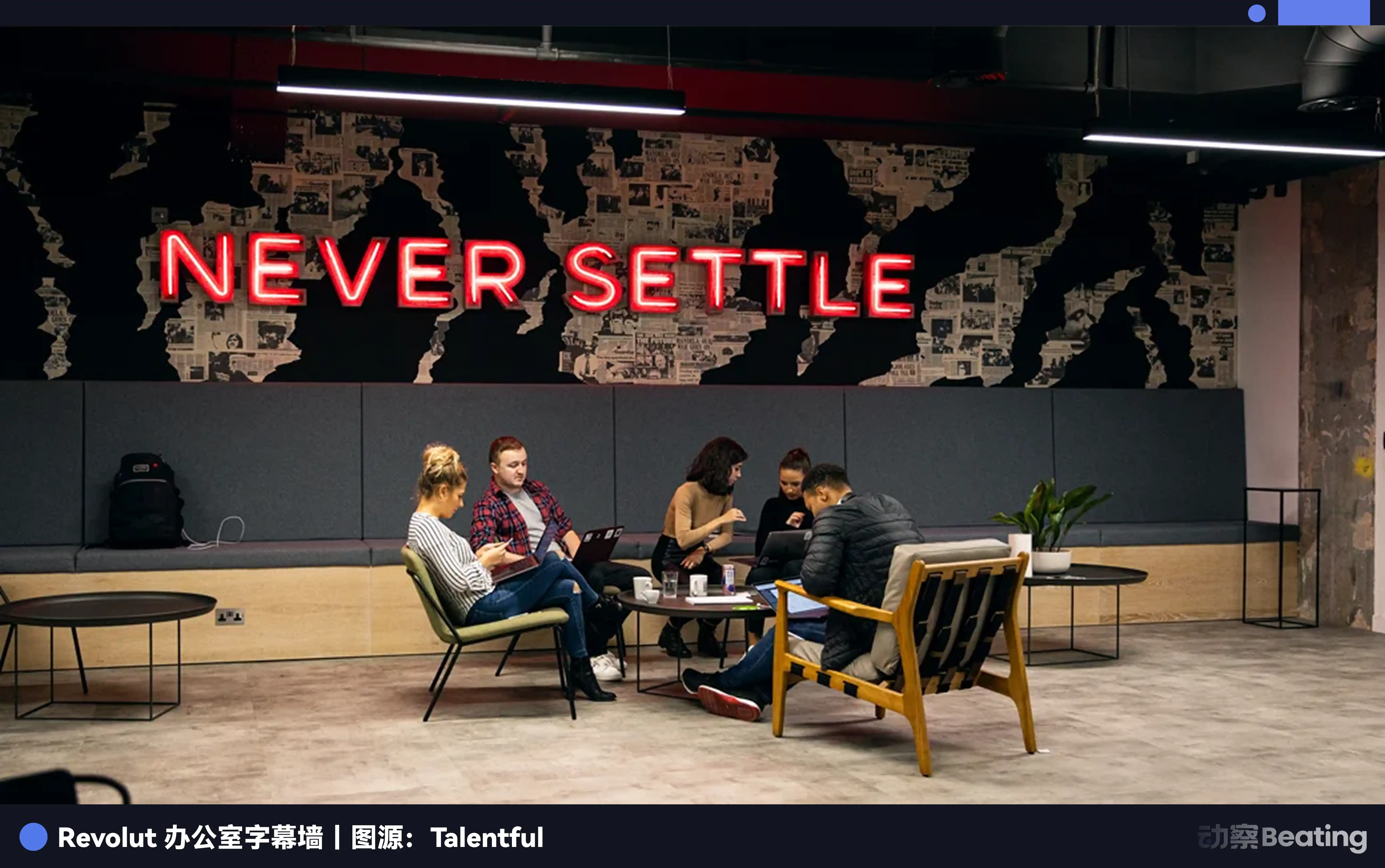
This perpetual dissatisfaction first manifested in the speed of product expansion.
In July 2015, Revolut officially launched its product, processing over $500 million in transactions in its first year. By the end of 2016, the user base exceeded 300,000, with nearly £1 billion in transaction volume. In November 2017, Revolut announced surpassing one million users, achieving this milestone in just over two years.
Storonsky's creed is "To release and iterate faster to bring you more winning opportunities." After launching the core product, a low-fee currency exchange card, Revolut quickly rolled out many new features: cryptocurrency trading in 2017, followed by stock trading, savings vaults, budgeting tools, insurance, P2P payments, business accounts... It has positioned itself as an all-encompassing financial super app, while its competitors are still carefully guarding their turf.
This aggressive expansion strategy has led to astounding growth. In 2017, Revolut's user base tripled, and its revenue increased nearly fivefold. In 2018, the user base grew from 1.5 million to 3.5 million, with revenue soaring by 354%. By April 2018, Revolut had completed a $250 million Series C funding round, valuing the company at $1.7 billion, officially becoming a unicorn.
The reason Revolut can quickly launch new features is because they employ a venture capitalist-like product strategy internally.
They do not blindly believe in elite "top-down design"; internally, there are usually many new products and features being simultaneously tested. However, only a small portion of them will eventually "graduate" to become real business lines. Those that don't take off are cut, while those that succeed in validation receive double the company's resource investment.
Today, Revolut's core revenue-generating products have no top-level strategic planning; they all grew out of this internal culture of racing and trial and error.
But this has also come at a great cost. Over these 11 years, Revolut has experienced at least three life-or-death trials.
The first trial came from trust.
In 2016, the company needed more funds to expand, but traditional funding channels were not smooth. Storonsky proposed a bold idea: to raise funds from the public through the crowdfunding platform Crowdcube. This was an unconventional move at the time, and many investors expressed opposition.
However, Balderton went against the tide and supported this decision. They believed that this would not only solve the funding issue but would also be a fantastic marketing move to test the public's trust in Revolut. In the end, 433 ordinary people participated in this crowdfunding, with an average investment of around £2,152 per person. They believed in Revolut's vision and invested real money to endorse this startup.
Now, those early supporters have also received amazing returns. The price of an initial iPhone, after 10 years, has turned into the down payment on a house in the suburbs of London. An initial investment of £2152 is now worth over £380,000, a return of over 170x.
The second test came from the culture.
In February 2019, the UK magazine Wired published a blockbuster report exposing serious issues in Revolut's corporate culture. The report accused the company of pursuing growth at all costs, ruthlessly exploiting employees, resulting in an extremely high turnover rate. The company was suddenly plunged into a major public relations crisis.
At this time, Revolut was in a period of rapid growth. In 2019, the company's user base surpassed 10 million and began expansion into Australia and Singapore. However, the outbreak of this crisis severely damaged the company's reputation.
As a member of the board of directors, Benedict immediately had deep conversations with Storonsky. He shared his experience managing thousands of people at Goldman Sachs, helping Storonsky realize that as the company grew to a certain stage, a more mature and humane management system had to be established. With Balderton's help, Revolut brought in more experienced managers and began systematically improving its corporate culture.
The third test came from compliance.
Starting in 2021, Revolut applied to the UK Financial Conduct Authority (FCA) for a banking license, but it took a full three years to be approved. The regulatory agency raised serious questions about its anti-money laundering system and corporate governance. This was a devastating blow for a fintech company.
While waiting for the UK license, Revolut did not slow down its expansion. In 2020, the company completed a $580 million Series D financing round, reached 14.5 million users, and entered the US and Japanese markets. In 2021, the company completed another $800 million Series E financing round, with a valuation of $33 billion. By 2022, the user base had grown to 26 million.
At a critical moment, Benedict once again leveraged his industry network. He personally reached out and invited Martin Gilbert, a titan of the UK investment community and Chairman of Aberdeen Standard Investments, to become the Chairman of Revolut. This move greatly enhanced the regulator's trust in Revolut. In July 2024, Revolut finally obtained the coveted UK banking license.
Obtaining the UK license, Revolut also handed in an impressive report card. By 2024, the company's user base exceeded 50 million, annual revenue reached $40 billion, growing by 72%, annual profit surpassed $1 billion for the first time, and the total customer transaction volume exceeded $10 trillion. The company became the top downloaded financial app in 19 countries.
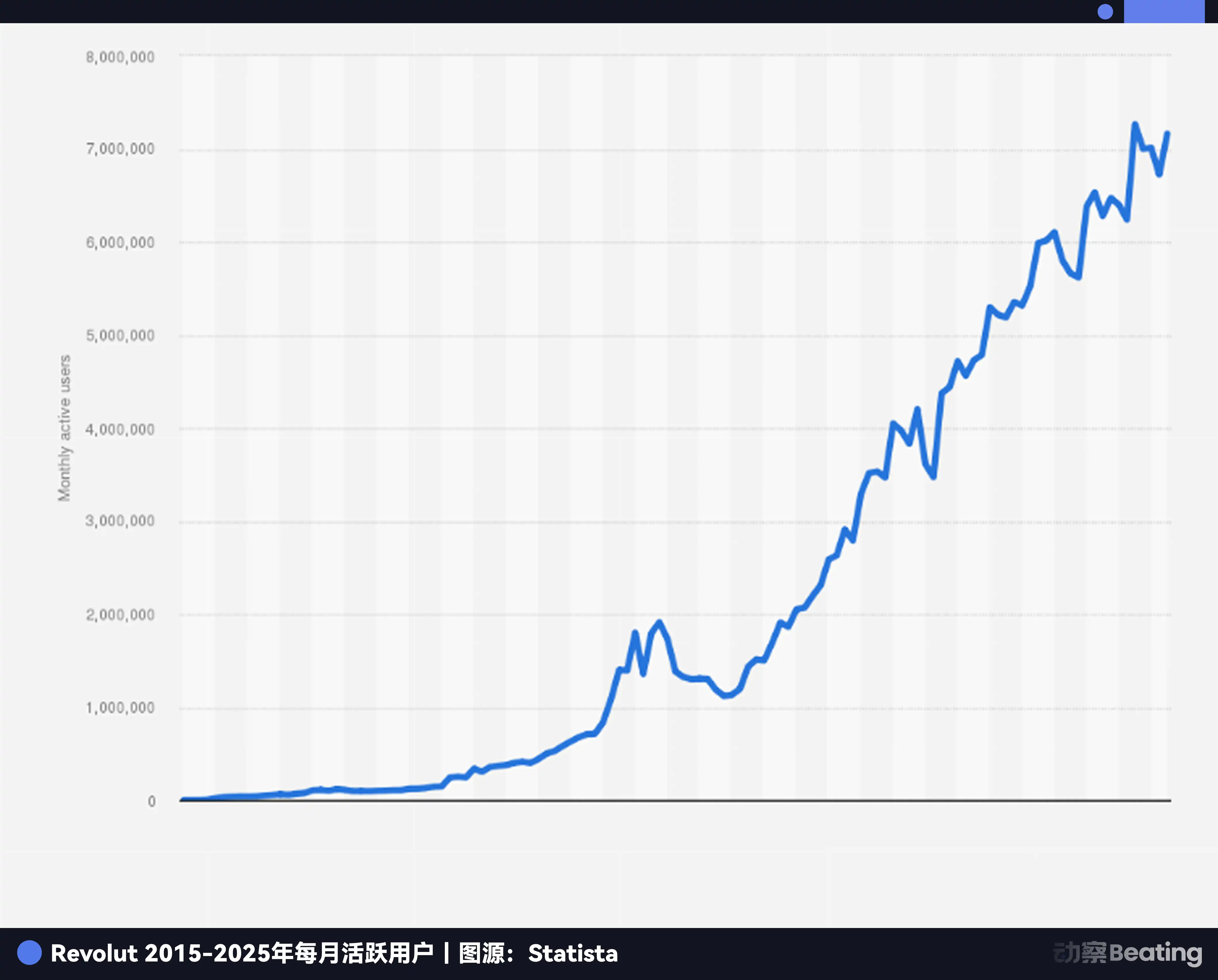
Throughout these 11 years of ups and downs, Balderton Capital has steadfastly stood behind Revolut. Balderton has always served as a board member of Revolut, providing indispensable support at every key stage of Revolut's development and consistently participating in follow-on funding rounds.
Revolut's epic battle brought Balderton, which had long been hidden behind the scenes, into the spotlight. This London-based VC's ability to capture the underlying logic of miracles did not stem from random luck but from the bloodline it shares with Silicon Valley powerhouse Benchmark Capital.
In 1999, Benchmark's partners decided to establish Benchmark Capital Europe in London. They not only brought capital but also introduced a unique organizational structure—Equal Partnership.
In traditional VC funds, there are usually several general partners who hold the vast majority of power and profits, while other partners are in a relatively subordinate position. This pyramid structure easily leads to internal competition and conflicts of interest.
However, Equal Partnership is entirely different. At Balderton, all partners equally own the company, possess equal speaking rights in any decision, and share returns equally. Regardless of who identified or led the deal, everyone enjoys the same financial rewards. This system ensures a high level of alignment of interests among all partners, enabling them to collaborate like a pack of wolves.
The advantages of this system were fully demonstrated in the process of investing in Revolut.
Firstly, it led to better due diligence. When Balderton first met Storonsky, although he was well-versed in the financial market, he didn't fully understand the technical implementation behind it. So, he immediately brought in partner Suranga Chandratillake, who had an engineering background, to evaluate together. There were no concerns about taking credit among partners, only a common goal—to invest in the best company.
Secondly, because all partners' interests are fully aligned, they can truly make the most advantageous decisions from the company's perspective. In multiple funding rounds for Revolut, Balderton has consistently provided unwavering support, never hesitating due to internal conflicts of interest.
Lastly, there is more comprehensive post-investment support. Startups encounter different challenges at different stages. The equal partnership means that entrepreneurs can tap into the resources of the entire partner team at any time.
In 2007, the European team spun out from Benchmark, officially renaming itself Balderton Capital after the street where their first office was located. The core principle of equal partnership was fully preserved and became a key differentiator for Balderton in the European VC landscape.
However, a good system cannot guarantee success in every investment. In the world of venture capital, what ultimately determines success or failure?
This law is simply an extreme version of the Pareto Principle.
In the world of venture capital, it means that a small portion of investments will contribute the vast majority of the fund's returns. The vast majority of investments will ultimately result in mediocrity or even total loss.
According to PitchBook data, the top 10% of investments in the venture capital industry contribute 60% to 80% of the industry's returns. The daily work of VCs is to look for that 1% possibility in countless seemingly dubious projects. They need to cast a wide net but, more importantly, they need to double down on those very few projects with the potential to become super winners at crucial moments.
In its 25-year history, Balderton Capital has invested in over 275 companies, including successful exits such as Darktrace, Depop, and GoCardless. Without Revolut, Balderton might still be an excellent European VC, but it would never be the legend it is today.
This also determines that the essence of venture capital is a game of non-consensus. If a project's prospects have become a consensus among everyone, its valuation will inevitably skyrocket, and the future return potential will be extremely limited. Only those non-consensus projects that were not well-regarded in the early stages and were controversial have the potential to bring about disruptive outsized returns.
For venture capital, success is not a matter of hit rate but of return multiples. It doesn't matter if you miss on nine projects as long as you hit one that can return 1000x, that success is enough to make a name for oneself. This may sound like gambling, but top VCs use a rigorous philosophy and discipline to increase the probability of winning the bet.
So, behind this 1400x return miracle, is there a replicable formula?
Excess Return = (Non-consensus Founder x Structural Era Opportunity) ^ Patience through Cycle
Firstly, we have the non-consensus founder.
In the world of venture capital, judgment of a person always takes precedence. Especially in the seed stage, when there is no product, market, or data, the founder is almost the sole criterion for judgment. A top-tier founder must be a paranoid optimist, having unrealistic fantasies about the future while being grounded enough to solve immediate problems.
Secondly, we have the structural era opportunity. The success of Revolut was closely tied to the unique historical window in Europe in 2015. The aftermath of the financial crisis, the proliferation of mobile internet, open regulatory policies, and intergenerational consumer shifts. Great companies are products of their time. They can keenly sense structural changes and, through their products and services, become synonymous with that change.
Lastly, and most importantly, is patience through the cycle. From 2015 to 2026, Revolut went through a series of trials, including cultural crises, regulatory hurdles, and fierce market competition. Over these 11 years, Balderton remained a steadfast supporter, not only providing continuous follow-on investments but also offering valuable advice and resources at critical moments. This long-term holding and patience in weathering the storm with the founder are essential for achieving excess returns.
In the world of capital, time is both the best friend and the worst enemy. Only those who can resist short-term temptations, adhere to long-term value, can ultimately benefit from the compounding effect of time.
Turning £1 million into $6 billion is not just a wealth myth but also a story of cognition, courage, and patience. It tells us that in this rapidly changing era, real opportunities are always reserved for those who can perceive the times, embrace change, and are willing to take a long-term approach with great entrepreneurs through the cycles.
Recommended
The Wall Street Journal: How is AI Trading Stealing the Limelight from Cryptocurrency?
Aug 15, 14:00
Tencent Still Has a Dream
Aug 15, 11:27
To Catch North Korean Hackers, They Set Up a Fake Project
Aug 15, 10:00
From Litigation to Settlement: Positive Signal Released by HTX's Negotiation with FCA
Aug 14, 19:32
11,742 Shipping Addresses Exposed Alongside Trezor Orders
Aug 14, 19:01
Founder Interview: FOMO Creator Explains How They Added 30,000 Users in One Day and Became One of the Fastest-Growing Crypto Apps
Aug 14, 18:37