Mass Produce Palantir, 58-Year-Old Peter Thiel Aims to Cash In on Controversial Data Giant
Author: Jack, Motion Beat
In January 2026, Minnesota lost control.
The Trump administration announced the termination of Temporary Protected Status (TPS) for Somalia, meaning tens of thousands of Somali refugees who had been living in the United States for years must leave by March 17. Minneapolis is home to the largest Somali community in the U.S., making the city the epicenter of this policy.
Subsequently, the 'Metropolitan Surge Operation' arrived as scheduled. Over 2,000 Immigration and Customs Enforcement (ICE) agents clad in tactical gear flooded the city, a number even surpassing the total size of the Minneapolis Police Department. They drove black SUVs, conducting intensive raids and arrests in residential areas.
A large number of disturbing videos quickly circulated on social media. Agents used window breakers to shatter car glass, dragged screaming drivers out using chokeholds, and pinned them to the icy ground. The most shocking of all was the death of 37-year-old U.S. citizen Renee Good. This legal observer was shot at close range in the head by a federal agent while documenting the enforcement action from inside her vehicle. Officials claimed she was attempting to run over people, but the video showed her vehicle merely making a slow turn.

Behind this large-scale manhunt lies one name, Palantir.
Multiple investigative reports revealed that ICE was extensively using a tool called ELITE developed by Palantir in Minneapolis. This system integrates massive data such as subjects' medical benefits, tax records, water and electricity bills, and coldly marks them as individual target points on a map through algorithms.
According to publicly available federal contract records, on April 17, 2025, ICE awarded Palantir a $30 million contract modification agreement for developing a platform codenamed 'ImmigrationOS.' Publicly available contract defense documents explicitly stated that the system was intended to support the President's executive order on expediting deportation actions. Many believe that this platform was actually tailored as an operating system for such 'surge' large-scale operations starting in 2026.
Over the past few years, Palantir has been vilified by the public as a 'data butcher.' Due to its data support for the Israeli military in the Gaza War, along with long-standing moral and ethical controversies and over a decade of loss-making history, Palantir is considered an 'unwelcome' entity in both Silicon Valley and Wall Street.
But in the past year, everything has changed.
In 2025, Palantir exploded on Wall Street. This company, which had lurked in controversy for two decades, completed its transformation from "peripheral contractor" to "Tech Giant." Being formally included in the S&P 500 in September 2024 was just the beginning. The company then moved its listing from NYSE to NASDAQ, saw its stock price soar by 150% in a year, and its market cap temporarily exceed $400 billion, rendering all traditional valuation models powerless.
Behind this was a dramatic turnaround in its financials. After 19 years of continuous losses, Palantir achieved GAAP profitability at the end of 2022 and embarked on a hyper-growth trajectory in the second half of 2024. As of 2025, its quarterly revenue broke the $1 billion mark for the first time, reaching $11.81 billion, with a year-over-year growth rate skyrocketing from about 20.8% in early 2024 to 62.7% in Q3 2025.
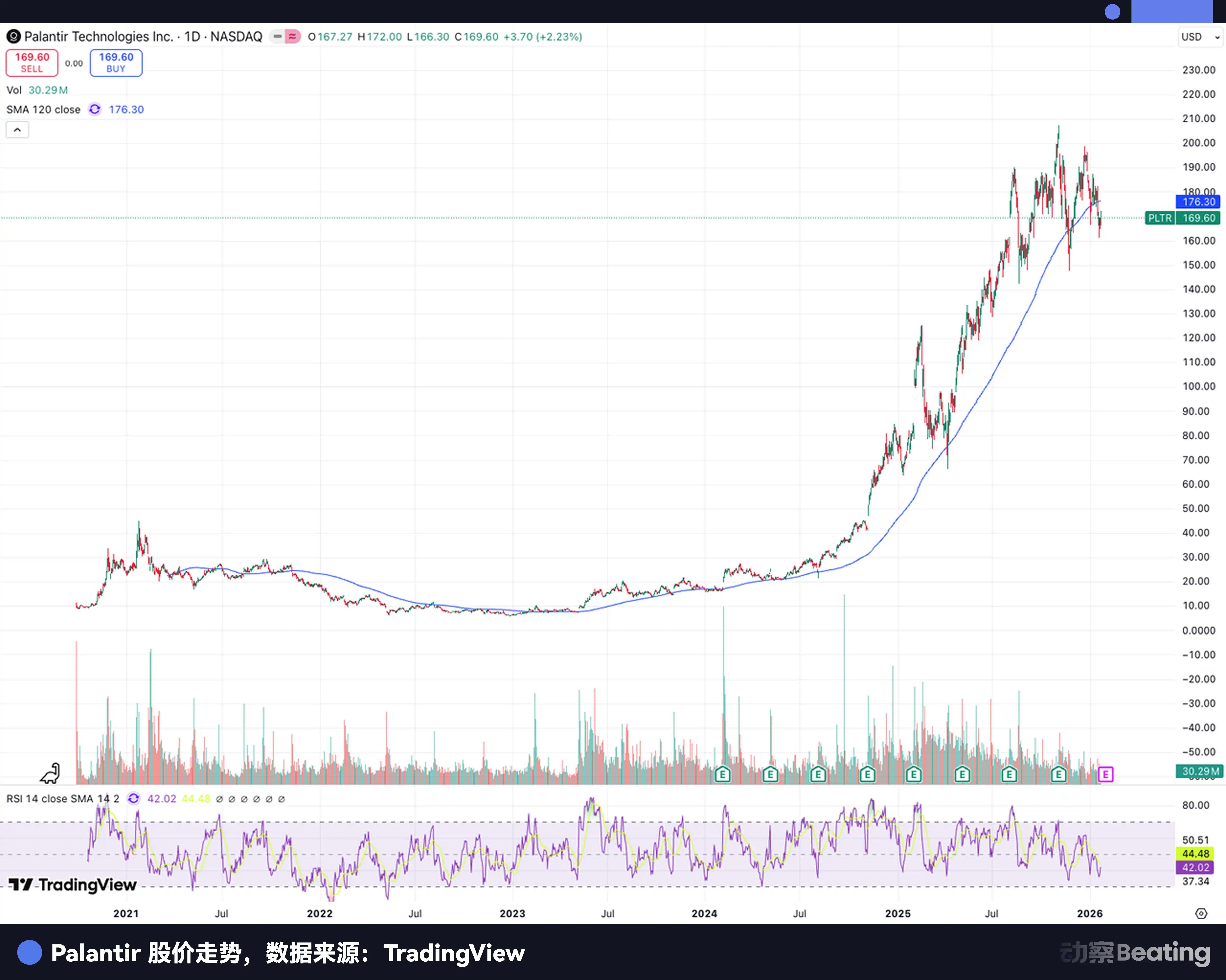
The core driver of this growth came from its commercial sector business. In Q3 2025, Palantir's US commercial business revenue surged by 121% year-over-year. This astonishing figure shattered the market's traditional perception of its "government reliance." On Reddit, retail investors hailed it as an "AI Darling," praising Palantir for building a foundational digital operating system for modern civilization. In 2025, retail investors net bought nearly $8 billion worth of Palantir stock, making it the fifth-largest security in terms of retail purchases that year and driving its P/S ratio to over 100x.
However, beneath the prosperity and euphoria lies Palantir's darkest history of being exiled from the entire Western financial system.
In September 2020, to retaliate against investment banks' suppression of its valuation, Palantir CEO Alex Karp and co-founder Peter Thiel opted for a highly provocative direct listing. They bypassed the traditional bank underwriting process, not paying hefty underwriting fees to banks. This meant Palantir declared an all-out war on the entire Wall Street system.
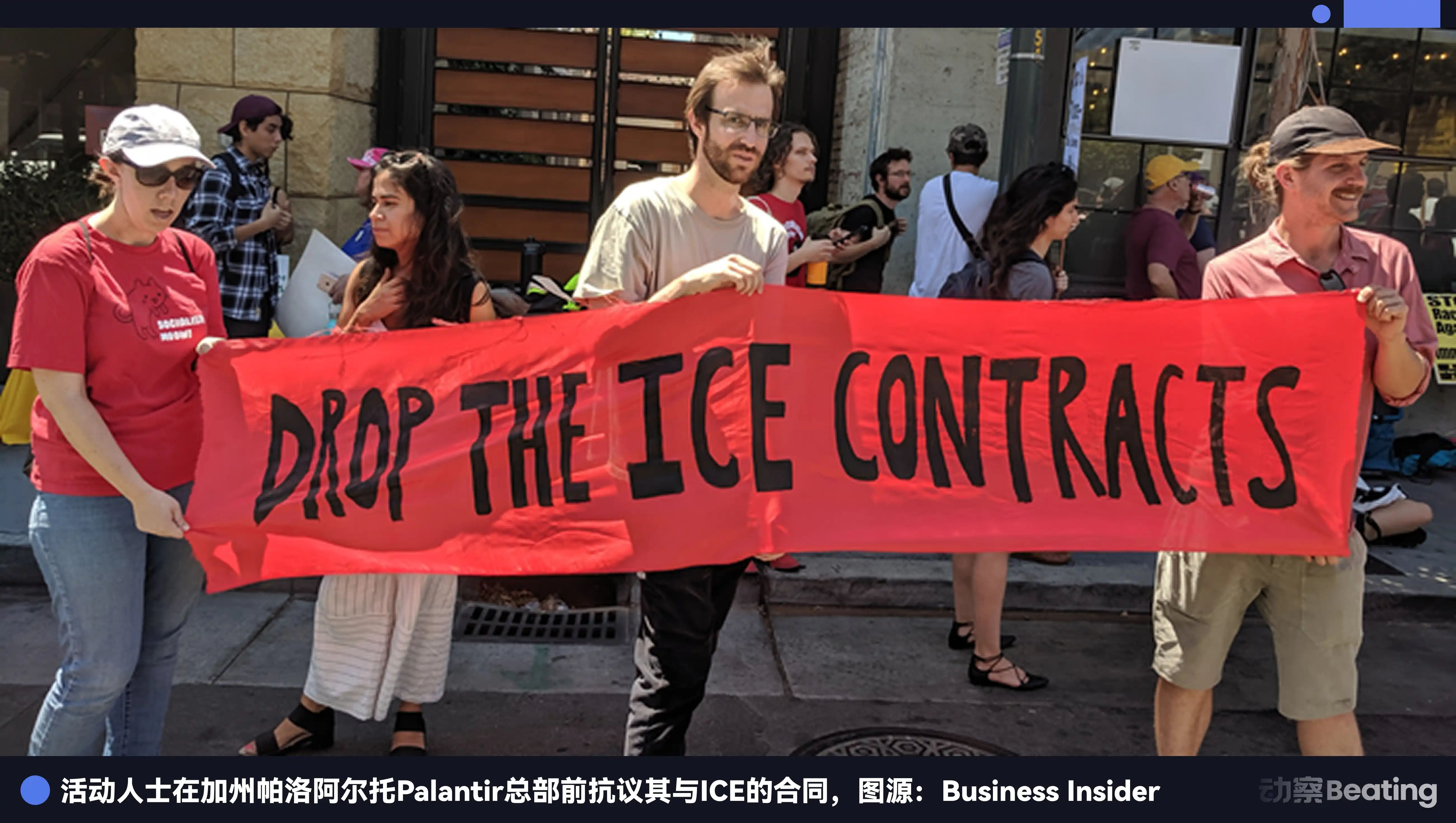
Palantir's "original sin" stemmed from its founding DNA when it was among the first startups funded by the CIA's venture capital arm In-Q-Tel in 2005. Despite receiving only a $2 million seed investment at the time, its intelligence agency background deeply tied Palantir's business to the government and military, notably with extensive work with ICE.
Since 2014, Palantir has been developing the ICM Investigative Case Management system and FALCON Mobile app for U.S. Immigration and Customs Enforcement (ICE) through a $41 million contract, allowing federal agents to track targets' geographical movements in real time using cell tower data to identify and trace undocumented immigrants.
Palantir's long-standing collaboration with ICE has categorized it in ESG frameworks as a company with "Potential Human Rights Violations" and "Surveillance Societal Risks." Palantir has consistently scored low in major ESG rating agencies. Ethos ESG once gave Palantir an F grade, with a composite score of only 18.1 out of 100, ranking it in the bottom 1% of the entire software industry. In social dimensions like "Accountability Mechanisms" and "LGBTQ+ Equality," Palantir scored a flat 0.
This directly led to Palantir being excluded by numerous ESG funds and banking institutions. In the modern financial system, ESG evaluations are no longer just a peripheral ethical reference but a core gateway for banks to assess credit risks, allocate capital, and decide on business admissions. For mainstream banks, supporting a company with a rock-bottom ESG rating signifies not only regulatory compliance pressure but also the potential for collective protests from their own employees and shareholders.
Amid ongoing social hostility, ESG standards have become the most effective financial shackle to strangle Palantir.
JPMorgan Chase was Palantir's first major corporate client, investing $120 million in 2009 to use its software to monitor internal fraud. However, as this project was labeled as "monitoring employees" by public opinion, JPMorgan Chase quickly terminated its partnership with Palantir and swiftly severed ties in their financial dealings. On the other hand, Morgan Stanley, as a long-term financial advisor to Palantir, slashed its valuation from $20 billion to $4.4 billion in 2018.
Palantir also faced financing challenges in Western financial markets. Due to extremely low ESG metrics, Norway's largest asset manager, Storebrand Asset Management, and the Norwegian Government Pension Fund KLP implemented a divestment and refusal-to-invest strategy towards Palantir, with large European banks beginning to subtly financially exclude Palantir.
To survive, Palantir had to turn to non-Western traditional financial powers like Malaysia's sovereign wealth fund, Khazanah Nasional, for financial support. This left CEO Karp thoroughly disillusioned with Western traditional finance. He has publicly criticized the "Awakening Culture" multiple times, denouncing the hypocrisy between Silicon Valley, Wall Street, and this culture, condemning them for enjoying the dividends of democracy while refusing to support the technology that upholds order.
From its founding in 2003 until the end of 2022, Palantir never achieved GAAP profitability for any year. The gears of fate didn't truly start turning until 2022, thanks to two "explosions" from different dimensions: one erupting in the war on the plains of Eastern Europe, and the other hidden deep within the power centers of language models.
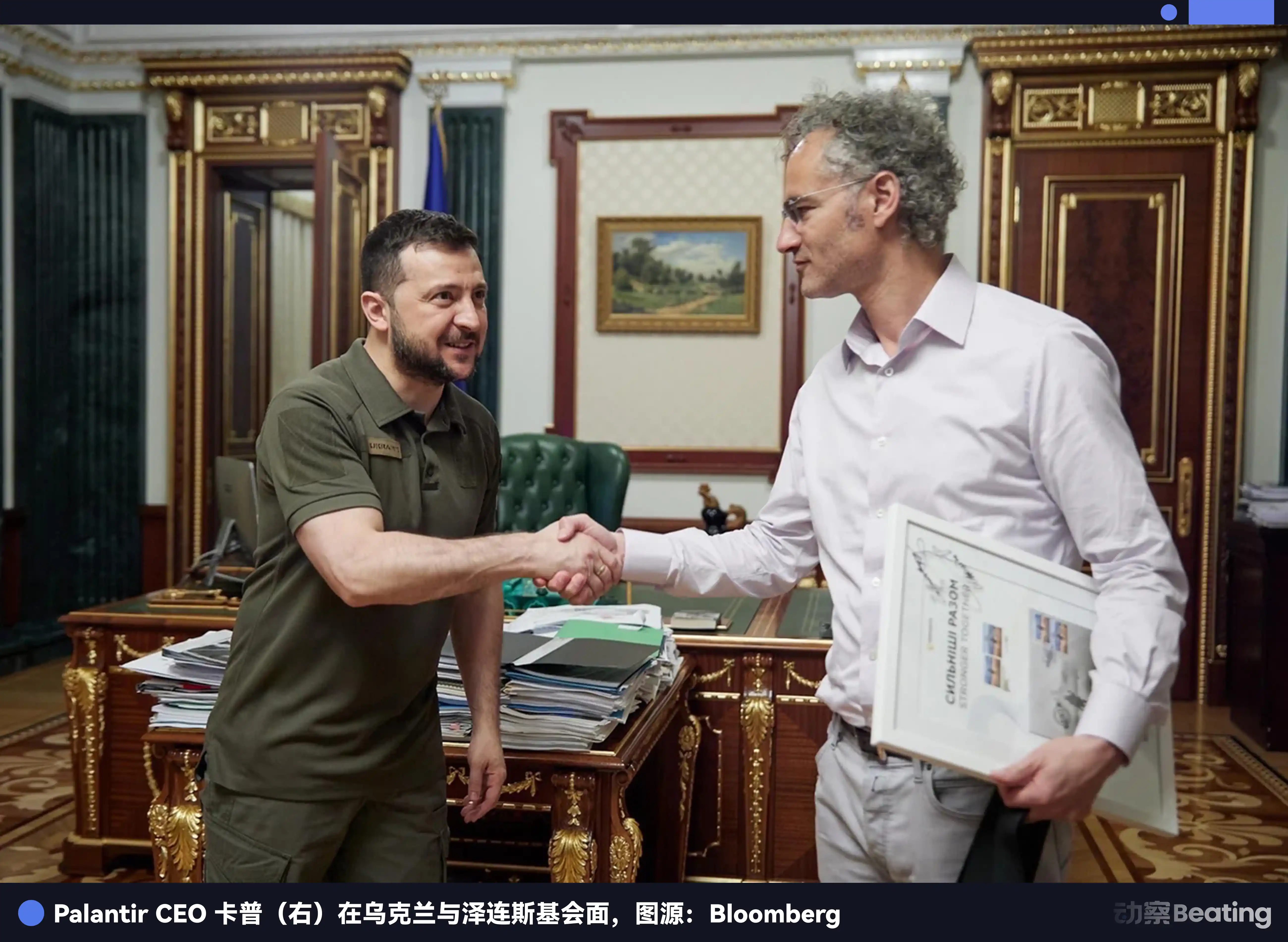
The Russia-Ukraine war became Palantir's best commercial advertisement. Due to its technology being heavily used on the Ukrainian battlefield for target acquisition, refugee placement, and battle damage assessment, Zelensky personally praised Palantir vigorously on social media. European policymakers suddenly realized that in the face of a brutal existential crisis, ESG's moral scruples appeared feeble and powerless.
On the other front, the large language model revolution ignited by ChatGPT directly provided the fuel for the launch of Palantir's AIP AI platform. Palantir's core team realized that a once-in-a-lifetime "whitewashing" opportunity had arrived. CEO Alex Karp admitted in an interview in 2023, "This is the moment we have been waiting for for twenty years."
The AIP released in 2023 is the strategic core of Palantir's response to the large language model wave. It connects the chaotic internal data of enterprises with classified tags to large models, providing them with a "logical exoskeleton." At the same time, the highly aggressive Bootcamp sales model has shortened the sales cycle from a year to a few weeks. In just the first half of 2025, Palantir held over 500 bootcamps, driving a 65% year-over-year surge in its commercial customer base and boosting its adjusted operating margin to an astonishing 51%.
In September 2024, Palantir was officially added to the S&P 500 Index, meaning that passive funds tracking the index must buy its stock regardless of whether they include ESG screening. The once-stabbed Palantir and Wall Street's major banks, who were once reserved about it, have now become key partners in promoting AIP or research supporters.
The victory in the public market allowed Palantir to escape the suffocation of "debanking," but this brutal game revealed a deep institutional crack. Palantir's breakout is a heroic exception. In Silicon Valley, there are still a large number of startups deeply rooted in hard technology, desperately struggling in the "valley of death" due to the tight grip of ESG guidelines and the traditional banking sector's politically correct tendencies.
What they need is a new financial infrastructure, a capital force that dares to ignore the "awakening culture" and can deeply understand its own value.
In July 2020, just on the eve of Palantir's preparations for a direct listing, a name that had been missing for a decade reappeared on the company's board of directors: Alexander Moore.
In Palantir's internal epic, Moore was a symbol imbued with totemic significance, as he was the company's "Employee #1." In 2005, while Peter Thiel was still hustling for the meager $2 million investment from the CIA, Moore, bearing the title of COO, laid the foundation of Palantir in a rudimentary office in Silicon Valley. In 2010, on the eve of Palantir's dazzling on the Afghan battlefield, he chose to depart and plunged into the venture capital world, eventually becoming a partner at 8VC.
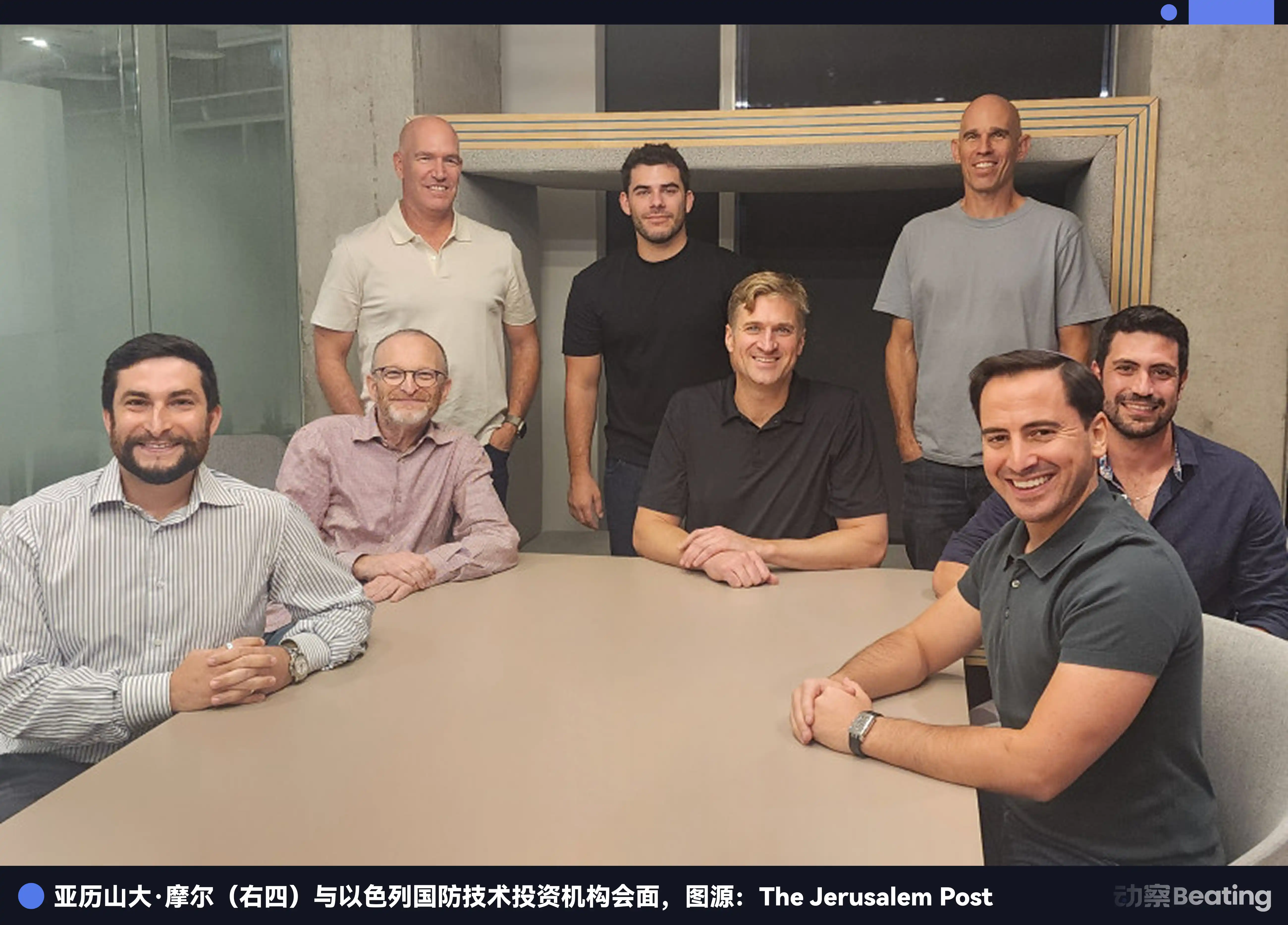
Moore's return in 2020 was more like a confluence of power. Behind him, 8VC was steered by Joe Lonsdale, one of Palantir's co-founders and the most industrially ambitious in the "PayPal Mafia." This return seemed to convey a strong signal: the group of young people who once reshaped the intelligence community with code were now returning to reshape America's industrial core.
In the unstoppable public market of 2025, the "Palantir Gang" once again joined forces. Lonsdale teamed up with Anduril founder Palmer Luckey and their godfather Peter Thiel to push forward a more ambitious plan in the power gap between Washington and Silicon Valley—establishing Solitude Bank. This was not a traditional commercial bank in the conventional sense; its birth itself was a public rebellion against the existing financial order. Amid the regulatory winter following the collapse of Silicon Valley Bank, Solitude Bank obtained approval and endorsement from the Office of the Comptroller of the Currency (OCC) and the Federal Deposit Insurance Corporation (FDIC) in just four months at an almost "privileged" speed.
Behind this "special treatment" was a dramatic shift in the power map between Washington and Silicon Valley. In the face of change, bureaucracy had to make way for the "Thiel Network."
Lonsdale put forward a grand vision for Solitude Bank: to become America's "conglomerate." This concept was rooted in his practical lessons from leaving Palantir and founding 8VC. During his tenure at 8VC, Lonsdale anchored his focus on hard technology fields such as national defense, government, and industrial infrastructure, incubating and investing in a large number of hard technology companies, including Anduril and Epirus. However, this experience plunged him into a profound "structural despair," which he summarized as a misalignment of the "capital geometric structure."
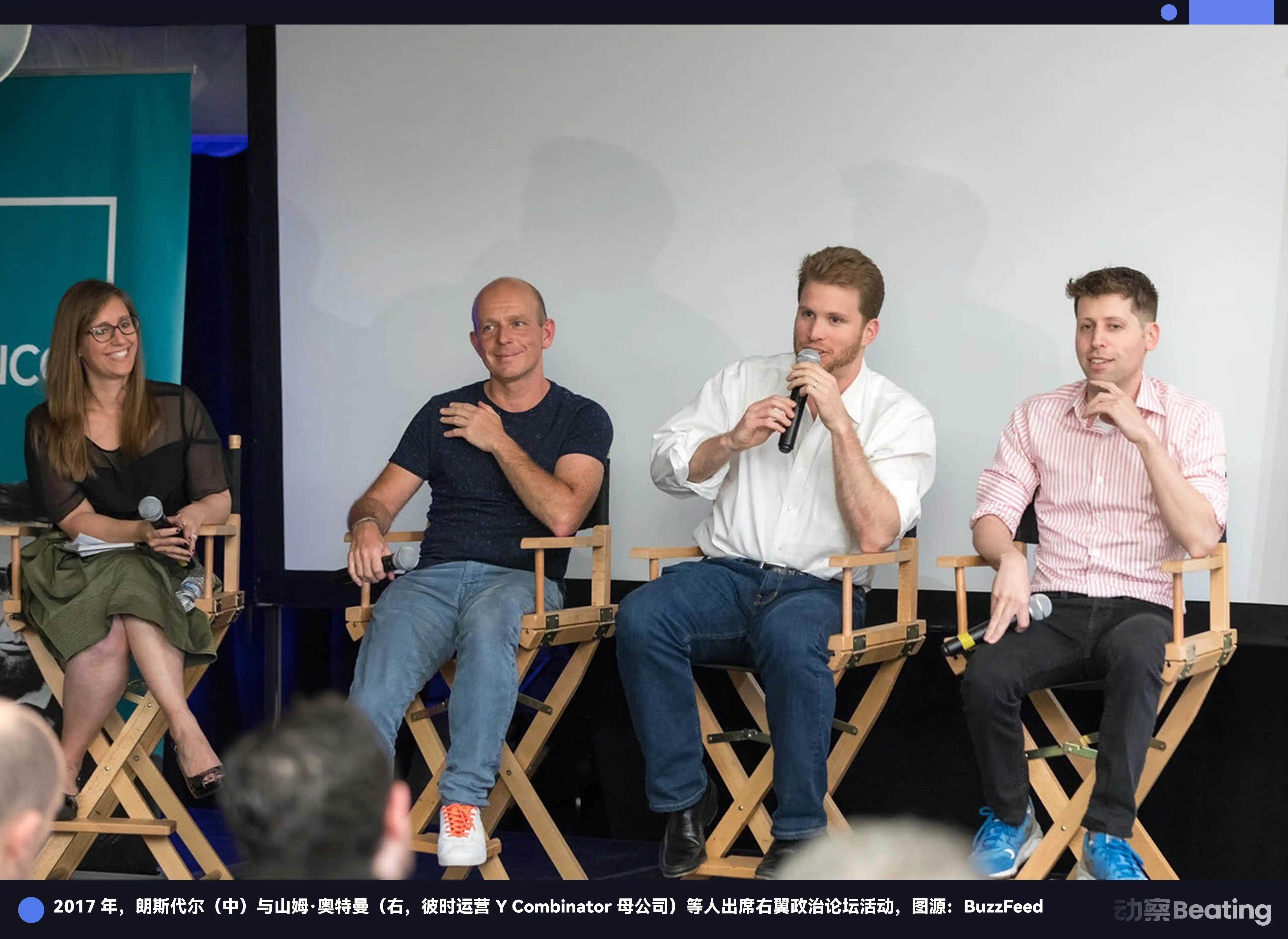
In the traditional Silicon Valley venture capital context, software companies are light asset and quick to return, while defense hard tech companies like Anduril require huge upfront capital investment, often burning through billions of dollars from founding to IPO. Hard tech startups must face the "trinity" execution pressure: simultaneously operate hardware manufacturing, software integration, and complex Washington political and business relationships. Even more brutal is the insurmountable "Valley of Death," with the U.S. Department of Defense's budget cycle lasting 2 to 3 years, causing many startups to die in the budget process's black hole due to cash flow interruption before receiving their first formal procurement contract.
Lone Mountain Bank has abandoned the traditional financial credit mindset, heavily absorbing former Navy SEAL team members from the 8VC "Artist Colony" program and senior engineers from SpaceX, to unprecedentedly examine the underlying data of hard tech companies, giving it asset pricing capabilities that traditional banks cannot possess. When Anduril presents test data for a hypersonic missile, what JPMorgan Chase sees is high-risk R&D expenditure, while Lone Mountain Bank sees five years of future defense orders.
This model directly unclogs the bottleneck of financial capital flowing to physical industries and the credit void. Based on this deep hard tech background and its unique government accounts receivable financing model, Lone Mountain Bank can accurately assess the default risk of a pending contract and provide asset-backed loans based on this. This means that Anduril can use future missile orders and its factory equipment as collateral to obtain operating funds now, without having to exchange equity for cash.
However, Lone Mountain Bank's most secretive core moat lies in its deep "relationship bank" nature. Over the past decade, Peter Thiel's network with Palantir has quietly penetrated the U.S. federal government and military. Today, this network has transitioned from a behind-the-scenes advisory list to a front-and-center decision-making hub, providing a highway to government contracts for Lone Mountain Bank's clients.
At the Pentagon, Army Undersecretary Michael Obaradar controls the Army's budget and procurement strategy. Despite signing a recusal agreement, as Anduril's former Senior Director, his advocacy for "rapid acquisition" reform directly benefits those non-traditional defense contractors served by Lone Mountain Bank. The newly established Army "Task Force 201" directly appoints Palantir's Chief Technology Officer Shyam Sankar as an Army Reserve Lieutenant Colonel. Jacob Helberg, former Palantir CEO senior adviser, is now the Deputy Secretary of State for Economic Growth. He leads the "Pax Silica" Silicon Valley Peace Initiative, forcibly reshaping the global supply chain and clearing geopolitical obstacles for mining and chip companies invested by Lone Mountain Bank.
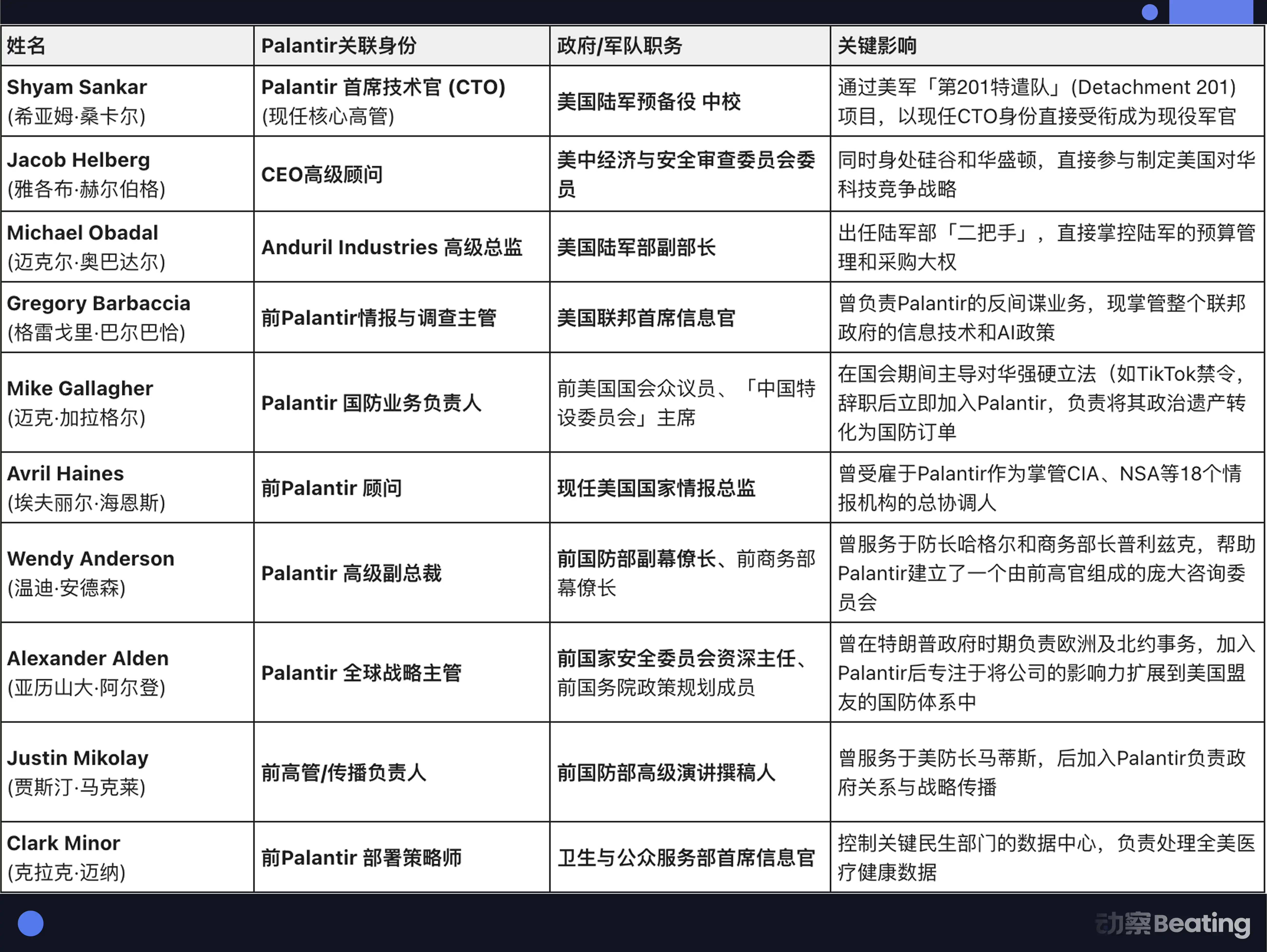
In the future, customers of Solitude Bank will no longer face an opaque bureaucratic system but rather will be dealing with insiders sitting across the decision-making table.
Sheltered by a vast web of power, Solitude Bank's internal architecture exhibits a stark contrast of calmness. To secure its position in the ruins of financial regulation, Solitude Bank has adopted an extremely conservative strategy known as the "Fortress Model," maintaining a minimum Tier 1 leverage ratio of no less than 12%, a risk control standard almost double that of traditional commercial banks. The vast deposits it absorbs are strictly prohibited from being used in high-risk lending and are instead forcibly locked in a vault of highly liquid assets such as U.S. Treasury bonds.
Simultaneously, Solitude Bank has also built an extremely aggressive payment engine. Endorsed by former DOJ prosecutor Katie Haun and her crypto venture fund Haun Ventures, Solitude Bank merged with the stablecoin company Atticus and positioned itself as the "most regulated stablecoin transaction hub." For defense tech companies executing missions globally, war does not adhere to banking hours. By using stablecoins as a settlement layer, the bank can provide 24/7 fund clearing services even on statutory holidays, ensuring supply chains located on the Polish border or Pacific bases can achieve instant payments.
At this point, the "American conglomerate" puzzle in Langsdale's mind has finally come full circle. This keiretsu structure that played a core role in post-war Japan's rise is characterized by the symbiosis of financial capital and industrial capital. Today, the "Palantir Gang" is playing an infinite game far beyond venture capital logic. In this scenario, finance has been restructured into the "financial fuel" of hard tech, driving the long-stagnant heavy industry of the United States.
However, the geographic center of this transformation is no longer in Silicon Valley but points to a more weighty and realistic coordinate. There, the former "Rust Belt" is being reshaped by this new financial force into America's "New Defense Industrial Corridor."
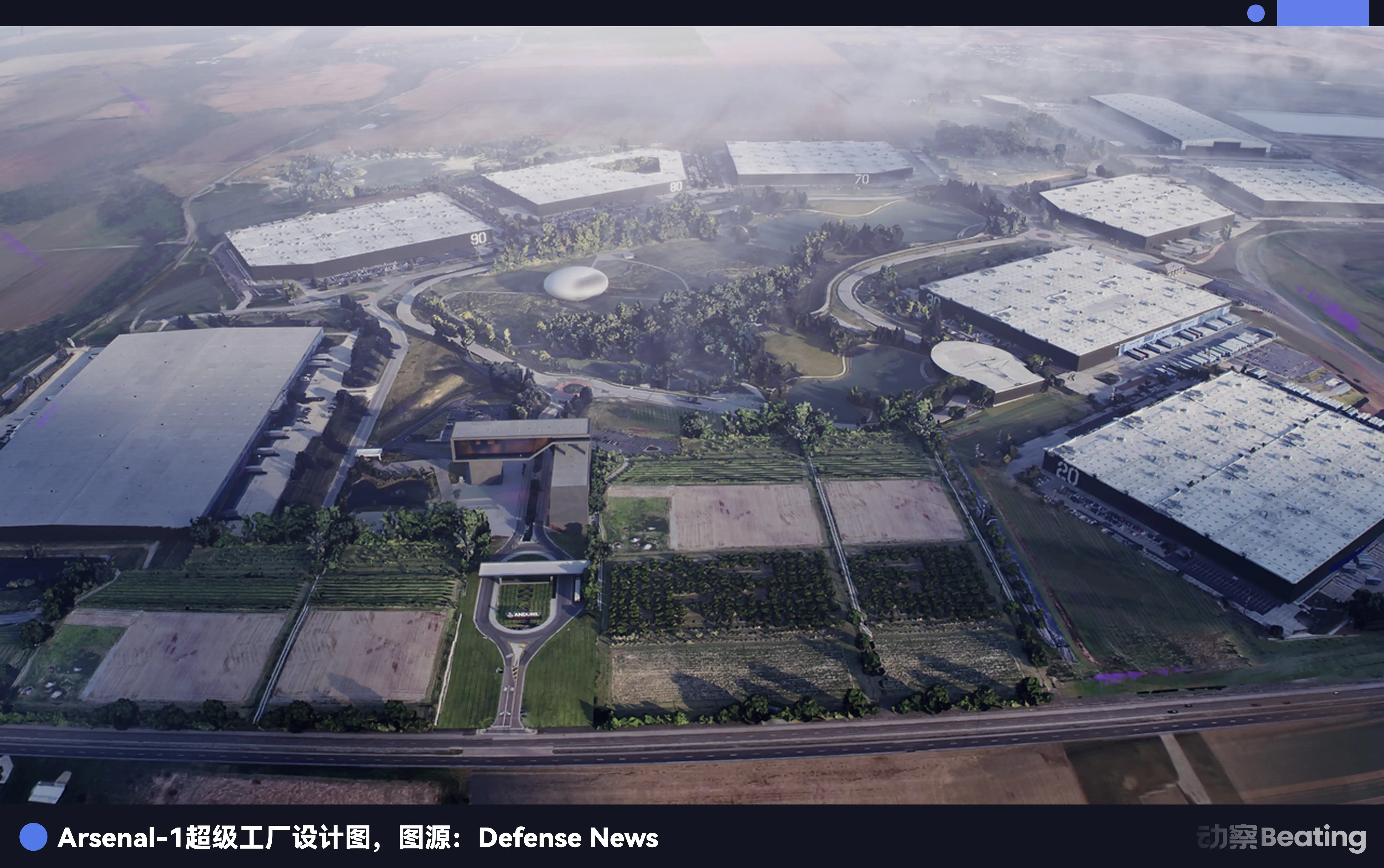
If you were to drive through the southern outskirts of Columbus in the harsh winter of 2026, you would see a highly cyberpunk scene: next to the Rickenbacker International Airport, a super factory codenamed "Arsenal-1" is breathing like a behemoth.
This factory, with a planned construction area of 5 million square feet, is the crown jewel of Anduril and the largest single defense manufacturing project in Ohio's history. Its exterior walls shimmer with cold signal lights, and thousands of engineers and technicians here are producing everything from an autonomous jet fighter named "Fury," with all equipment being dynamically scheduled in real-time by an operating system called "Arsenal OS." Here, there is no clamor of a traditional assembly line, only the quiet flow of data and deadly efficiency.
This land was once the heart of American industry, where Cleveland's steel, Akron's rubber, and Dayton's aviation parts together forged the base of the "Arsenal of Democracy" during World War II. However, with the wave of globalization and deindustrialization, this area became the infamous "Rust Belt," with factories closing down leaving vast ruins and towns corroded by opioid drugs, becoming scars of America's decline.
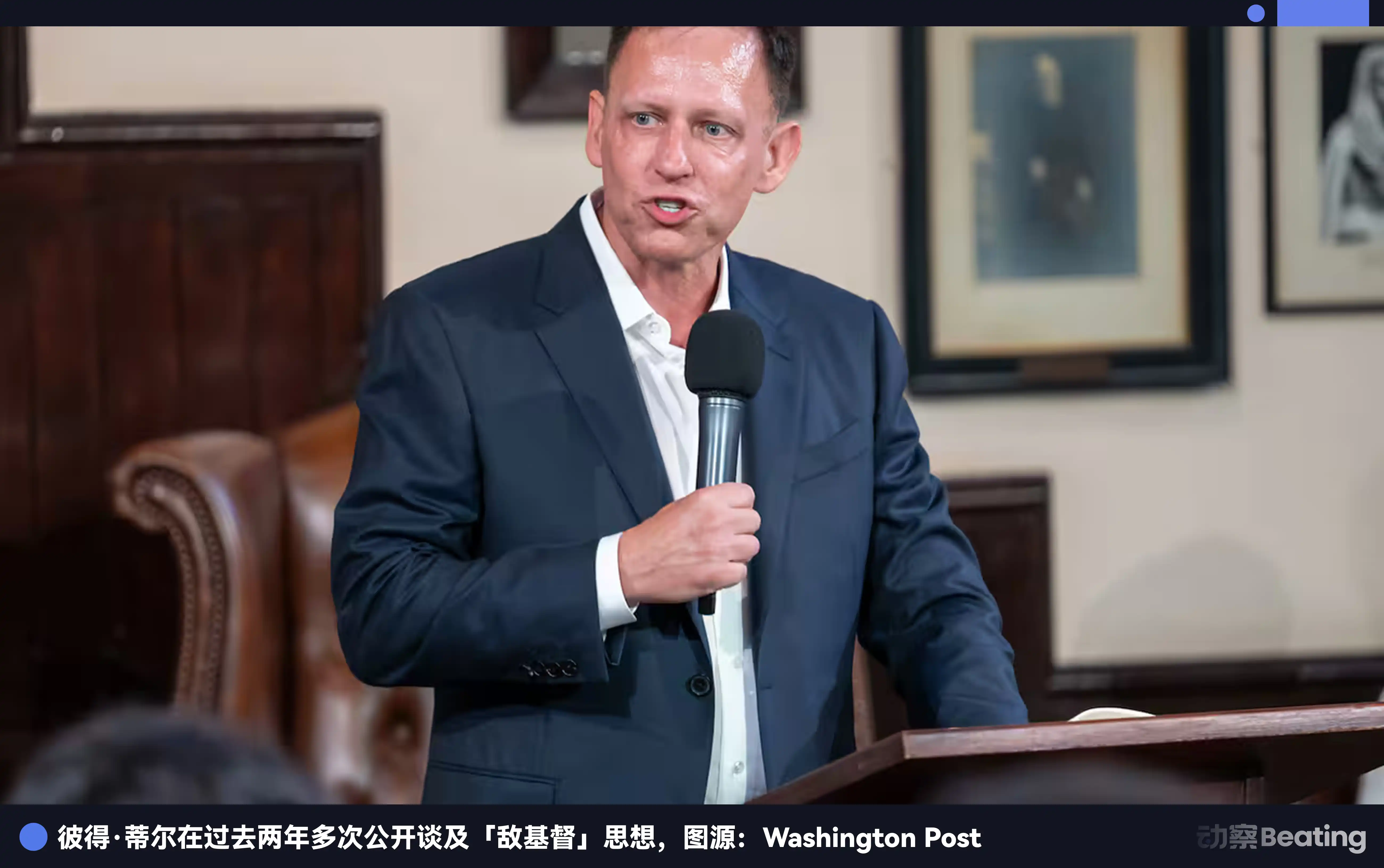
But around 2024, there was a drastic reversal of fortunes. Silicon Valley core capital, led by Peter Thiel and A16Z, began to massively shift their focus from software companies in the San Francisco Bay Area to the hard tech sector in the American Midwest. This was a philosophical reckoning initiated by Peter Thiel against the development logic of Silicon Valley over the past two decades.
The origin of this reckoning can be traced back to Thiel's deafening curse: "We wanted flying cars, instead we got 140 characters." In Thiel's view, the so-called "tech prosperity" since the 1970s was a massive lie. Silicon Valley elites were addicted to the false prosperity of the digital world, optimizing advertising algorithms and social media to addict people to screens, while the atomic world languished in a fifty-year-long stagnation.
Thiel believes that this escapism from the physical world not only hollowed out economic growth but also made Western civilization incredibly fragile in the face of geopolitical challenges. Therefore, he established within the Founders Fund an investment creed tinged with apocalyptic hues: if technology cannot solve "hard problems" like nuclear fusion, space transport, and hypersonic defense, then all unicorn companies will ultimately be meaningless.
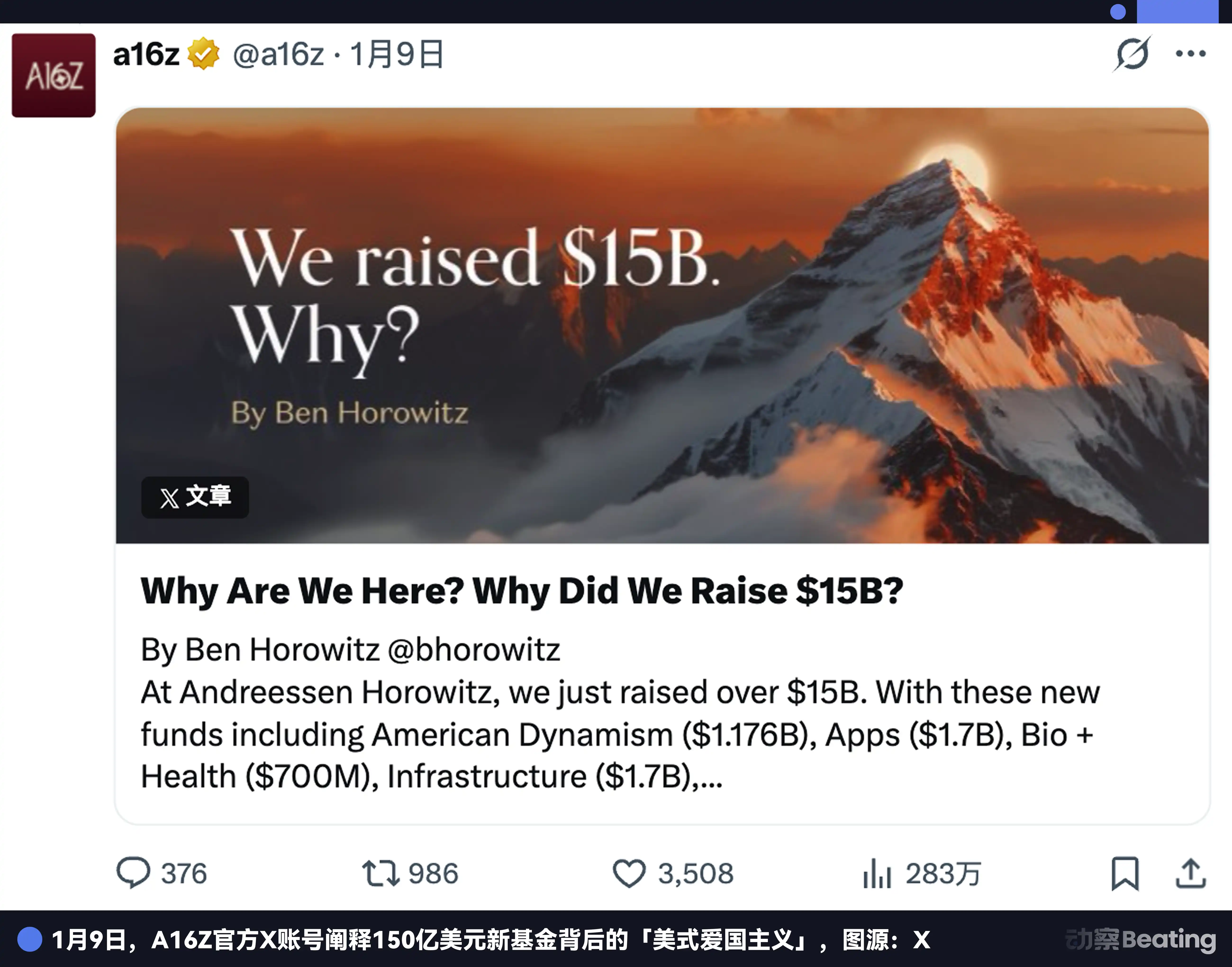
In order to ground the philosophical vision of returning to the atomic world, Silicon Valley elites displayed an unprecedented level of political aggression. A16Z packaged this as the "American Dynamism" movement, with a core focus on using Silicon Valley venture capital to restructure those ossified national-level infrastructures.
For this purpose, A16Z broke the tradition of venture capital firms not directly engaging in politics, set up a high-profile office in Washington D.C., and assembled a lobbying team consisting of former senior Pentagon officials and seasoned lobbyists. According to public records, A16Z's federal lobbying expenditure in 2025 exceeded $1.8 million, surpassing even the total of the National Venture Capital Association. Their core mission was singular: to help hard tech companies like Anduril and Hadrian cross the "Valley of Death."
Within the walls of Arsenal-1 Factory, this philosophical movement is being transformed into a disruptive force against the traditional military-industrial complex.
Unlike traditional defense giants like Lockheed Martin, accustomed to cost-plus contracts where no matter how much R&D delays or cost overruns occur, the government foots the bill, which is essentially a reward for inefficiency, the Anduril model is a typical "Tillersonian" approach — using venture capital to self-develop products, iterate quickly, and only sell to the military once the product is mature.
At the same time, the "American Power" camp emphasizes absolute supply chain sovereignty, with SpaceX being the prime example. In contrast to traditional defense contractors that subcontract components across a global supply chain, Anduril has built its solid rocket engine factory to ensure that during a war where global shipping routes are cut off, American missiles can still fly out of the warehouse. Here, the production line itself is part of the software, and through "Arsenal OS," the factory can seamlessly switch from producing reconnaissance drones to producing loitering munitions in a matter of weeks based on battlefield needs, a level of flexibility unimaginable to traditional rigid production lines.
This "reindustrialization" movement also has a political ultimate protector — Vice President J.D. Vance from Ohio. As a former disciple of Peter Thiel, Vance serves as the perfect bridge connecting Silicon Valley capital with Rust Belt workers. Upon assuming the vice presidency, he became the top advocate for "American Power" in the White House, vigorously pushing for an upgraded version of "Buy American" clauses and providing huge tax breaks for tech companies building factories in the Rust Belt.
Data seems to be confirming the madness and success of this strategy. By early 2026, Ohio's manufacturing output had seen double-digit growth for four consecutive quarters, with over 15,000 new high-end manufacturing jobs created. Not just Anduril, but Intel's wafer fab in Licking County, and Helion Energy, a fusion startup supported by Lone Pine Bank, have all taken root in this land.
After the alliance of Silicon Valley elites and Washington power, this is no longer just Thiel's philosophical utopia. The American "reindustrialization" seems to be transitioning from a hollow slogan to a reality woven with steel and code.
As we shift our gaze from the bustling arsenal factory in Ohio and zoom back into the global supply chain landscape, the revival fervor of Silicon Valley elites will soon be extinguished by cold, hard facts. The American reindustrialization machine, attempting to defy historical gravity, is now hurtling full speed towards invisible reefs formed by physical limits and economic realities. This is the deepest-level logical impasse of geopolitics and macroeconomics.
The most fatal vulnerability is the elemental curse buried deep underground. While the Arsenal-1 Factory can assemble drones around the clock, the key raw materials that make up the nerve and bone of these machines are not in its control. It's a profoundly ironic closed loop. According to the U.S. Geological Survey (USGS), China controls around 90% of the global rare earth refining capacity. The Mountain Pass mine in California is the only rare earth mining site in the U.S., but the ore extracted here still needs to be shipped to China for refinement due to the lack of domestic separation technology, only to be bought back at a high price. This means that the new factory in Ohio is essentially using materials from China to manufacture weapons intended to counter China.
Running parallel to the supply chain crisis is the "Kilowatt War" unfolding on the U.S. mainland power grid. Silicon Valley elites, while promoting "American Power," deliberately ignored an awkward physical fact. The high-energy AI data centers and new manufacturing they rely on are engaging in a life-and-death struggle on the same increasingly aging grid.
Palantir's exponential growth in computing power for training the next generation of large models has seen its single data center's energy consumption approach that of a medium-sized city. According to Boston Consulting Group's forecast, by 2030, the electricity consumption of just U.S. data centers will reach 7.5% of the total power usage, further encroaching on the remaining space for manufacturing resurgence. Before the commercialization of fusion technology invested by Solitude Bank, the U.S. is facing a zero-sum game: when the digital brain and the industrial body simultaneously compete for limited energy blood, this giant's movement is destined to suffer fatal stiffness due to insufficient blood supply.
At its deepest and most difficult-to-unravel deadlock lies within the gene paradox of the U.S. dollar hegemony. Historically, no country has ever been able to simultaneously hold the titles of "the world's largest industrial exporter" and "global financial hegemon" because it requires two completely opposite currency policies. To revitalize manufacturing, seize markets through exporting weapons and industrial goods, the U.S. needs a weaker dollar to lower production costs. However, to maintain Wall Street's financial hegemony, attract global capital inflows to support financial prosperity, it must uphold the strong dollar status.
This is the modern version of the famous "Triffin Dilemma."
Vance and Till are trying to forcibly reverse this trend through administrative means, transforming the dollar from a public good serving the global financial cycle into a national tool serving domestic industry. This implies that the U.S. may need to tolerate long-term inflation and even use administrative intervention to force Wall Street to give up profits to subsidize the Ohio assembly line. This is a political gamble that touches the core of national interests. Are Manhattan's financial capitalists really willing to sacrifice their own global financial scepter for the Rust Belt workers?
From the cold hunting in Minneapolis to the clandestine convergence in the corridors of power in Washington, a group of "hackers" who once reshaped the intelligence community with code are now trying to rewrite the physical world with the same logic. They are wagering money, reputation, and even the destiny of America, trying to prove that the "Silicon Valley model" can save an empire from dusk. The answer may not lie in those exquisite pitch deck slides but in whether the fragile supply chain can still operate in the storm of the next winter.
Recommended
The Wall Street Journal: How is AI Trading Stealing the Limelight from Cryptocurrency?
Aug 15, 14:00
Tencent Still Has a Dream
Aug 15, 11:27
To Catch North Korean Hackers, They Set Up a Fake Project
Aug 15, 10:00
From Litigation to Settlement: Positive Signal Released by HTX's Negotiation with FCA
Aug 14, 19:32
11,742 Shipping Addresses Exposed Alongside Trezor Orders
Aug 14, 19:01
Founder Interview: FOMO Creator Explains How They Added 30,000 Users in One Day and Became One of the Fastest-Growing Crypto Apps
Aug 14, 18:37