
Goldman Sachs Analysis: Intel's Q2 Exceeds Expectations Across the Board, Manufacturing Transformation Still Pending

TL;DR
· Intel's Q2 revenue was $16.1 billion, non-GAAP EPS was $0.42, and Q3 guidance was also above market expectations.
· CapEx for 2026 is expected to exceed $20 billion, with long-term agreements increasing demand visibility and raising return pressure.
· Goldman Sachs has a target price of $150 but maintains a Neutral rating, as the market remains concerned about processes, foundry customers, and server market share.
Intel's second-quarter earnings report, released after the market closed on July 23, significantly exceeded expectations, with a stronger Q3 guidance, but the stock price did not respond with a continuous upward trend. The after-hours trading initially rose, then the gains retreated, as the market did not rush to "buy the dip" based on one strong quarter.
The most direct positive impact of this earnings report was that revenue, gross margin, and profit all exceeded market expectations. Intel's Q2 revenue was $16.1 billion, with a non-GAAP gross margin of 41.8%, a non-GAAP operating margin of 17.2%, and a non-GAAP EPS of $0.42. The company's Q3 revenue guidance is between $15.8 billion and $16.8 billion, with a midpoint of $16.3 billion, a non-GAAP gross margin of 42%, and a non-GAAP EPS of $0.38.
A report by Goldman Sachs on July 23 showed that these numbers were all above the bank's and the market's previous expectations. However, for Intel, short-term operational recovery is just the first step. Investors are more concerned about whether the advanced process can ramp up as planned, whether external foundry customers can truly materialize, whether the server CPU market share can be maintained, and whether the over $20 billion in capital expenditures will ultimately translate into profits and cash flow.
Intel's second-quarter outperformance was not solely driven by a single business.
By segment, the Client Computing and Physical AI Group, which is the original client computing business, had revenue of $8.9 billion. The Data Center and AI business had revenue of $6.3 billion. Intel Foundry had revenue of $5.8 billion. It is worth noting that Foundry includes a significant amount of internal and intersegment revenue, and the company's total revenue in a consolidated basis also deducted $5.5 billion in intersegment offsets.
The margin performance likewise alleviated market concerns. The non-GAAP gross margin was 41.8%, the operating margin was 17.2%, and the non-GAAP EPS was $0.42, higher than the expectations outlined in the Goldman Sachs report and above the previous market consensus.
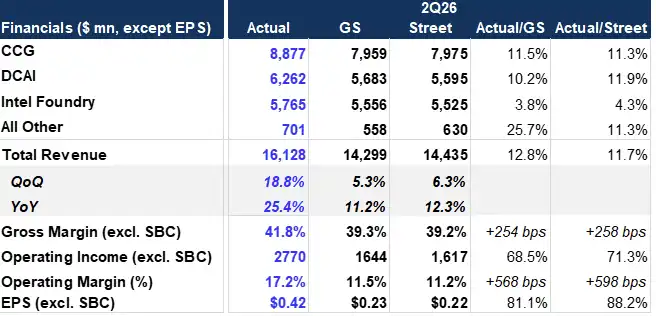
Intel Q2 Earnings Recap: Total revenue of approximately $16.1 billion, gross margin of 41.8%, EPS of $0.42, all three major segments performing above expectations.
For the average investor, these numbers signify two things. First, the short-term demand for PC, server, and manufacturing-related businesses is not as weak as previously feared. Second, the drag on the gross margin from costs, product mix, or capacity utilization was lower than the market expected.
The third-quarter guidance further reinforces the short-term recovery signal. The revenue midpoint is $16.3 billion, higher than Goldman Sachs' previous estimate of around $14.7 billion and the market's estimate of around $15.1 billion. The non-GAAP gross margin guidance is 42%, also higher than the market's expectation of about 40.3%. The non-GAAP EPS guidance is $0.38, higher than the market's expectation of around $0.28.

Q3 Guidance Comparison: Revenue midpoint of $16.3 billion, gross margin of 42%, EPS of $0.38, all above Goldman Sachs' and market expectations.
Beyond the financial report, Intel's management mentioned that the company secured additional strategic customer orders and long-term agreements in the second quarter, advancing multi-year collaboration with SambaNova. The Goldman Sachs report and related interviews also stated that CPU and XPU multi-year supply arrangements have enhanced future revenue visibility.
These kinds of long-term agreements are crucial for Intel. While the company is concurrently working on improving product competitiveness and transforming its manufacturing, customers are willing to sign longer-term arrangements, indicating that at least some products and capacity still have stable demand, rather than just a one-time inventory replenishment.
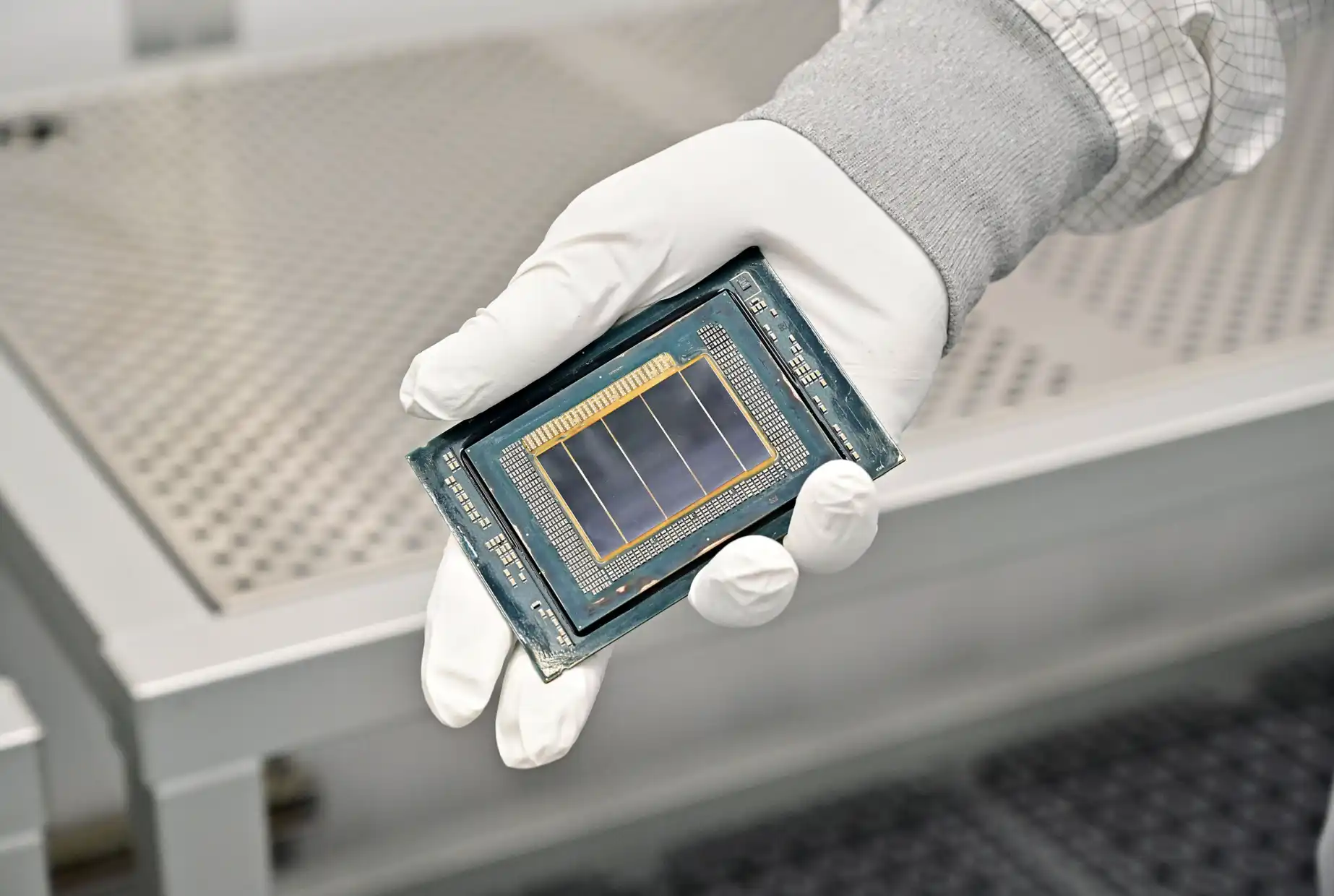
Technicians showcase the Clearwater Forest chip in Fab 52's clean room
However, the market is not entirely thrilled, and the reason lies here. As the demand signal strengthens, Intel also needs to continue ramping up its capital expenditures.
Intel's CFO prepared remarks indicate that due to the enhanced customer demand signal, the company is raising its 2026 capital expenditure outlook, expecting it to exceed $20 billion, with 2027 capital expenditures projected to be significantly higher than 2026 levels. For a company catching up in advanced processes, expanding manufacturing capacity, and driving external foundry commercialization, high investment is not surprising, but investors are more concerned about when the investment will translate into customer orders, capacity utilization, and profit margins.
If the advanced node ramp progresses smoothly and external customer adoption accelerates quickly enough, the high CapEx can be seen as a necessary investment for future growth. However, if the node advancement is slower than expected or external foundry orders are not stable enough, this expenditure will put pressure back on profit margins and free cash flow.
Goldman Sachs maintains a Neutral rating on Intel with a 12-month price target of $150. Based on the approximately $102.62 share price used in the report, the target price implies about a 46% upside.
While this upside is not insignificant, the fact that the rating has not been upgraded indicates that the short-term financial improvement is not enough for analysts to confirm that Intel has completed its turnaround. The target price in the report is based on the assumption of sustained future earnings recovery, rather than just looking at the next quarter's profit.
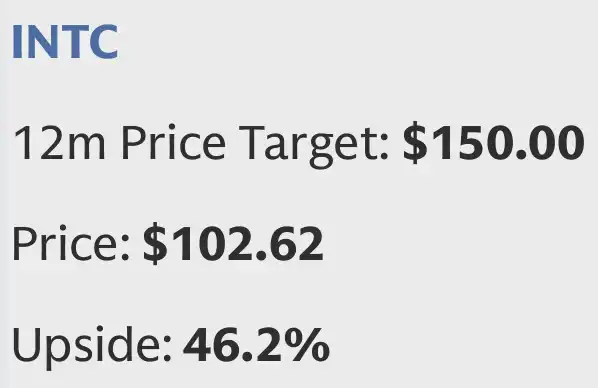
The current price is around $102.62, with a target price of $150, implying a 46% increase, and the rating is maintained at Neutral.
The issue is that Intel now needs to prove not just a "one-quarter beat," but whether it can sustainably restore revenue, gross margins, and EPS over the next few years. Under the foundry transformation and advanced process investment, the market needs to see more external customers, a more stable server market share, and a clearer profit return.
After Intel's earnings report was released, the stock initially rose in after-hours trading but then gave back some of the gains. This reaction is more like the market acknowledging that short-term performance exceeded expectations, but still not willing to immediately offer higher trust in the long-term transformation.
In the short term, Q2 performance and Q3 guidance have indeed provided positive signals. Strong revenue, strong gross margins, strong EPS, and long-term customer agreements have made some future demand clearer. These are enough to alleviate the market's concerns about Intel's short-term demand and profit margins.
However, the challenges for the long term have not disappeared.
The advancement of the process node needs to continue on schedule, with yield and cost improvements ongoing. The external foundry business cannot just focus on revenue scale; it also needs to consider customer quality, capacity utilization, and profit margins. Server CPU market share is also a pressure point, and if the data center business faces renewed pressure, the confidence brought by a single quarter's performance will quickly erode.
Capital expenditure is the most direct financial constraint. Exceeding $20 billion in 2026 and showing a significant increase in 2027, it indicates that Intel is using heavier investment in exchange for future opportunities. As long as the pace of return is not clear enough, the market finds it challenging to consider this expenditure entirely as a positive.
This earnings report bought Intel some time, but it has not completed the turnaround yet. The performance and guidance showed that the company's short-term business is better than expected, but the post-market surge followed by a pullback indicates that investors are still waiting for the manufacturing transition and outsourced production to truly pay off.
Welcome to join the official BlockBeats community:
Telegram Subscription Group: https://t.me/theblockbeats
Telegram Discussion Group: https://t.me/BlockBeats_App
Official Twitter Account: https://twitter.com/BlockBeatsAsia
Recommended
When even the well-known Robinhood account hack doesn't deter people from rushing in, is it a sign that the on-chain market sentiment has peaked?
Jul 24, 17:44
Interview with Matching Hearts Founder Xinxun Zeng: From Kimi's Departure to His AI Matchmaking Journey
Jul 24, 16:59
Trillion-Dollar SK Hynix Empire Inheritance Plot Revealed in Choi Tae-yoon's Divorce Case Closing
Jul 24, 16:51
In a year, its valuation has surged nearly 7-fold, and the large-scale model "Second-hand Dealer" OpenRouter is about to be acquired.
Jul 24, 15:50
Revenue Growth of 25%? Intel Delivers an Easily Misunderstood Financial Report
Jul 24, 15:09
Abraxas Capital, the Institution Giving On-Chain Analysts Goosebumps | Meet the Hyperliquid Trader
Jul 24, 14:06