Weekly Digest | Precious metals, crypto and stocks swing wildly; Jensen Huang's comeback rally lasts just one day
We Editor's Note: We has selected the week's best content to help you catch up over the weekend. Click a headline to read the full piece.
Products of the AI boom
Anthropic interviewed 58 companies across 66 conversations and found: 55% of AI's value comes from higher output, only 2% from layoffs
The research interviewed Anthropic's enterprise customers. Two law firm cases show the concrete difficulties of implementation: one started by reworking its archiving process, while the other's company-wide knowledge tool met resistance during rollout.
Written after the Riemann hypothesis was proved
Anthropic and Claude jointly released a Lean 4 formalization of the proof of the Riemann hypothesis, comprising 175,187 files and roughly 17 million lines of code, which passed community verification. The author reviews anyGeometry's objections, the axiom audit and multi-kernel replays, and argues that the subject of trust has shifted from mathematicians to machines.
Musk cheers, Cathie Wood misses the boat, Wall Street questions whether "Huang's return" involved insider trading
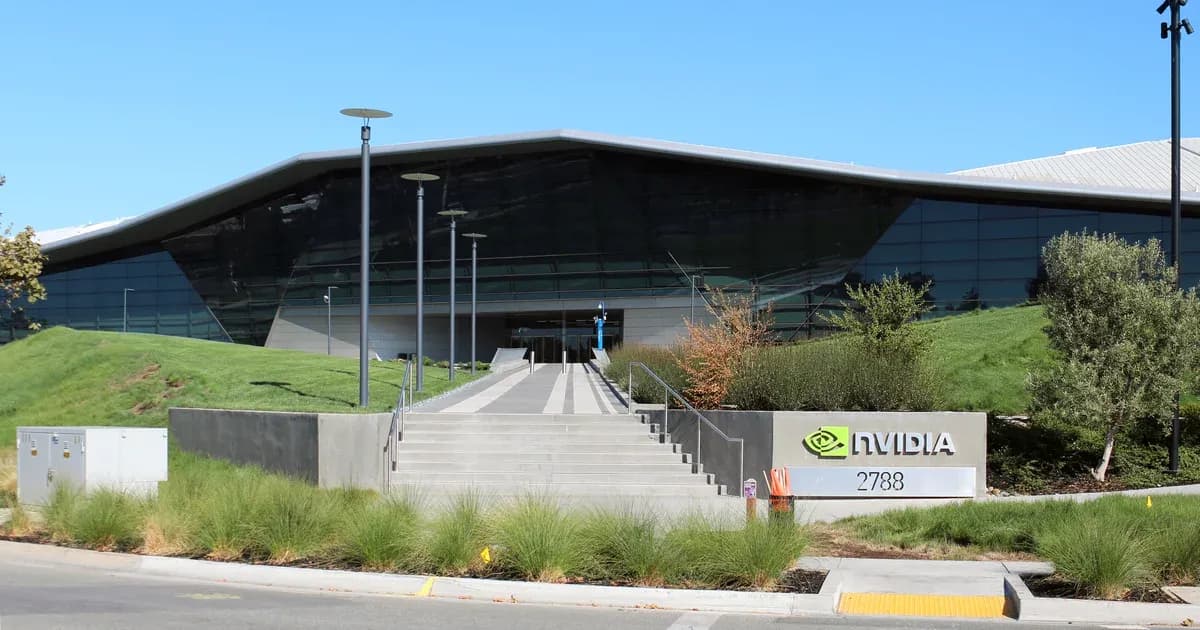
Eleven days after resigning, Jensen Huang was unanimously reinstated by Nvidia's board; shares jumped 31% that day and market value rose $952 billion, a single-day record for any stock. A $3.4 million call option trade placed before the reinstatement announcement is suspected of insider trading; Cathie Wood had earlier cut her Nvidia stake to move into SpaceX and missed the surge.
After his return, Huang's first all-hands meeting covered 11 things
In his first all-hands meeting after returning, Nvidia CEO Jensen Huang apologized, saying he had let employees down and that he is receiving psychological treatment. He addressed rumors that he had placed himself above the code of conduct, stressing that violations are never tolerated but do not necessarily mean dismissal; he said the company does not need a succession plan and denied that government pressure brought him back.
Macro insights
From the dot-com bubble to the AI boom: reviewing QQQ's ten major drawdowns
The 2000 dot-com bubble brought an 83% decline, the 2008 financial crisis roughly halved the index, and 2021 to 2022 saw a 35.6% drop. Drawdowns of more than 20% have been more frequent since 2020, and the current AI rally's drawdown is already close to 20%; whether to buy the dip depends on AI's commercial returns.
What happens to US stocks after the Fear & Greed Index drops into extreme fear?
The author groups extreme-fear signals since 2011 into 17 episodes, and uses whether credit spreads narrowed in step with equity rebounds to distinguish genuine risk repair from a temporary bounce.
Who is selling gold? Russia has trimmed for 10 straight months, and Saudi Arabia and Tether are in the spotlight too
As of September, Turkey, Russia and Azerbaijan's state oil fund had sold a net total of about 166 tonnes of gold, with Russia trimming for ten consecutive months for a cumulative ~72 tonnes. Saudi Arabia is suspected of selling gold to raise dollars but there is no hard evidence, and Tether's total holdings actually edged up; cooling demand is the more noteworthy development.
Mining below the cost line: losing $10,000 a coin, yet the power button stays on
Bitcoin fell as low as $55,000 in November, breaking below the cost line of most listed miners, with MARA's cash cost reaching $62,862 per coin. A 9.13% difficulty reduction could not offset the price drop, and hash price fell to a record low of $28.5. Some mining farms are instead signing over their power and facilities to AI companies, and hashrate that goes offline may struggle to return.
Big ideas from institutions and big names
DWF Ventures: crypto neobanks cannot retain users with cashback
Weekly spending on crypto cards is up nearly 200% year on year, but more than 86% is concentrated in the top five projects, with RedotPay alone taking over 46%. After cashback, most projects keep less than 1% of card spending; localization and multi-currency settlement are the growth directions.
Ray Dalio's latest interview: why great technology is often not a great investment
Dalio starts from the difference between paper wealth and disposable cash, explains how debt-servicing pressure forces holders to sell, and discusses how to write investment principles into a decision system.
2027 asset allocation outlook: bitcoin, US stocks or gold — which bottoms first?
In an exclusive interview, Ben Cowen says bitcoin may bottom around $35,000, with the next four to seven weeks the most fragile period, and that gold is likely to bottom first. He insists the four-year cycle has not failed and that ETFs cannot change the pattern, and warns that buy-the-dip strategies will eventually stop working.
Arthur Hayes warns: the AI bubble is about to burst, and the next super bull market depends on "flooding the system"?
OpenAI and Anthropic carry huge losses alongside enormous compute commitments, and the AI credit chain may snap in the second half of 2027; the crisis will force governments to restart the printing presses, becoming a catalyst for a bitcoin super bull market.
Getting ahead of the curve
Mobile apps: the second half for the crypto industry
The article reviews how Aave, Pancake and Fomo are moving into mobile. Approaching from lending, decentralized trading and on-chain trading respectively, they are trying to put account opening and deposits inside a phone app.
Where exactly is BTC's bottom? Seven angles to find the answer
BTC fell from $126,000 to around $60,000. The on-chain network-wide average cost basis is about $53,000 and MVRV has dropped to 1.13; AHR999 has fallen to 0.34, entering the buy-the-dip zone. He Yi plans to buy in batches below $79,000, while Gracy sees the $50,000-plus range; $55,000 hits the shutdown price for some mining machines, ETFs saw $3.59 billion in net outflows in November, and Coinbase is watching $58,000 support.
Galaxy retracts its call that BTC has bottomed: only 2 of 13 indicators met, how much deeper can the bear market go?
Galaxy withdrew its call that the bitcoin bear market ended in June: BTC fell for seven consecutive weeks and lost its 50-week moving average, breaking below the June low intraday. With the drawdown at only 53% and just 2 of 13 bottom indicators triggered, a daily close below $58,525 could open the door to a deeper decline.
A study of buybacks and dividends across 83 tokens: which mechanism supports prices best?
Four Pillars compared buyback-and-burn, treasury holdings and staking dividends. After accounting for circulating supply inflation, only 16 of the 66 tokens listed in the study had positive net cumulative returns.
What's happening in Web3
Bankless: VVV is forming a habit — its rallies come when AI trust breaks down
Dragos and Prime Intellect disclosed on the same day that three AI hosting providers had lurked for months to steal prompts, and that DeepSeek V4.1 Flash was replaced with an "abliterated" version. OpenRouter then delisted the three providers and removed the "zero retention" label from 125 endpoints; VVV rose about 30% in two weeks.
On bonding curves and LP incentives: key modules and evolving trends in new token liquidity mechanisms
The article breaks down curve pricing at issuance and the liquidity mechanism after migration into an automated market maker pool, and uses sustained trading volume and liquidity provider retention as the basis for evaluating incentives.
With $77 million of debt hanging overhead, Sky's founder is selling tokens to repay it too
Rune plans to sell SKY over the counter to repay more than $70 million of debt, but whether he can find institutional buyers and restore stUSDS redemptions remains the key to whether this crisis can be resolved.
Those listed companies that claim to be "accumulating coins" are actually selling quietly
Because their share prices are far below the net asset value of their crypto holdings, the traditional model of issuing new shares to fund more purchases has broken down. To repay debt or cope with financial pressure, some crypto treasury companies are selling their BTC, ETH and SOL secretly or with delayed disclosure.
With its stock down 60% from the year's high, Coinbase is getting anxious
In November alone, Coinbase played four self-rescue cards in quick succession.
Key news
- European Securities and Markets Authority plans to upgrade the MiCA crypto registry in 2027
- Ethereum developers confirm the Glamsterdam upgrade will activate on the Hoodi testnet in the early hours of December 16
- Ripple's proposal to bring lending to the XRP Ledger is one vote short of taking effect; the related vault may go live on December 9
- BOJ executive: stablecoins need stronger reserve oversight and a connection to central bank money
- Binance is hiring equity capital markets BD and research analysts to advance tokenized equity capital markets products
- BNB Chain releases a new lightweight L1 whitepaper focused on high-frequency trading, autonomous AI agents and other scenarios
- Solana launches browser tool Solana Playground, with AI agents able to assist with coding
- Polygon has extended its Open Money Stack payments platform to the Base network
- Injective sends letter urging the US SEC to broaden the exemption framework for tokenized stocks and RWAs
- Singapore VC TBV holds first close of a $30 million crypto fund, focusing on on-chain revenue, RWAs and other areas
- Bluefin announces strategic shift: will stop perpetual contract business and focus on spot and RWAs
- CryptoQuant: 30-day change in stablecoin market cap falls to -12%, weakening bitcoin's liquidity base
- Switzerland's first spot bitcoin ETF begins trading under the ticker BBIT
- Israel Discount Bank launches BTC and ETH trading in its app, but customers cannot transfer tokens to or from external wallets or platforms
- Japan's FSA explores responses to DeFi and non-custodial wallet risks, and plans to identify responsible parties for nominally decentralized projects
- Kenya Revenue Authority plans to require crypto platforms to share customer identity and transaction data with it
- Robot tactile model company Lute Robotics raises $20 million
- Smart contract AI formal verification platform Sequent raises $2.2 million pre-seed round
- DeepSeek tests a "quota consumption" feature that shows the token cost of conversations
- Data: Solana's share of network value capture falls to 15%, with most revenue going to ecosystem applications
Join the official Coincamps community:
Telegram: https://t.me/coin_camps
Recommended
Meme Daily: A one-chart look at the hottest Memes of the past 24 hours (2026.11.28)
Nov 28, 11:18Big Tech's New-Grad Slots Are Being Handed to AI Budgets First
Nov 28, 07:55Capitec Alternatives (2026): 4 Banks to Switch To, and When Staying Wins
Nov 28, 01:34
Nvidia vs AMD Stock (2026): Growth, Margins and Valuation Compared
Nov 27, 23:30