
IBIT vs FBTC (2026): Fees, Custody, Liquidity and Which Bitcoin ETF to Buy
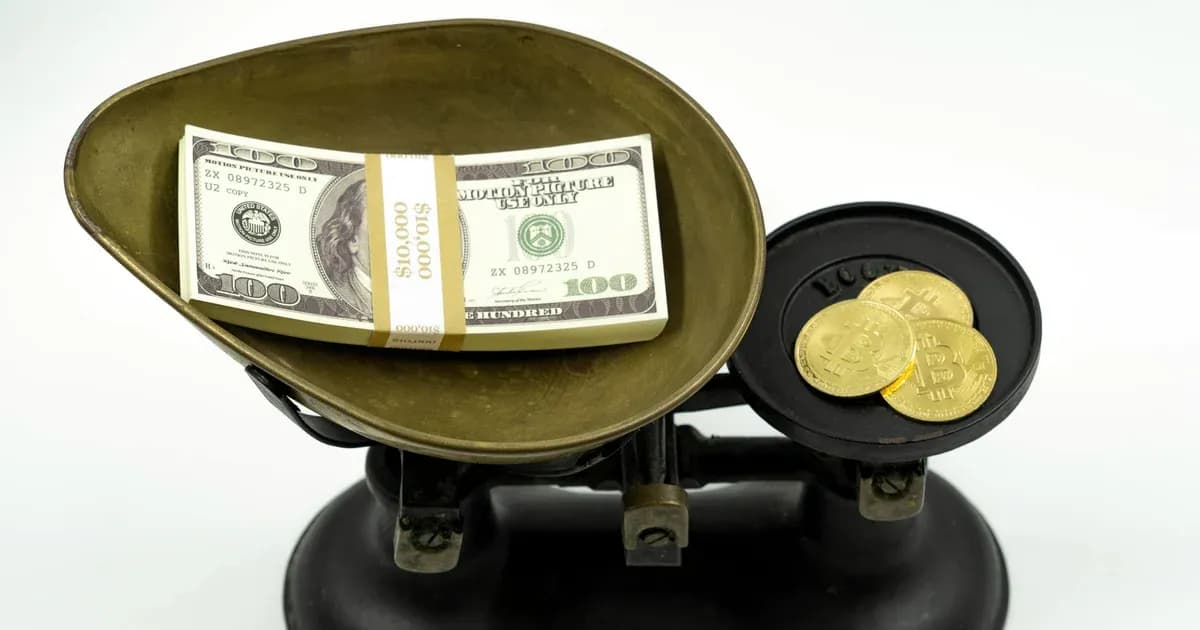
IBIT or FBTC? On cost there is nothing to choose: BlackRock's iShares Bitcoin Trust ETF (IBIT) and the Fidelity Wise Origin Bitcoin Fund (FBTC) both charge 0.25% a year (iShares, Fidelity). The differences are elsewhere. IBIT is the better choice for most buyers, and clearly for traders and options users, because it is more than four times larger and publishes a 0.02% median bid/ask spread. FBTC is the better fit for Fidelity customers and for anyone who wants their bitcoin held by the fund sponsor's own trust bank rather than by Coinbase.
The question is live because bitcoin has fallen hard. The benchmark IBIT tracks dropped from $83,721.81 on 30 September 2026 to $58,413.85 on 20 November 2026, a 30.2% fall, and IBIT's net asset value was down 33.26% for the year to 20 November (IBIT fact sheet, IBIT fund page; the percentage fall is our calculation). Neither fund protects you from that. They only decide how you hold it.
Last updated: 23 November 2026. Fees, fund data, custody arrangements and returns re-checked against BlackRock iShares and Fidelity fund pages, fact sheets and prospectuses on this date. All figures are in US dollars and describe the US-listed funds.
At a Glance
- Fees are identical: 0.25% a year on both. On $10,000 with a flat bitcoin price, that is $25 in the first year in either fund.
- Size: on 30 September 2026 IBIT held $67.06 billion and FBTC $15.45 billion.
- Tracking was near-identical: both returned −26.80% at NAV over the year to 30 September 2026, each about 0.2 points behind its own benchmark, roughly the fee.
- Custody is the real structural difference: Coinbase Custody holds IBIT's bitcoin; Fidelity Digital Assets, an affiliate of FBTC's sponsor, holds FBTC's.
- Options: IBIT options have traded on Nasdaq since 19 November 2024, and the SEC approved Cboe listing options on FBTC in October 2024.
Spec sheet: IBIT next to FBTC
The two tables below set the funds side by side. The first covers what you pay and how easily you can trade. The second covers how each fund is built. Every cell links to the official page or filing it came from.
| Cost and trading | IBIT (BlackRock iShares) | FBTC (Fidelity) |
|---|---|---|
| Our pick: IBIT for most buyers | Best for traders, options users and anyone who wants the deepest market | Best for Fidelity account holders who want custody kept in-house |
| Annual fee | 0.25% sponsor fee (iShares) | 0.25% gross and net expense ratio (fact sheet) |
| Fund assets, 30 Sep 2026 | $67,060.47M (fact sheet) | $15,454.1M (fact sheet) |
| Median bid/ask spread | 0.02%, 30-day median to 20 Nov 2026 (iShares) | Not stated on the Fidelity pages and fact sheet we read |
| Listing and launch | Nasdaq; fund launched 5 Jan 2024 (fact sheet) | Cboe BZX; fund inception 10 Jan 2024 (fact sheet) |
| Listed options | Yes, on Nasdaq since 19 Nov 2024 (Nasdaq) | Cboe listing approved by the SEC, 18 Oct 2024 (Federal Register) |
| Structure | IBIT (BlackRock iShares) | FBTC (Fidelity) |
|---|---|---|
| Bitcoin custodian | Coinbase Custody Trust Company; Anchorage Digital Bank is an available alternative, but the sponsor had no plan to move bitcoin there (prospectus) | Fidelity Digital Assets, N.A., an affiliate of the sponsor; BitGo Bank & Trust is an additional custodian, with no plan to move bitcoin there (prospectus) |
| Benchmark | CME CF Bitcoin Reference Rate – New York Variant (iShares) | Fidelity Bitcoin Reference Rate (fact sheet) |
| Legal form | Grantor trust; not registered under the 1940 Act (prospectus) | Grantor trust; not registered under the 1940 Act (prospectus) |
| Bitcoin held | 760,926.24 BTC on 20 Nov 2026 (iShares holdings) | Not stated on the Fidelity pages we read; 100% bitcoin per the fact sheet (Fidelity) |
Two patterns stand out. Price and tracking give you no reason to prefer one fund. Scale, published trading data and custody do, and they point in different directions depending on who you are.
🔎How we compared: on 23 November 2026 we read the BlackRock iShares IBIT fund page, fact sheet and prospectus, Fidelity's FBTC fact sheet, prospectus and fund pages, Nasdaq's newsroom and the SEC's Cboe options order in the Federal Register. We compared fees, size, trading data, custody, tracking and taxes, and we did not trade either fund for this article. The worked fee example uses the stated assumptions. No provider paid for placement. See our methodology.
Fees: a dead heat, shown on $10,000
IBIT and FBTC cost exactly the same to hold. IBIT's sponsor fee accrues daily at an annual 0.25% of net asset value (IBIT prospectus). FBTC pays its sponsor a 0.25% unified fee on its bitcoin holdings, accrued daily (FBTC prospectus). In both funds the sponsor pays the custody, administration and listing costs out of that fee, and both sponsors may waive fees but are not obliged to.
Assumptions for the example: $10,000 invested in either fund, bitcoin's price unchanged, the 0.25% fee applied once a year (daily accrual changes the result by cents), no brokerage commission, and the fund bought and later sold once.
| Holding period | Value left in IBIT or FBTC | Sponsor fees paid |
|---|---|---|
| 1 year | $9,975.00 | $25.00 |
| 3 years | $9,925.19 | $74.81 |
| 5 years | $9,875.62 | $124.38 |
| 10 years | $9,752.79 | $247.21 |
The only cost that can differ is trading. Paying half of IBIT's 0.02% median spread when you buy and again when you sell comes to about 0.02% in total, or roughly $2 on $10,000 (iShares). Fidelity's pages we read do not publish an equivalent figure for FBTC, so we cannot price that side; for a buy-and-hold investor the gap is small either way.
You can see the fee working in bitcoin terms on IBIT's own data. A 40,000-share basket represented 22.64 BTC on 30 September 2026 and 22.63 BTC on 20 November 2026 (fact sheet, fund page). The fee is paid by slowly shrinking the bitcoin behind each share.
Liquidity and trading: IBIT's size advantage
IBIT is the more liquid fund. It held $67.06 billion on 30 September against FBTC's $15.45 billion, and on 20 November its 30-day average volume was 50,110,122 shares (IBIT fact sheet, FBTC fact sheet, IBIT fund page). That matters most for large orders, frequent trading and options.
On options, IBIT moved first. Nasdaq listed IBIT options on 19 November 2024 and reported 353,716 contracts traded on the first day (Nasdaq). The SEC approved Cboe's rule change to list options on FBTC on 18 October 2024 (Federal Register). If you write covered calls or hedge with puts, check the open interest and spreads in your broker's option chain before choosing; we did not compare option-chain data for this article.
However, for a monthly $200 purchase in a retirement account, liquidity differences this small rarely change the outcome. Over the year to 30 September the market-price returns were −27.17% for IBIT and −27.22% for FBTC (iShares, Fidelity).
Custody: Coinbase or Fidelity's own trust bank
The structural difference between the funds is who holds the coins. IBIT's bitcoin sits with Coinbase Custody Trust Company. Its prospectus also names Anchorage Digital Bank N.A. as an available alternative custodian, but says the sponsor had no plans to move bitcoin there (IBIT prospectus).
FBTC keeps its bitcoin at Fidelity Digital Assets, N.A., which the prospectus describes as an affiliate of the sponsor and a national trust bank. BitGo Bank & Trust is named as an additional custodian, again with no plan to move bitcoin there (FBTC prospectus).
Neither set-up is risk-free. With IBIT, your fund depends on a third-party custodian that is part of a large crypto exchange group. With FBTC, one financial group sponsors the fund and holds its assets, which some investors like for simplicity and others see as concentration. Both prospectuses spell out custody, hacking and loss risks in detail. Read those sections rather than relying on brand names.
Tracking: how closely each followed bitcoin
Both funds tracked bitcoin almost exactly, minus the fee. The table compares each fund's NAV return with its own benchmark index (one year to 30 September 2026, and calendar 2025), taken from the two fact sheets dated 30 September 2026 (IBIT, FBTC).
| Fund | 1-yr NAV | 1-yr index | 2025 NAV | 2025 index |
|---|---|---|---|---|
| IBIT (source) | −26.80% | −26.61% | −7.08% | −6.84% |
| FBTC (source) | −26.80% | −26.62% | −6.98% | −6.74% |
Each fund trailed its benchmark by 0.18 to 0.24 points, close to the 0.25% fee. The two funds use different benchmarks, so their 2025 returns are not directly comparable, and their since-launch figures start on different dates. The sensible reading is that both do the job; tracking is not a reason to switch.
Accounts and taxes
FBTC is built around Fidelity's platform. Fidelity says you can use a Fidelity brokerage account, including an IRA, to invest, and that FBTC fits most brokerage, trust and IRA accounts (Fidelity). IBIT's fact sheet says its shares can be bought or sold on the secondary market through any brokerage account (IBIT fact sheet); check your own broker's rules for crypto products first. Our report on Vanguard opening its platform to crypto ETFs covers one platform that changed its stance.
Tax treatment is the same in structure. Both are intended to be grantor trusts, so US holders are treated as owning their share of the trust's bitcoin. IBIT's prospectus says each delivery or sale of bitcoin to pay the fee is a taxable event for holders, and FBTC's says holders include their share of bitcoin sold to pay trust expenses in taxable income (IBIT prospectus, FBTC prospectus).
Who should choose which
IBIT: for most buyers, and the clear pick for active traders
- Suits: anyone outside Fidelity, active traders, option writers and larger orders.
- Strengths: the largest fund in this comparison, a published 0.02% median spread, and options listed on Nasdaq since November 2024 (iShares, Nasdaq).
- Limits: bitcoin is held by Coinbase Custody, a third party; same 0.25% fee as FBTC, so no cost edge (prospectus).
FBTC: for Fidelity customers who want custody in-house
- Suits: people who already invest through Fidelity, including in an IRA, and who prefer their fund's bitcoin away from an exchange-affiliated custodian.
- Strengths: custody at Fidelity Digital Assets, N.A., a national trust bank; same 0.25% fee and near-identical tracking (prospectus, fact sheet).
- Limits: about a quarter of IBIT's size; Fidelity's public pages we read do not publish a median spread or a daily bitcoin count; sponsor and custodian belong to the same group (fact sheet).
💡Our take: this is a choice about plumbing, not price. With identical fees and tracking, the fund you can buy most cheaply in the account you already use is the right one. Spend the decision time on how much bitcoin belongs in your portfolio. A 30% drop in under two months is the real risk here, not the ticker.
For context on the sell-off, see bitcoin's four-month low. If you are weighing bitcoin against dollar-pegged coins instead, our explainer on stablecoins vs bitcoin sets out the differences, and our Nasdaq vs S&P 500 comparison shows how fund fees add up in equity ETFs.
Common Questions
Is IBIT cheaper than FBTC?
IBIT is not cheaper than FBTC; both charge 0.25% a year (iShares, Fidelity). The only cost difference you may see is the bid/ask spread when you trade, and IBIT publishes a 0.02% 30-day median.Can I swap bitcoin I already own for IBIT shares?
Possibly, but not as a normal broker order. iShares says investors interested in converting bitcoin in-kind for IBIT shares should contact it about the process and eligibility (iShares). Check the tax consequences before doing so.Do IBIT or FBTC pay dividends?
Neither fund pays distributions. IBIT lists its distribution frequency as none, and FBTC's prospectus says the trust does not anticipate making distributions (iShares, FBTC prospectus).The Verdict: a decision guide
- You trade often, use options or place large orders: IBIT.
- You invest through Fidelity, including an IRA, and want custody in-house: FBTC.
- You buy small amounts monthly at another broker: IBIT, or whichever your broker lets you buy without a commission; the fee is identical.
- You already own one of them: stay put. Switching means selling, which can trigger tax and trading costs for no fee saving.
- You cannot stomach a 30% drop: neither. Both hold only bitcoin.
Sources: iShares Bitcoin Trust ETF (IBIT) fund page (data as of 20 November 2026); IBIT fact sheet (as of 30 September 2026); IBIT prospectus dated 31 July 2025, with supplement dated 21 November 2025; Fidelity Wise Origin Bitcoin Fund fact sheet (as of 30 September 2026); FBTC prospectus dated 29 April 2026; Fidelity crypto funds page; Fidelity Institutional FBTC page; Nasdaq newsroom on IBIT options; SEC order on Cboe bitcoin ETF options, Federal Register. All read on 23 November 2026.
This content is provided for informational and educational purposes only and doesn't constitute financial, investment, legal or tax advice. Fees, fund assets, holdings, spreads, custody arrangements and returns for the iShares Bitcoin Trust ETF (IBIT, BlackRock) and the Fidelity Wise Origin Bitcoin Fund (FBTC, Fidelity) were read from official fund pages, fact sheets and prospectuses on 23 November 2026 and can change. Bitcoin is highly volatile and both funds can lose most or all of their value. Past performance does not guarantee future results.
Join the official Coincamps community:
Telegram: https://t.me/coin_camps
Recommended
QQQ Alternatives (2026): 6 Cheaper or Different Ways to Own the Nasdaq-100
Nov 24, 01:34
Why did Washington agree to Jensen Huang's reinstatement at Nvidia?
Nov 24, 00:09
Jensen Huang, the imperial concubine returns to the palace.
Nov 23, 23:56
Nvidia Officially Announces: Jensen Huang Reinstated as President, CEO and Board Member Effective Immediately
Nov 23, 22:32Nvidia Board Restores Jensen Huang as CEO Full Text: In the Best Interests of All
Nov 23, 22:20