A16z: From the Golden Gate Bridge to Exorbitantly Priced Public Restrooms, How Is the U.S. Rebuilding Its Engineering Infrastructure?
Only by restructuring the results-oriented approval legislation can the real manufacturing sector truly revive.
Author: Matt Cronin, a16z
Compiled by TechFlow
TechFlow Summary: Facing severe delays in constructing advanced semiconductor fabs, next-generation nuclear reactors, and AI data centers, America’s capacity for physical infrastructure is becoming the greatest bottleneck constraining national technological competitiveness. The policy team at top Silicon Valley VC firm a16z traces back a century of engineering history to dissect the deep-rooted systemic obstructions.
The article profoundly points out that current approval paralysis cannot be blamed on the negotiation costs of a democratic system, nor can it be attributed to reasonable environmental protection demands. Rather, it stems from a bureaucratic incentive mechanism that focuses on mitigating compliance procedural risks while taking zero accountability for project delivery outcomes. Based on the latest Senate bill, the report outlines five specific pathways to break the deadlock.

A Century of Engineering Shifts: From the Golden Gate Bridge to the Exorbitantly Priced Public Toilet
In the early days of the Great Depression, facing seemingly insurmountable engineering challenges, San Francisco launched the construction of the Golden Gate Bridge. For years, naysayers ridiculed the project as "a bridge that could never be built."
Workers battled turbulent currents, dense fog, and fierce winds over four-plus years to complete the world’s longest and highest suspension bridge at the time. Breaking ground in January 1933, it opened to traffic by May 1937, costing a mere $35 million.
This feat rivals the nearby Empire State Building, completed just a few years earlier: its 102-story frame rose in only 410 days, finishing a full month ahead of schedule. It was a golden age of builders; across America, overcoming seemingly impossible engineering challenges was routine.
Yet, nearly a century later, just five miles from the Golden Gate Bridge, the city of San Francisco launched another public works project: a public restroom at Noe Valley Plaza.
Measuring just 150 square feet with a single metal toilet and a baby changing table, this one-room facility was initially projected to cost up to $1.7 million with a timeline exceeding two years.
After triggering intense nationwide backlash, the city accepted a donated prefabricated modular restroom, with engineering and architectural teams providing pro bono technical support. Even so, because the donated unit still had to clear lengthy reviews and sign-offs from over six government departments, including an arts committee, it ultimately cost taxpayers around $200,000 and took a grueling 18 months to finally get approved.
Nationwide Construction Stagnation and Shrinking Manufacturing Capacity
It is easy to dismiss the Noe Valley restroom as an extreme outlier of local governance, yet the same tragedy keeps playing out across major public projects nationwide:
California High-Speed Rail: After spending $13 billion of an initial $33 billion budget, core track laying between Los Angeles and San Francisco remains incomplete, with total projected costs ballooning to $128 billion.
Nuclear Reactor Construction: Over the past twenty years, only two large-scale nuclear reactors have been completed from scratch nationwide. Both were delayed by more than seven years, with cost overruns totaling roughly $23 billion, whereas during the peak of U.S. nuclear construction, four to five reactors were finished annually.
Arizona Copper Mine Development: Containing reserves sufficient to meet one-quarter of U.S. copper demand, the site has been dormant for nearly three decades since its discovery in 1995, mired in federal environmental reviews and overlapping litigation, with an approval pipeline stretching from exploration to actual production lasting over 35 years.
550-Mile Interstate Transmission Line: The project took 17 years to finally come online, while actual physical construction took only 2 years. The remaining 15 years were entirely consumed by prolonged government approvals and legal entanglements, matching its sister project, which similarly took 15 years.
West Virginia Gas Pipeline: With 94% of construction complete, the project sat stalled in litigation for nearly a decade due to permitting disputes, ultimately requiring specialized congressional legislation and directives from the Supreme Court to finally come online.
If taken as isolated incidents, these absurd examples might seem laughable, but they are actually the concentrated manifestation of deeper systemic failures across America. Communities nationwide are grappling with aging and decaying infrastructure, crumbling public buildings, and outdated grids increasingly incapable of supporting the modern digital economy.
Data reveals a startling decline: In 1997, America’s share of global manufacturing value-added peaked at 25%; today, it has contracted to 16%. Without fundamental institutional intervention, that share is projected to fall further to 11% by 2030.
Ironically, these severe construction slowdowns are not due to a lack of tools. Compared to builders a century ago, we possess unparalleled computing technology, massive capital reserves, and world-class engineering expertise. We should be breaking ground faster and safer than ever before, yet reality runs counter to this. What exactly is tying America’s hands?
Democratic Systems Are Not the Deciding Variable Behind Construction Delays
A popular narrative blames democratic systems themselves, claiming that the cacophony of multi-party consultation hinders administrative efficiency and that only a single dominant voice can drive effective progress. This view disguises embarrassingly poor bureaucratic performance as an inevitable cost of free societies, creating a false dichotomy between civil rights and effective development.
While superficially persuasive—especially when pointing to authoritarian regimes abroad that appear to raise entire cities, compute hubs, and industrial ports in record time—the logic completely crumbles under historical scrutiny.
History is riddled with catastrophic failures of authoritarian regimes on major industrial projects. Even when they break ground, they often plunge into inefficiency and waste, driven by evaluation metrics that prioritize raw output volume over economic viability, ultimately yielding vast quantities of unused, worthless assets.
Facts prove that when governments cultivate the right institutional soil, democratic systems can demonstrate extraordinary construction speeds. In 1956, the U.S. Congress established dedicated funding, unified national engineering standards, and clear federal-state division of responsibilities, completing nearly half of the U.S. interstate highway system’s mileage in just ten years.
Modern democracies continue to demonstrate powerful infrastructure mobilization capabilities: Spain has built over 3,800 kilometers of high-speed rail, second only to China in mileage, while keeping unit costs well below the international average. Meanwhile, Taiwan, China leverages a streamlined one-stop industrial approval channel and seamless land, power, and water supply to bring advanced semiconductor foundries fully online in roughly two years.
Thus, the form of governance is never the key variable determining construction speed. The core lies in whether industrial policy truly empowers engineering execution: clear authorization frameworks, standardized entry requirements, predictable financing support, capable enforcement agencies, and rule systems that compel government bodies to issue definitive conclusions on schedule rather than continuously creating avenues for delay.
Environmental Protection Must Not Become a Shield for Indefinite Delay
Another common misconception equates long, cumbersome approval processes with the necessary cost of ensuring environmental safety, mistakenly assuming that strict review is the sole guardian of ecological health.
The intuitive logic seems simple: less construction means less pollution. However, global industrial production does not vanish into thin air. As domestic construction stalls in the U.S., energy-intensive and high-emission manufacturing simply shifts to regions with laxer environmental standards, ultimately worsening global ecological degradation.
Endless bureaucratic red tape does nothing to genuinely save the natural environment. Canada and Australia share equally rigorous reputations for environmental protection, yet their average approval cycles for mining and major energy infrastructure projects take merely two to three years, compared to decades for similar U.S. projects.
The core secret to success in Canada and Australia lies in focusing on substantive environmental standards while minimizing procedural delays. True environmental protection should center on concrete metrics like structural safety and emission compliance, rather than wasting time trapped in circular document processing.
The Real Core Malady: Rewarding Compliance Processes Instead of Deliverables
The root cause of America’s current infrastructure paralysis lies in its deep entanglement of extremely burdensome compliance procedures with liability waivers that carry zero substantive accountability.
The most representative institutional barrier is the National Environmental Policy Act (NEPA). Unlike substantive laws that set concrete environmental safety standards, NEPA is fundamentally a purely procedural statute. It does not mandate specific environmental outcomes; instead, it forces federal agencies to draft exhaustive reports evaluating every potential environmental impact.
This traps construction projects in a quagmire of procedural reviews for years. A final Environmental Impact Statement (EIS) often runs into thousands of pages, averaging over four and a half years and costing millions of dollars. Yet, no matter how thick the report, it fails to materially enhance ecological safety.
Even more devastating, NEPA arms opponents with open-ended judicial litigation weapons. Any disgruntled competitor or advocacy group can latch onto minor procedural flaws within thousands of pages to drag agencies into court, stifling projects through prolonged injunctions. A single round of review brings zero legal certainty; opponents can continuously file overlapping lawsuits at every stage.
This procedural obsession even backfires on green infrastructure designed to improve the environment. It has sequentially blocked approvals for dozens of clean nuclear plants, large-scale geothermal projects, interstate high-voltage transmission corridors, and urban transit lines.
This mechanism proliferates across industries, inflicting massive internal friction on physical projects and communities nationwide. Ultimately, innovators and builders suffer a dual institutional squeeze: paying exorbitant fees and legal costs to government agencies, while simultaneously shelling out endless compliance consulting fees to external experts. Construction speeds suffocate under layers of defensive documentation.
Bipartisan Pathways Forward: Five Reform Pillars Centered on Effectiveness
What is the secret of nations that successfully accelerate construction? The answer is simple: reward responsible delivery, do not incentivize delay and buck-passing.
Luckily, a bipartisan consensus is forming in Washington to push through regulatory reform. Executives from traditional petrochemical firms, renewable energy developers, heavy industry constructors, and commercial banks alike are calling for systemic reconstruction. The Bipartisan American Affordability and Jobs Act of 2026, co-sponsored by senators across the aisle, along with corresponding House bills, provides a clear legislative roadmap to break this deadlock.
The final legislation must achieve substantive breakthroughs across five core pillars:
Limit Procedural Review: The Supreme Court has already explicitly affirmed that NEPA is merely a procedural law. New legislation should permanently cement this principle statutorily, stipulating that physical construction cannot be arbitrarily halted while agencies correct deficiencies in NEPA reports; establish expedited judicial review channels to quickly resolve legitimate disputes; and clearly define that relying solely on federal loans or loan guarantees does not trigger comprehensive NEPA reviews for private development projects.
Enforce Hard Deadlines: Congress should impose legally binding hard timelines for approval processes across all federal departments, staff them with adequate review professionals, and create mandatory statutory relief channels for overdue cases, forcing agencies to fulfill their duties on schedule.
Establish One Project, One Review: Designate a single lead agency to coordinate joint reviews among all participating federal departments under a unified mechanism and tight schedule; directly recognize and accept state or tribal reviews that meet federal substantive environmental standards to avoid duplication, fully aligning with Canadian, EU, and Australian models.
Make Permits Final: Explicitly prohibit courts from issuing stop-work orders based solely on procedural flaws; regulatory agencies must not arbitrarily revoke legally approved permits unless facing unforeseen, extreme circumstances; if projects are halted due to illegal government administrative interference, developers retain the right to legally obtain permit restoration, full reimbursement of litigation costs, and compensation for corresponding economic losses.
Simplify Permitting: Broaden the application scope of "Categorical Exclusions" to allow routine, low-risk construction activities to fast-track without exhaustive environmental assessment processes; establish cross-departmental sharing mechanisms for categorical exclusion lists; Congress should actively promote cooperative frameworks between the federal government and states to conduct integrated tripartite reviews (environmental, utility networks, and zoning) for eligible industrial sites in advance, allowing compliant companies to break ground within weeks rather than waiting years for approvals (drawing on successful practices in Taiwan, China).
Reawakening Construction Capacity: Congress Must Clear the Obstacles
The aforementioned bipartisan reforms will completely shed the procedural dead weight dragging the nation down. While robustly defending natural ecosystems and preserving the vitality of a free society, they will restore America’s confidence to build without restraint.
Decades ago, the Golden Gate Bridge was mocked as "an impossible bridge to build." Four years later, after overcoming every naysayer’s obstruction, it stands proudly on the shores of the Pacific.
America today remains the nation that once created countless engineering marvels. The only difference now is that the institutional framework has empowered naysayers and delayists while tying the hands of builders.
This status quo must be fundamentally reversed. America has not lost its ability to construct great works; we have simply buried that capability under excessive red tape and self-defensive bureaucratic procedures.
We are a great nation ready to break ground again. Now is the moment for Congress to clear institutional roadblocks and let the future move forward!
Join the official Coincamps community:
Telegram: https://t.me/coin_camps
Recommended
JPMorgan: The New Investment Logic Under a "Blue Wave"
Nov 10, 11:46Position is the viewpoint; why does trading need to be understood?
Nov 10, 11:42
Focusing on OnChain Finance, 2027 Hong Kong Web3 Carnival Debuts Institutional Session
Nov 10, 11:39
Anthropic Presses Ahead With IPO Despite Sharp Plunge: Roadshow to Start as Early as Tuesday, Valuation May Face Another 20% Cut
Nov 10, 11:29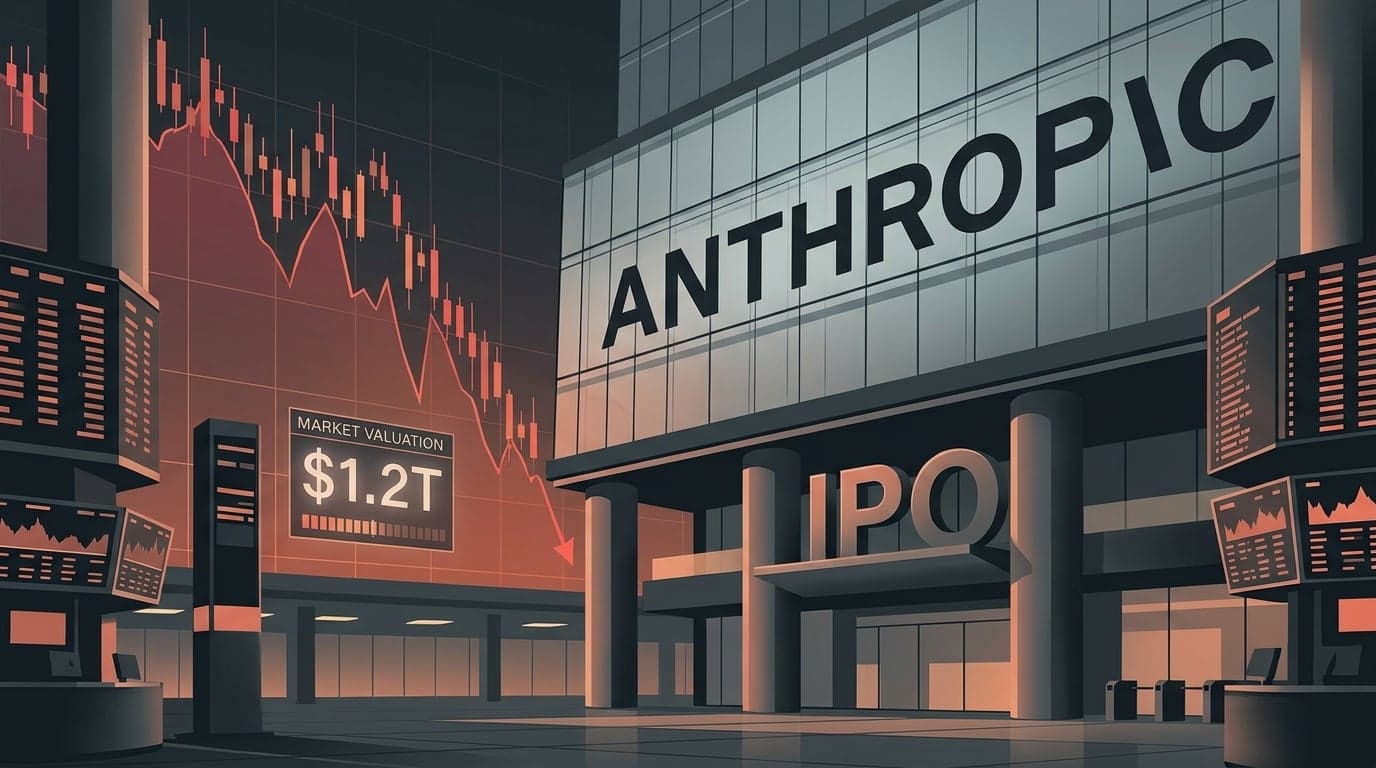
Focusing on OnChain Finance, 2027 Hong Kong Web3 Festival Sets Up Institutional Arena for the First Time
Nov 10, 11:19Claude Fable 5.2 Completes Formal Proof of Fermat’s Last Theorem in Two Days, Anthropic Releases Two Flagship Models Simultaneously
Nov 10, 11:13