From Canton to Solana: Why Is Wall Street's Clearing Giant DTCC Starting to Embrace Public Chains?
TechFlow Summary: For a long time, traditional financial giants exploring asset tokenization have been constrained by regulatory red lines and data privacy requirements, strictly limiting their pilot scenarios to permissioned private chains. However, from the early Canton privacy consortium network pilots to its recent proactive expansion of business touchpoints to high-performance public chains like Solana, DTCC's tokenization strategy has undergone a major paradigm shift.
While private ledgers resolve compliance and permission isolation, their inherent flaw of fragmented liquidity makes it difficult to realize the ultimate vision of cross-institutional capital interconnectivity. This article provides an in-depth analysis of DTCC's three-stage evolution path in tokenization architecture, systematically outlining how it builds the settlement infrastructure for the next-generation capital markets by leveraging the global liquidity of public blockchains, all while adhering to strict settlement discipline.
The Giant of Traditional Financial Settlement Steps into the On-Chain World
The Depository Trust & Clearing Corporation (DTCC) is one of the most critical central nervous systems in the global financial system, effectively monopolizing the back-end clearing and settlement for virtually all U.S. equities, fixed-income products, and institutional securities transactions.
In the traditional financial world, any securities transaction from execution to final ownership transfer typically undergoes a lengthy T+1 or even longer settlement cycle, relying on intricate cross-institutional reconciliation networks.
With the rising wave of real-world asset (RWA) tokenization, DTCC recognized early on that distributed ledger technology could compress reconciliation costs to near zero and enable around-the-clock, nearly real-time atomic settlement.
Stage One: Privacy-Centric Canton Network Pilots
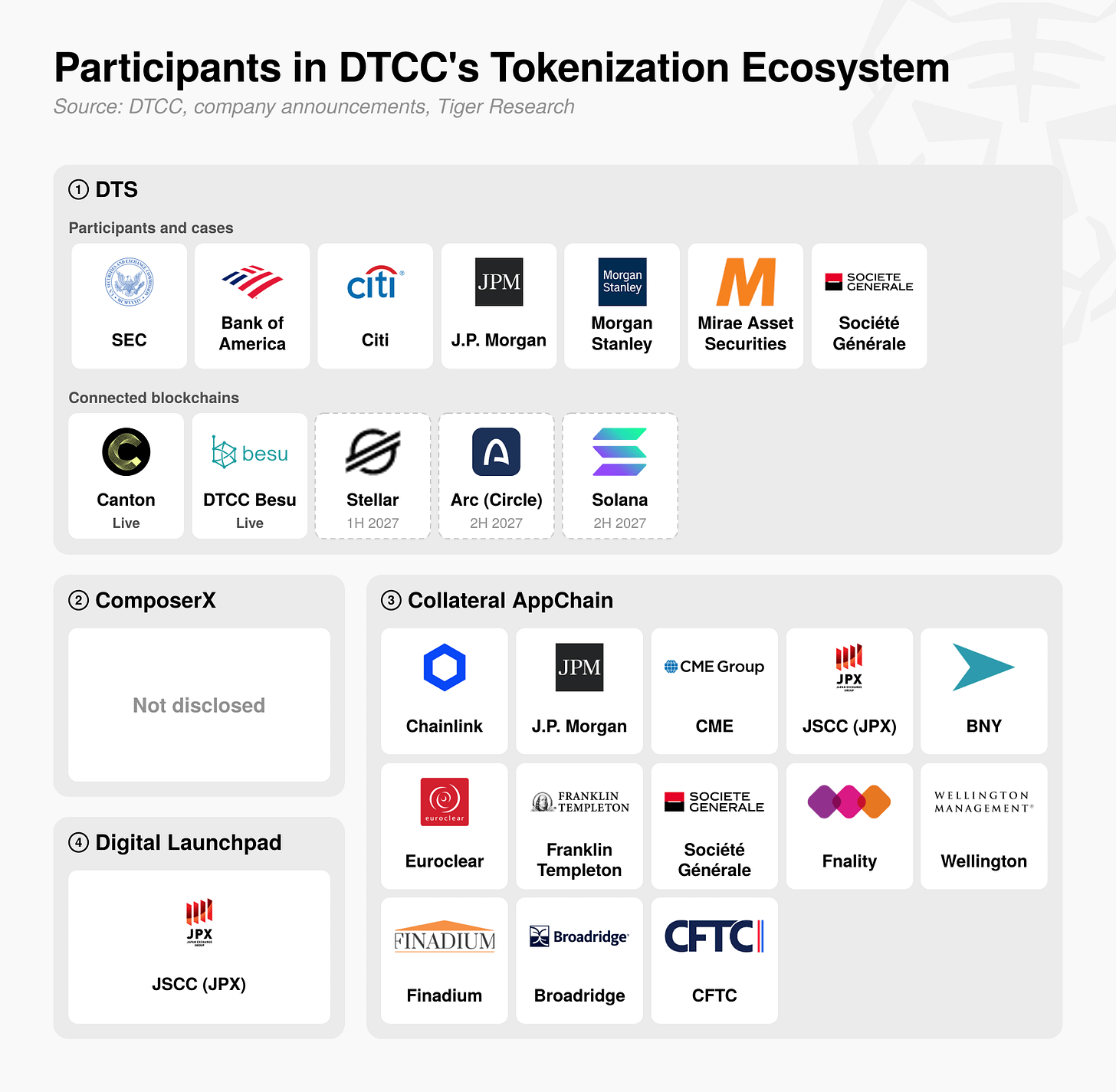
During the initial stages of exploring asset digitalization, DTCC closely collaborated with top Wall Street institutions such as JPMorgan Chase and Goldman Sachs, deeply participating in the construction and stress testing of the Canton Network.
As an enterprise-grade privacy blockchain built specifically for regulated financial institutions, Canton's greatest technical feature lies in enabling consensus-based settlement across different independent subnets while preserving transaction privacy.
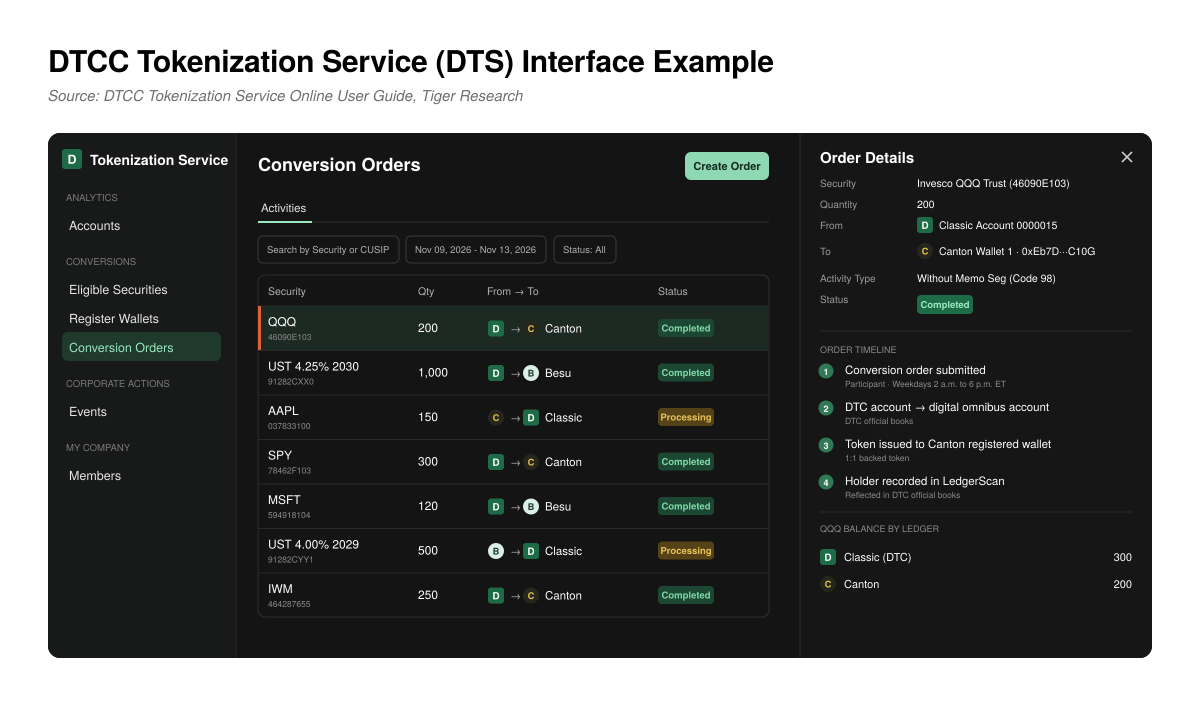
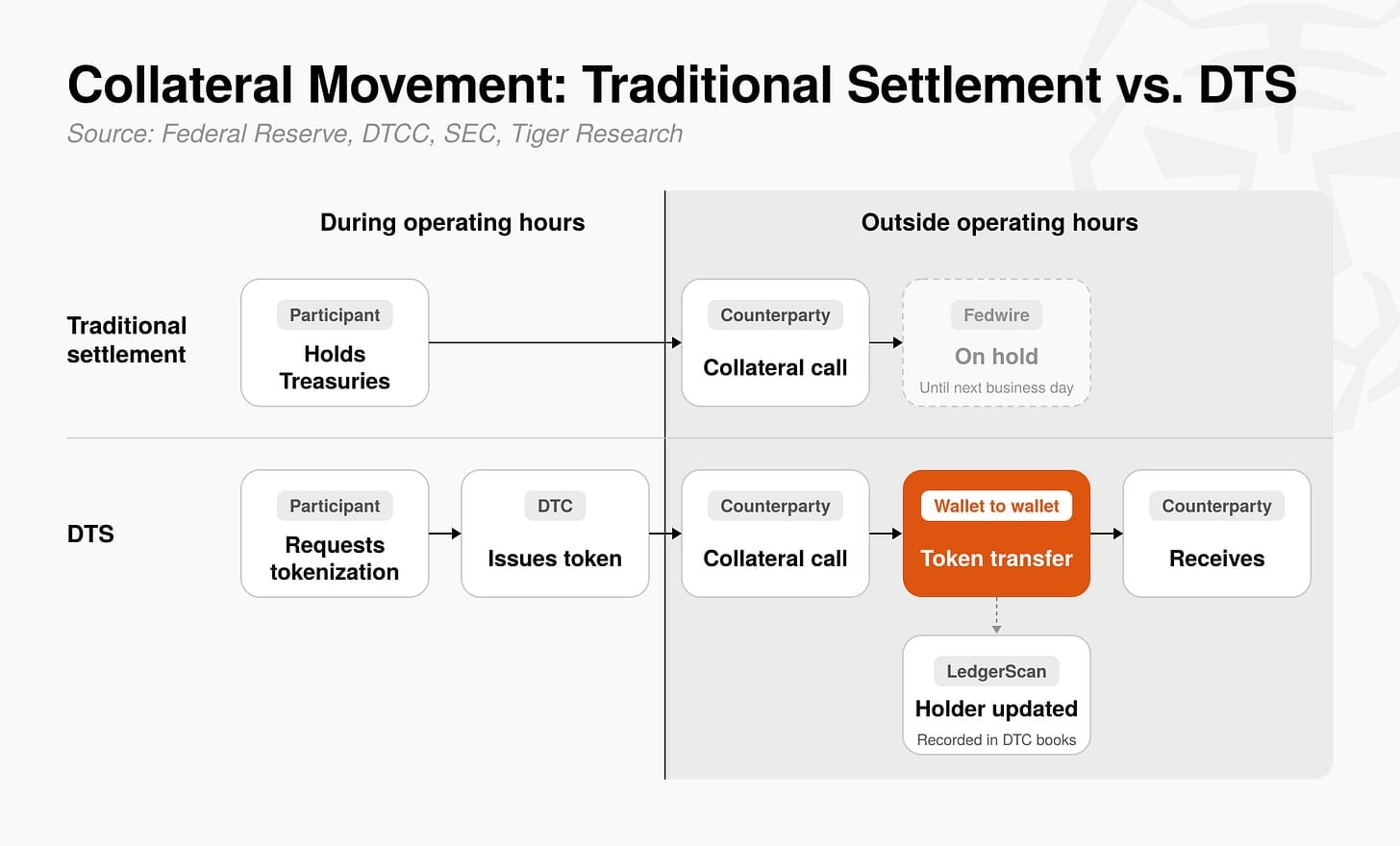
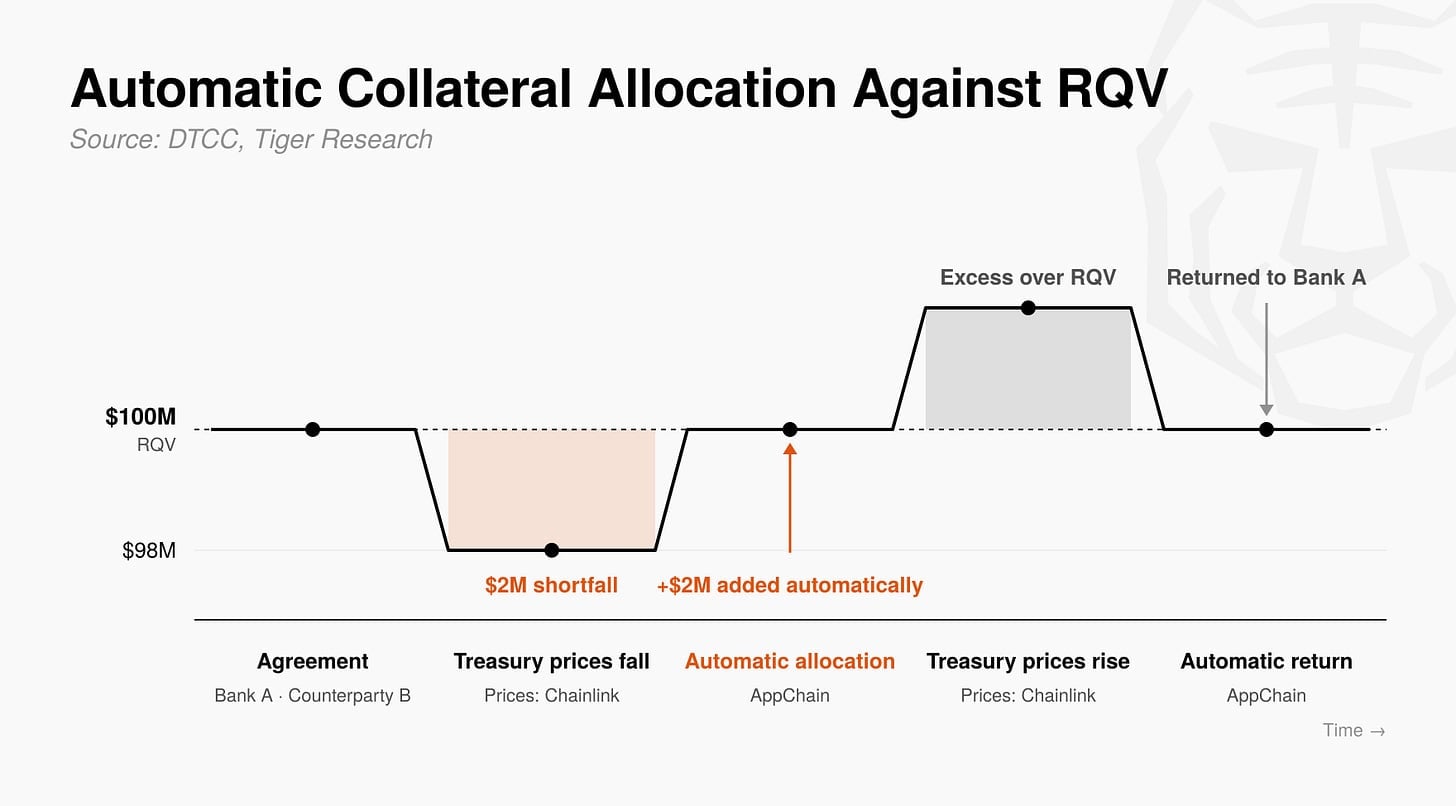
Through the Canton Network, DTCC successfully verified the engineering feasibility of cross-asset collateral mobility, real-time margin calls, and privacy data isolation.
However, private consortium chains are inherently limited by strict access thresholds. Participating entities remain locked within existing licensed financial institutions, unable to tap into the broader global retail investor base and native on-chain liquidity pools.
A Way to Break Through: Why Target the Solana Public Ecosystem?
As institutional demand for deeper liquidity continues to rise, DTCC has begun actively evaluating the performance limits of public chains when handling ultra-large-scale securities settlement tasks.
The high Gas costs on the Ethereum mainnet and relatively slow confirmation delays make high-frequency securities settlement cost-prohibitive; meanwhile, Layer 2 solutions reduce costs but introduce additional complexity regarding liquidity fragmentation and cross-Rollup settlement finality.
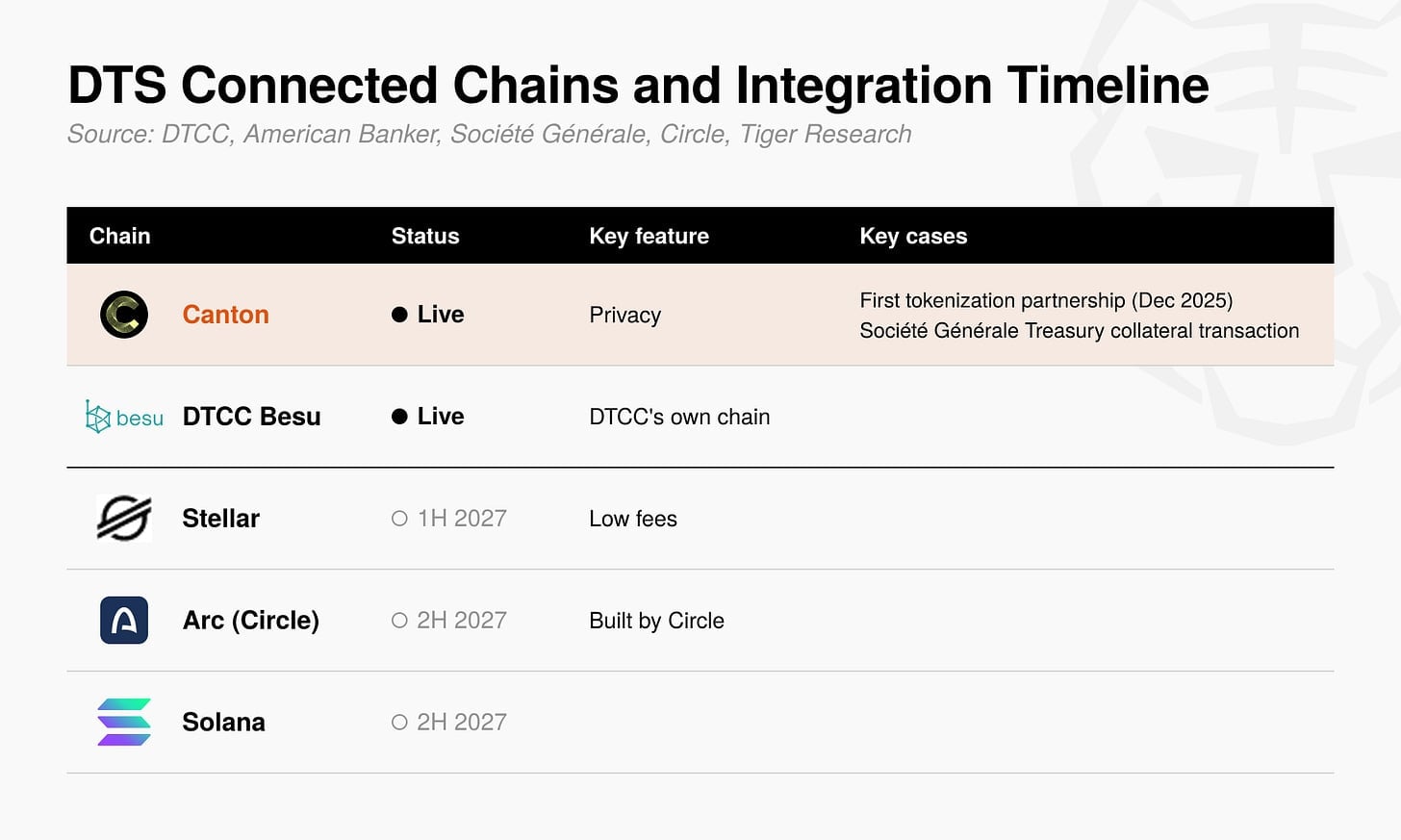
Against this backdrop, Solana, with its single global state, ultra-low transaction fees, and sub-second confirmation speeds, has become the primary candidate for traditional financial institutions aiming to deploy on public chains.
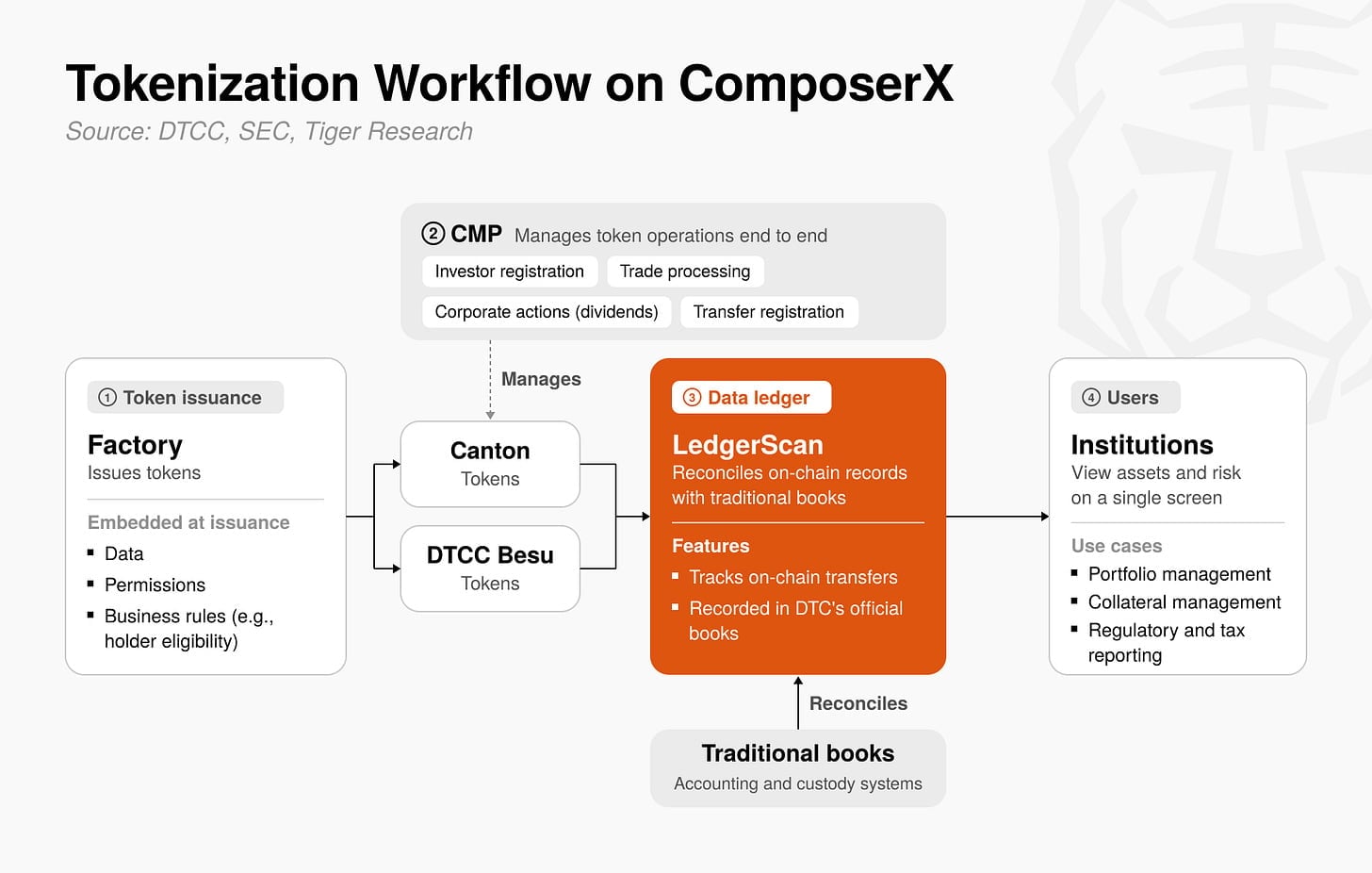
By introducing the programmable Token2022 standard (featuring modules such as transfer hooks, confidential transfers, and native interest calculations), financial institutions can finally natively embed Anti-Money Laundering (AML) checks and transfer compliance reviews directly on public chains without relying on complex smart contract wrapping.
Evolving a Dual-Track Hybrid Architecture
Notably, embracing public blockchains does not mean DTCC will completely abandon its private chain infrastructure.
On the contrary, Tiger Research explicitly points out in its research report that DTCC is constructing a dual-track hybrid architecture featuring an "internal privacy backbone network + external public chain liquidity interface."
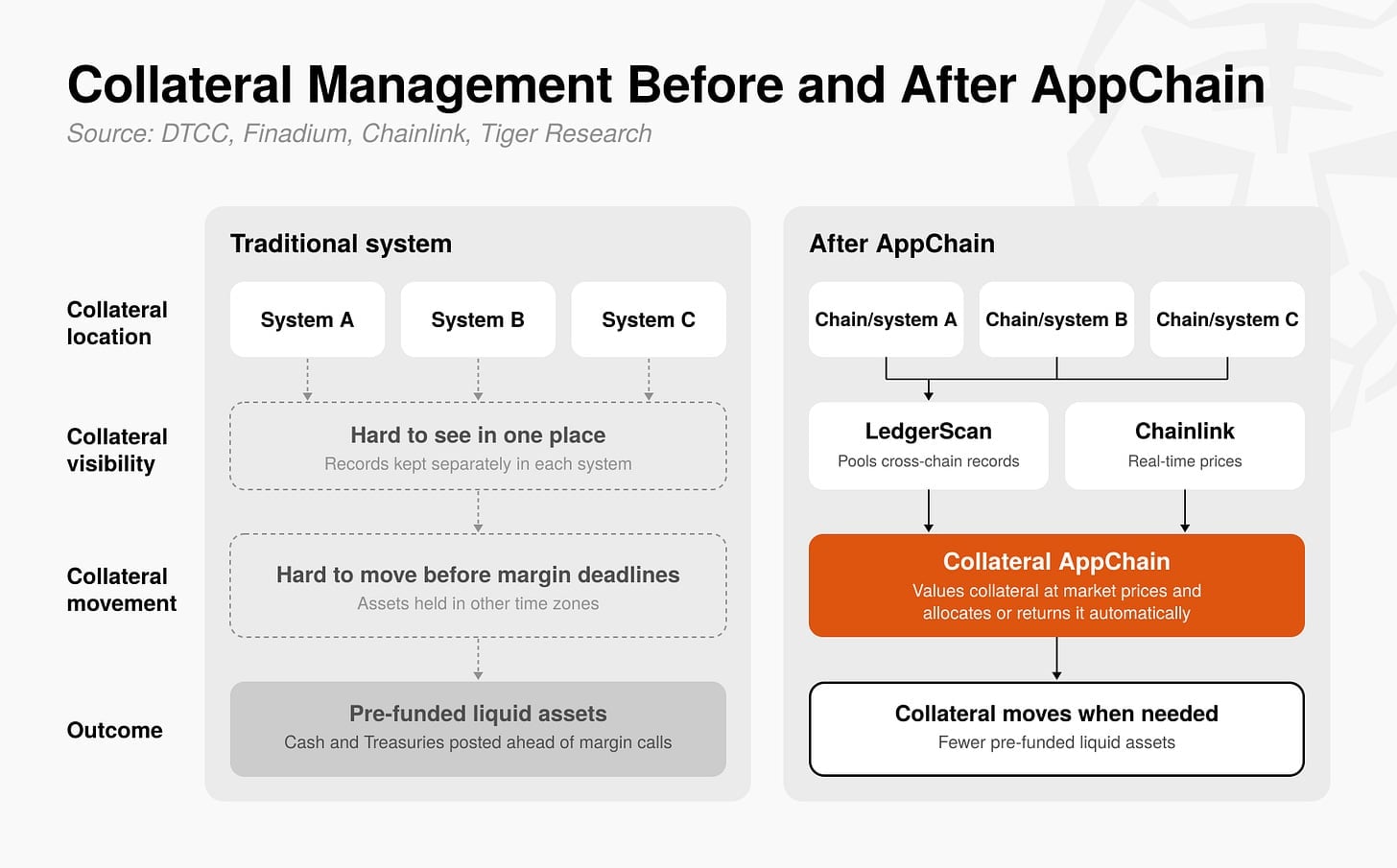
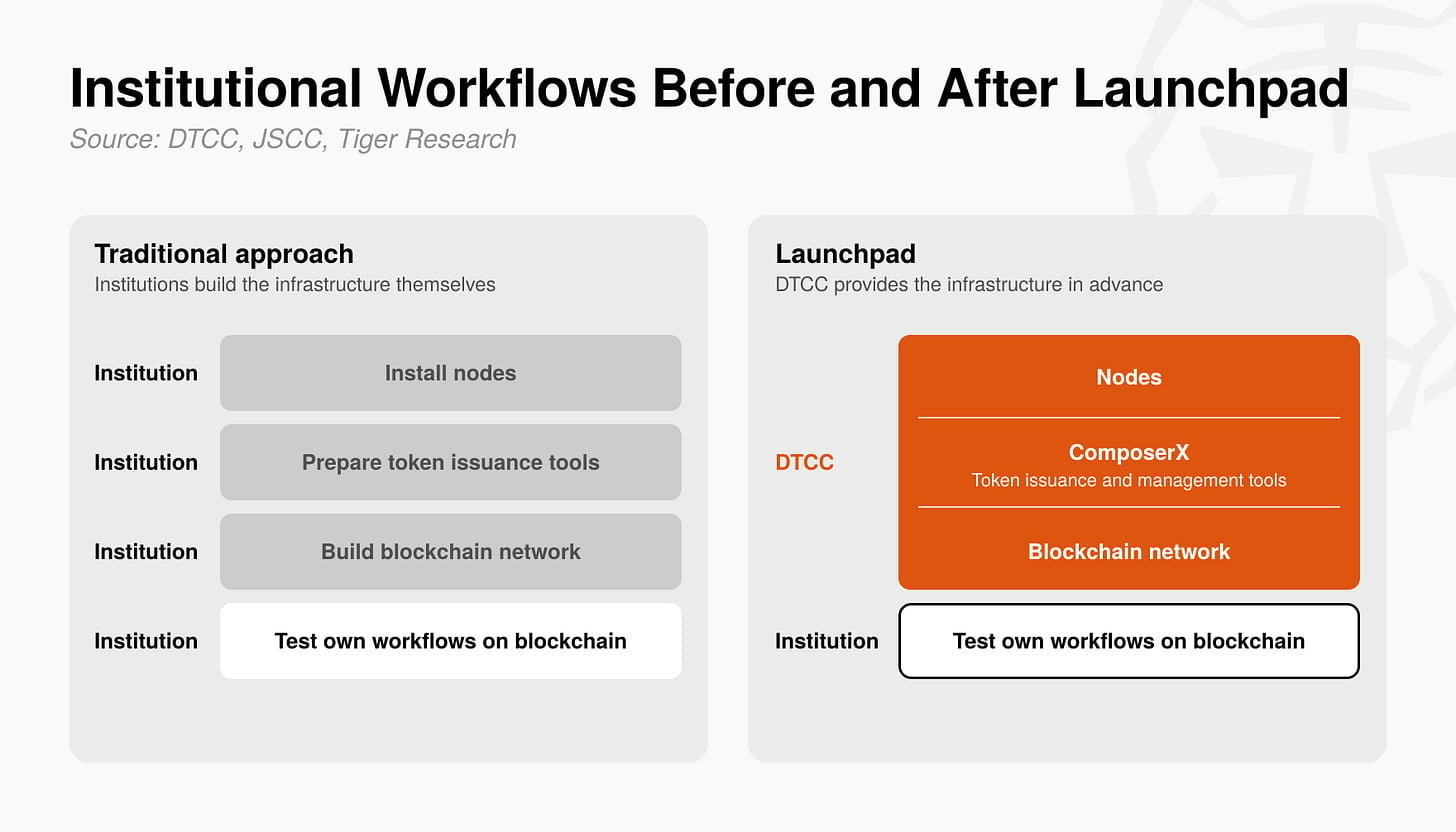
At the foundational layer, massive intra-institutional position allocations and core securities ledger records remain anchored within highly secured permissioned chain nodes; while at the surface layer, compliance-packaged tokenized shares can be mapped via cross-chain interoperability protocols onto high-performance public chains like Solana, enabling seamless integration by global decentralized lending protocols and liquidity pools.
Regulatory Compliance and Future Challenges
Although the technical architecture has matured, the large-scale deployment of tokenized securities on public chains still faces stringent regulatory scrutiny.
The U.S. Securities and Exchange Commission (SEC) maintains an extremely cautious stance regarding the eligibility of non-custodial wallets holding compliant securities directly, end-to-end ownership tracking, and jurisdictional determinations.
Every step forward taken by DTCC is fundamentally about finding a balance point between Washington's regulatory red lines and cutting-edge financial technology innovation.
Moving from closed local networks to an open global settlement network is a leap fraught with resistance, but the underlying leap in capital efficiency it represents is irreversibly reshaping the financial foundation of Wall Street as a whole.
Join the official Coincamps community:
Telegram: https://t.me/coin_camps
Recommended
Cardano Ecosystem Stablecoin DJED Announces Shutdown: After Nearly Four Years of Operation, Holders Must Complete Redemption Before New Year's Day
Nov 18, 14:45
From Crypto Venture Capital to Traditional Venture Capital: The Three Core Competencies That Venture Capital Actually Needs
Nov 18, 14:41
Nvidia Earnings Call: Board Rules Out Huang Return, Guides Q4 to $130B
Nov 18, 14:31
The AI bubble has already burst, yet retail investors are still frantically buying the dip: Hedge fund veteran warns Nvidia risks are far from cleared
Nov 18, 14:31
Research Report Analysis | Space Fund Size Grows to $18 Billion in One Year, but On-Orbit Direct Investment Accounts for Only 3%
Nov 18, 14:18
World Bank Partners with Citi and Circle: Global Aid Funds Expected to Be Settled On-Chain via USDC
Nov 18, 14:15