
Tether Reportedly Charges 20% Recovery Fee from Stolen USDT Victims, Reigniting Controversy Over Centralized Power
TechFlow Summary: Market rumors and overseas media investigations reveal that Tether, the issuer of the world's largest stablecoin, has proposed a reissuance and asset recovery service fee of up to 20% of the frozen funds when assisting some victims of hacking attacks and fraud in recovering on-chain frozen USDT.
This fee structure far exceeds its officially disclosed standard asset recovery rates. In major security incidents involving millions to tens of millions of dollars, the exorbitant fees combined with lengthy cross-border legal proceedings have directly sparked deep skepticism within the crypto community regarding the central privileges of stablecoins.
A Divided Fee Structure: The Gap Between the Standard 10% Recovery Rate and the 20% Case-Specific Recovery Rate
According to Tether's officially published asset recovery guidelines, for ordinary users who mistakenly transfer tokens to incorrect addresses or smart contracts in non-criminal routine situations, as long as the single transaction amount exceeds $1,000, the official typically charges a processing fee of up to 10% (minimum $1,000) along with a non-refundable verification fee.
Investigations by overseas media show that when incidents escalate into large-scale hacking attacks or telecom fraud cases involving millions to tens of millions of dollars, Tether's external legal team increases the fee charged to victims to 20% of the frozen funds.
Calculating based on $10 million in stolen and frozen funds, the maximum processing fee under standard guidelines would be $1 million, whereas the 20% case-specific recovery rate directly pushes the cost up to $2 million, resulting in a single-transaction price difference of up to $1 million.
Besides doubling the fee rate, the return cycle for recovering case-related assets is extremely lengthy and accompanied by stringent review procedures. Victims often have to go through multiple rounds of identity verification and proof of fund sources before entering the subsequent asset unfreezing and reissuance process.
Dual Barriers of Technology and Law: The High Wall of Compliance for Burning and Reminting
From the perspective of the underlying smart contract mechanism, adding case-related addresses to the blacklist (Blacklist) on-chain is merely the first step in freezing assets. Once an address is frozen, the USDT within it cannot be transferred out, nor can it be directly routed back to the victim's account.
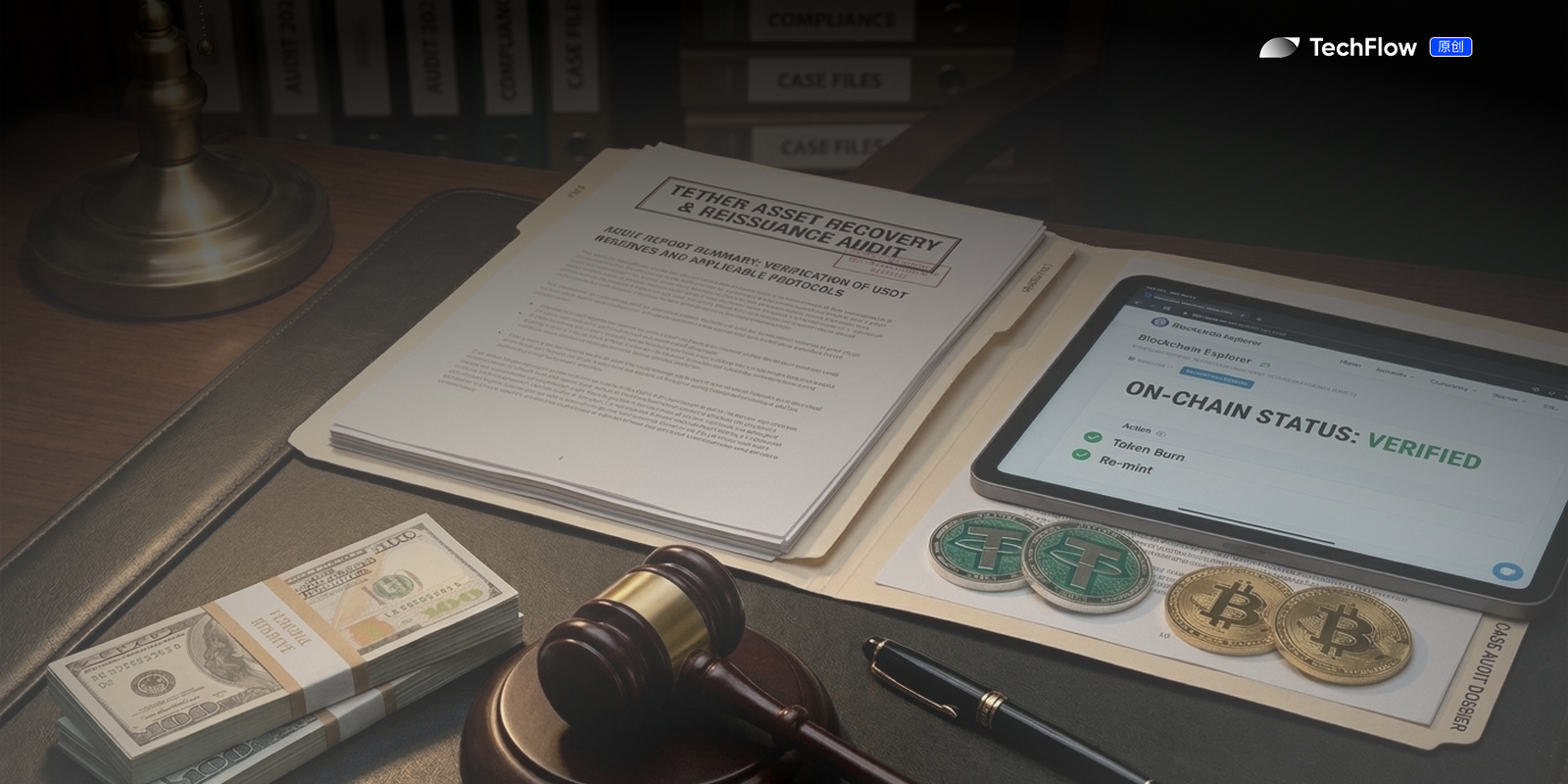
To truly complete the asset return, Tether must invoke the smart contract administrator's private key to execute privileged operations: burning (Burn) the original tokens held at the blacklisted addresses and reminting (Re-mint) an equivalent amount of USDT to the designated addresses specified by the victims.
This technical operation is highly sensitive from a legal perspective. Tether must ensure there are no disputes over asset ownership; otherwise, if the holder of the original address files a lawsuit, the issuer faces severe civil liability risks.
The reissuance of case-related assets heavily relies on cross-border legal defenses, formal court forfeiture orders (Forfeiture Order), and coordinated intervention from law enforcement agencies in multiple countries. Tether typically argues that the charge of up to 20% is precisely intended to cover massive overseas compliance investigations, legal team expenses, and potential litigation costs.
The Centralization Paradox: Technological Relief or Privilege Rent-Seeking
The exposure of high recovery fees has quickly opened a rift in public opinion within the crypto community and the legal circle. Some victim legal representatives have publicly questioned that after suffering losses from hacker attacks, victims are asked by the issuer to pay fees of up to 20%, relying on absolute freezing and reminting powers, which lacks transparent pricing benchmarks.
Critics point out that in the absence of competitive market alternatives, stablecoin issuers leveraging centralized control to charge high percentages to victims eager to recover losses is commercially akin to rent-seeking.
Supporters and compliance experts offer a different perspective. In decentralized public blockchain environments, once a private key is leaked or a contract is compromised, stolen on-chain assets typically face a 100% permanent loss outcome.
It is precisely by relying on the issuer's centralized intervention capabilities that victims retain a realistic path to recover 80% of their assets during cross-border asset tracing efforts. This fee controversy has once again thrust the underlying institutional contradictions of the stablecoin industry into the spotlight: between the practical demand for asset recoverability and the decentralized censorship-resistant principles, the power boundaries and pricing fairness of centralized issuers remain in a regulatory vacuum.