J.P. Morgan Decrypts the CPO Supply Chain: Mass Production Accelerates, GlassBridge Remains a Long-Term Variable

TL;DR
· Morgan Stanley's supply chain check shows that CPO capacity, test efficiency, and order momentum are all improving.
· TSMC's official roadmap points to mass production in 2026, with Morgan Stanley expecting PIC capacity to reach at least 25kwpm by 2028.
· GlassBridge has long-term potential, but short-term mainstream projects still primarily rely on existing FAU and grating-coupling solutions.
According to Morgan Stanley's latest supply chain check, the timeline for CPO to transition from prototyping to mass production is becoming clearer. TSMC's Silicon Photonics (PIC) capacity planning has been increased, wafer-level testing time has been reduced, and Asian supply chain companies like FOCI and AllRing are also moving into a more defined order ramp-up phase. For AI data centers, CPO is an important path to increase network bandwidth and reduce interconnect power consumption. TSMC's official annual report has revealed that COUPE-related CPO solutions are expected to enter mass production in 2026, with NVIDIA also stating in June that it has begun shipping the Spectrum-X CPO switch to some partners. The current change is not that bottlenecks have disappeared but that the mass production chain is beginning to provide a more verifiable rhythm.
The market is also currently focused on GlassBridge. It is seen as a potentially disruptive new optical coupling solution that could challenge traditional FAU in terms of high density, reworkability, and thermal compatibility. However, Morgan Stanley's check shows that GlassBridge currently mainly serves edge coupling and one-dimensional fiber layouts and has not yet entered mainstream projects in TSMC COUPE. In the short term, the mainline is not for new technologies to immediately disrupt old solutions but for the existing mass production system of CPO to move forward.
The mass production foundation of CPO first falls on TSMC's PIC capacity. Morgan Stanley expects TSMC's PIC capacity to start at around 500 wafers per month, ramp up to 10kwpm in the second quarter of 2026, reach 15kwpm by the fourth quarter of 2026, and expand to at least 25kwpm by 2028.
These numbers are not officially disclosed by TSMC and are part of Morgan Stanley's supply chain check and model assumptions. Publicly, TSMC has confirmed in its annual report that COUPE is related to its Silicon Photonics and 3DFabric technologies, achieving 200Gbps with multiple customers in 2025, with CPO solutions aiming for mass production by 2026. Institutions like TrendForce also state that TSMC's "COUPE on Substrate" is expected to start mass production in the second half of 2026.
In Morgan Stanley's shipment assumption, the global CPO switch shipment volume in 2026 is approximately 23,000 units, with the 100T switch being the main product, led by NVIDIA. The shipment volume increases to 59,000 units in 2027 and reaches 200,000 units in 2030. If the yield rate continues to improve, the actual shipment volume of the TSMC PIC capacity's optical engine could reach around 7.8 million units in 2027.
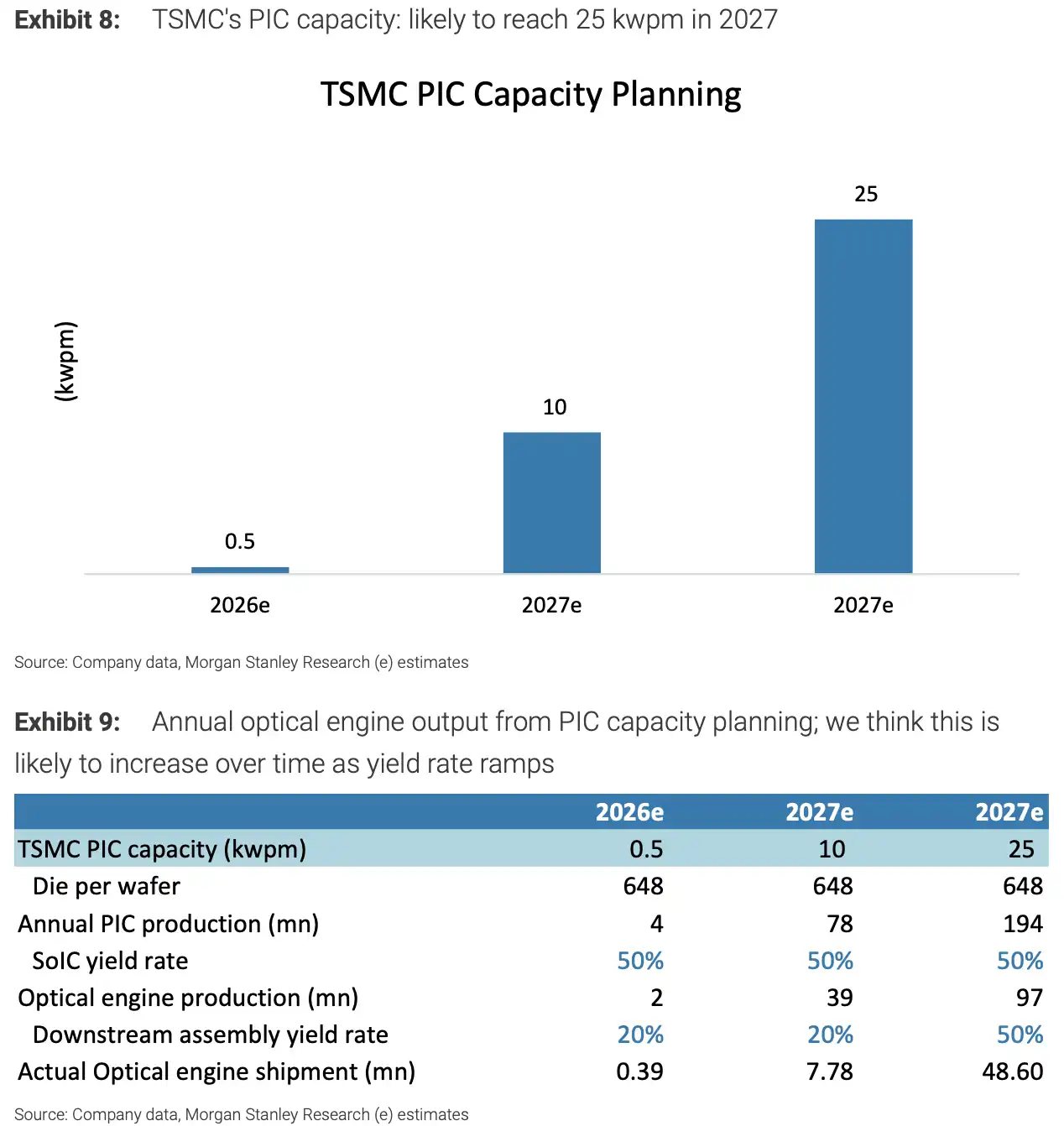
In 2026, it is expected to ramp up from about 0.5kwpm to 10kwpm, reaching at least 25kwpm in 2028, amplifying the shipment volume of the optical engine under different yield rates.
The PIC capacity is just a prerequisite. What truly determines the shipment pace includes packaging, testing, optical components, system integration, and customer platform integration. CPO requires both electrical and optical signals to be jointly validated at an earlier stage, and mass production is more challenging than traditional pluggable optical modules.
One of the most significant improvements in Morgan Stanley's inspection is the efficiency enhancement of CPO Insertion 2 wafer-level testing.
The testing time for this stage has been improved from one day per wafer in the second half of 2025 to currently about 6 hours per wafer. The goal for the next 6 to 12 months is to further reduce it to 3 to 4 hours per wafer.
Insertion 2 is the first node where both optical and electrical signal testing are conducted simultaneously, usually difficult to bypass. If this stage takes too long, even if the frontend wafer and packaging capacity are in place, the final production pace will be constrained by the test throughput.
Improving testing efficiency is a crucial signal for CPO's transition from engineering samples to commercial shipments. However, it is not the ultimate answer yet. To enable CPO to enter AI data centers on a large scale, subsequent proof is still needed to show that testing equipment, probes, packaging plants, FAUs, lasers, and system fabs can collaborate stably and maintain yield rates under higher production volumes.
At the company level, FOCI and AllRing are the two more directly benefited lines in this report.
Morgan Stanley expects that FOCI's mass production revenue of CPO will start in July and ramp up continuously in 2027, mainly supplying NVIDIA Spectrum CPO switches. By the second half of 2027, FOCI may also begin shipping FAUs to AMD's MI500 series, with more production customers contributing revenue in 2028.
In the short term financially, FOCI is still facing the cost of expansion and relocation. In 2026, due to the capacity transfer of the new Thailand plant, the ramp-up preparation of the SiPh/CPO production line, and one-time expenses related to a new stock issuance, FOCI is expected to record a loss of NT$0.41 per share. By 2027, revenue is expected to increase to NT$8.694 billion. The model assumes that NVIDIA's revenue contribution to FOCI will increase from 29% in 2026 to 76% in 2027, further rising to 92% in 2028.
The changes at AllRing are more directly reflected in the profit forecast. Morgan Stanley has raised AllRing's 2026 revenue estimate to NT$9.405 billion, an increase of 13% from the previous estimate. The 2026 EPS has been raised by 15% to NT$25.48, and the 2027 EPS has also been raised by 2%. The target price is maintained at NT$1,580, with a rating of Hold.
The highlight of AllRing is not only in CPO. Its 2026 CPO-related revenue, including FAU coupling, AOI, and die bonder equipment, is expected to account for 11% of total revenue, rising to 19% in 2027 and reaching 26% in 2028. The CoWoS business is projected to grow by 55% and 53% in 2026 and 2027, respectively. SoIC is also included in the long-term growth assumption, with its revenue contribution expected to be approximately 4% in 2027.
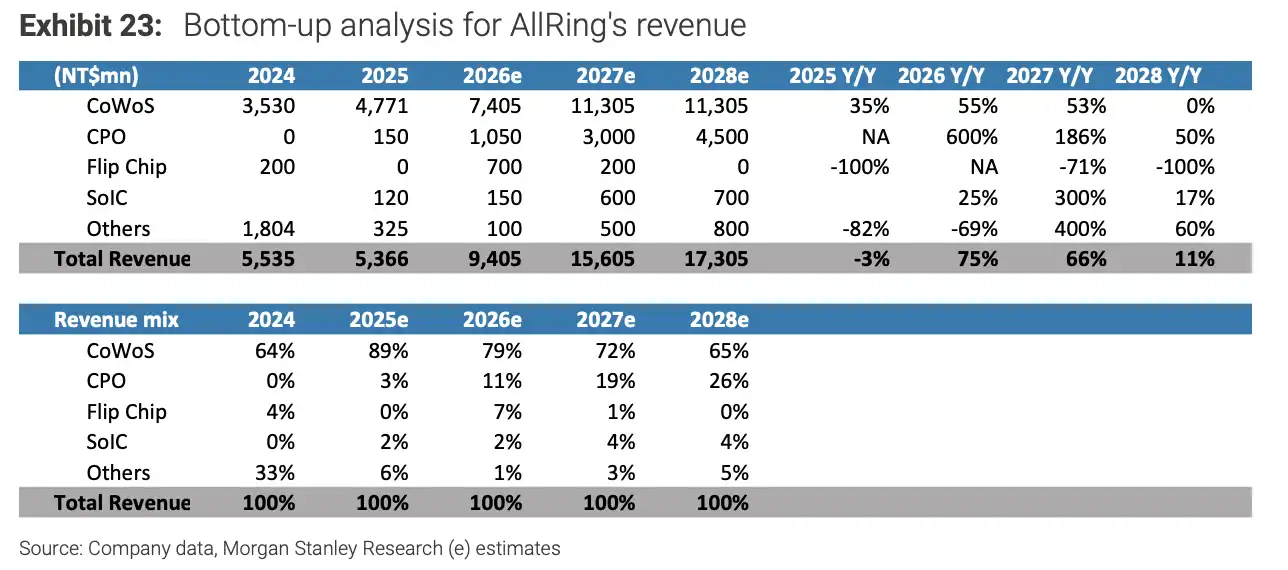
AllRing Revenue Breakdown. From 2024 to 2028, changes in CoWoS, CPO, and SoIC sub-revenue, with CPO's share expected to increase from 0% to 26%.
Morgan Stanley also stated that AllRing is the sole Wafer-on-Wafer die bonder equipment supplier for TSMC's SoIC. As AMD, NVIDIA, Apple, Broadcom, and other customers continue to shift to chiplet designs, the expansion of SoIC capacity will also drive demand for related equipment. TSMC's 2026 SoIC capacity target is 14kwpm.
The market is focusing on GlassBridge because it provides a coupling path different from traditional FAUs.
According to Corning's official information, GlassBridge uses wafer-level glass ion-exchange waveguides and a detachable passive alignment connector architecture, which can support high-density fiber-to-PIC connections and enhance manufacturing, testing, and rework flexibility. Corning's disclosed O-band fiber to PIC coupling loss is approximately 1.5dB. Compared to traditional V-groove FAUs, it has differentiated advantages in manufacturing scalability, thermal compatibility, and reworkability.
These advantages have not yet translated into mainstream production status. A Morgan Stanley inspection shows that currently GlassBridge is mainly suitable for edge coupling and one-dimensional fiber layout, while the TSMC COUPE platform and near-term mainstream projects such as NVIDIA, AMD, and Ayar Labs still primarily rely on grating coupling, making it easier to achieve mass production in the latter half of 2026.
The traditional FAU supply chain is still difficult to be rapidly replaced in the short term. According to Morgan Stanley's assessment, TFC's competitiveness in the high-end FAU sector is not easily replaceable by GlassBridge for the time being. On the other hand, if Largan remains only at the V-Groove solution, it may face greater competitive pressure.
GlassBridge is more like a long-term technical roadmap. Only if it can transition to a more complex two-dimensional fiber layout in the future, enhance the maturity of the supply chain, and be adopted by mainstream platforms, it may exert more substantial pressure on the traditional FAU market space.
The signal from this supply chain inspection is that the CPO production chain is now clearer than before, but the risks have not vanished.
TSMC PIC capacity planning, Insertion 2 test efficiency, FOCI's NVIDIA project revenue, AllRing's CPO, and advanced packaging equipment orders all point in the same direction: the AI data center optical interconnect upgrade is transitioning from concept validation to more specific capacity and revenue arrangements.
However, CPO mass production still depends on several practical conditions. Whether wafer-level testing can continue to be shortened to 3 to 4 hours per wafer, whether the yield can be maintained at higher capacity, whether foundries, packaging, chip design, FAU, lasers, and system manufacturers can complete collaborative designs, and whether the mass production platforms of NVIDIA, AMD, and other customers are progressing as planned will all impact the subsequent shipment schedule.
The emergence of GlassBridge also introduces uncertainty into the long-term space retention of the existing FAU supply chain. It has not yet disrupted the traditional FAU in the short term, but the technical roadmap may still evolve. For the CPO supply chain, the current tougher validation lies in whether capacity, test efficiency, customer onboarding, and actual revenue can be continually realized.
Recommended
Desk: Brent Crude Tops $110, Musk's Net Worth Drops 528.6 Billion in Four Days After Tesla Roadster Launch
Oct 17, 21:49
JST Fifth Buyback and Burn Successfully Concludes: Over 170 Million Tokens Worth Approximately $23.53 Million Burned, Buyback Mechanism Set for Comprehensive Upgrade
Oct 17, 20:10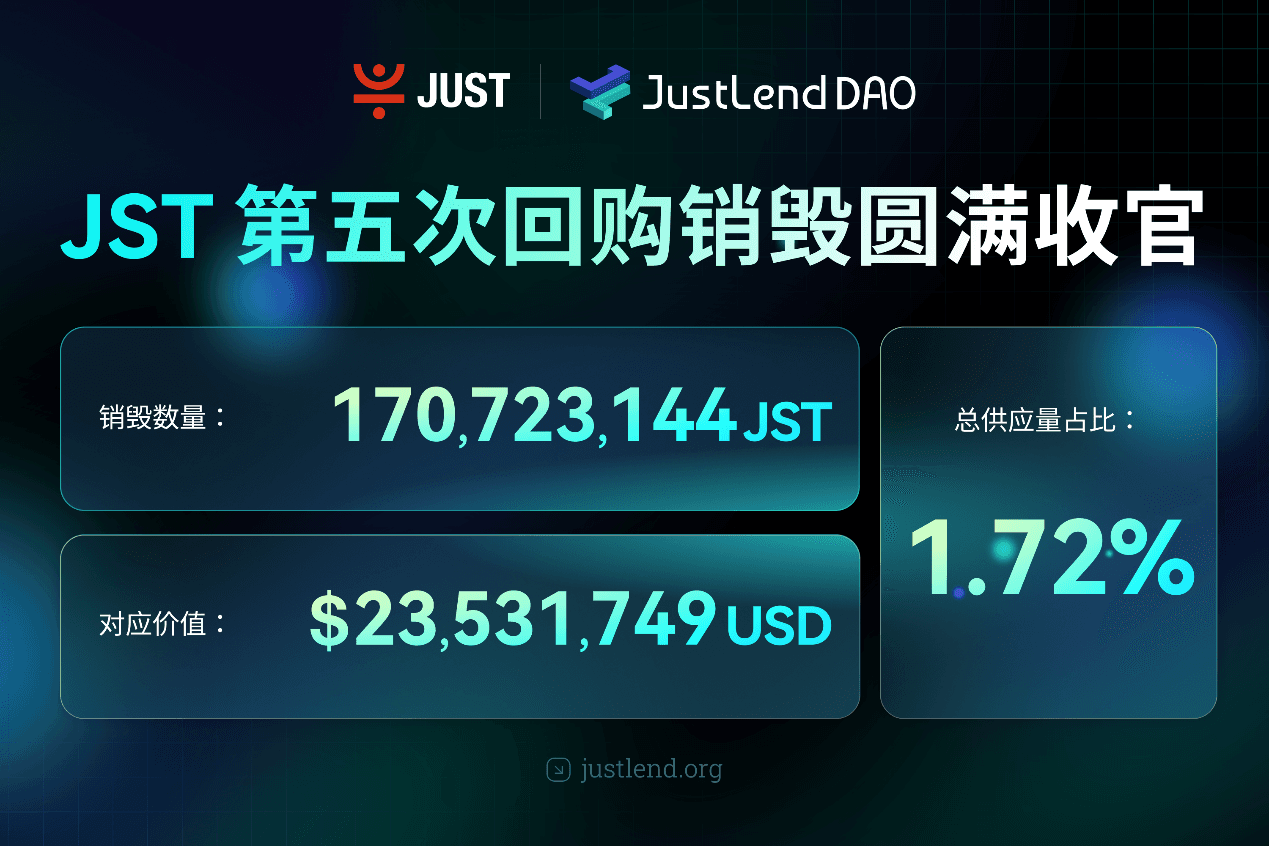
BitTorrent Brand Upgrade and Initial BTT Buyback & Burn Launch Simultaneously, Dual Engines Usher in New Era of Web3 Infrastructure
Oct 17, 20:00
Asia Market Daily: Japan's BOJ signals more rate hikes while Korea targets offshore perpetual platforms (2026/10/17)
Oct 17, 17:01Why did Papertrade backfire on you?
Oct 17, 17:01
The 'Strict Father' of Northern Myanmar: This Company Deploys 200,000 "AI Best Actors" to Strike Back Against Scammers
Oct 17, 15:34