South Korea Raises Leveraged ETF Participation Threshold, Will the AI Chip Market be Backfired by Product Mechanism?
TL;DR
· South Korea will advance tighten the single-stock leverage ETF/ETN, with a 30 million KRW cash threshold set to be implemented on July 31.
· The new rule will dampen new speculative demand, but existing leverage positions and daily rebalancing may still amplify volatility.
· Related Tickers: Samsung Electronics (005930.KS), SK Hynix (000660.KS), KOSPI, South Korea single-stock leverage ETF/ETN.
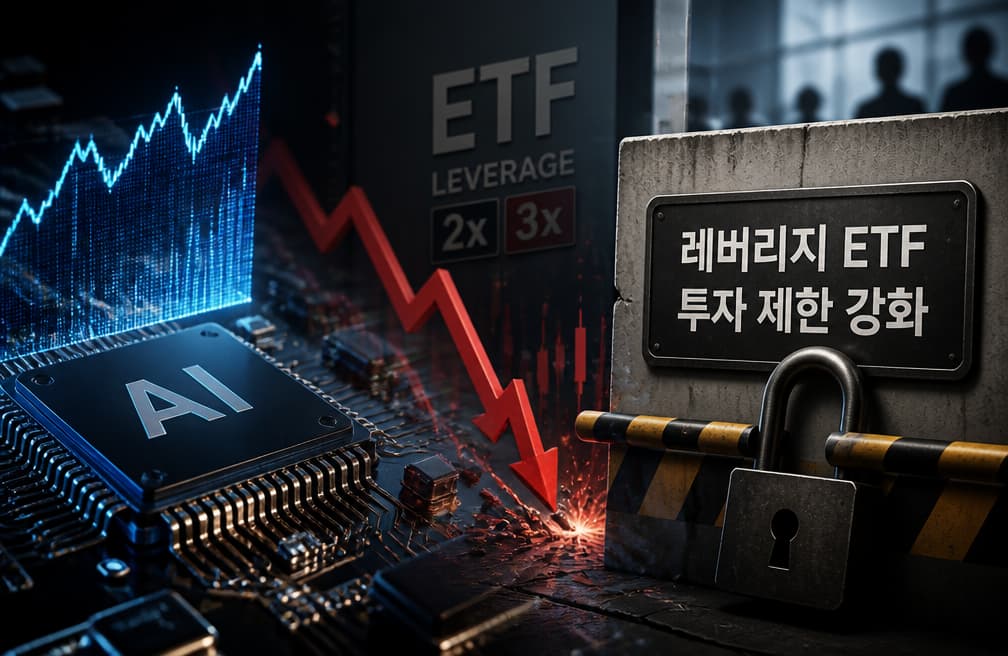
The Financial Services Commission of South Korea accelerated the tightening of the rules for single-stock leverage products in late July, bringing forward the investor threshold, originally planned to be implemented in stages, to around July 31.
According to a July 24 report by the Korean media SBS, investors will now need at least 30 million KRW in pure cash in their accounts to participate in such products. The previous threshold was 10 million KRW, and substitutes such as stocks, ETFs, and bonds could also be included to a certain extent. The new rule applies to new or additional investments and covers both domestic and overseas listed single-stock leverage products.
The focus of this announcement is on 2x single-stock leverage ETF/ETN products that track Samsung Electronics and SK Hynix. Regulation has simultaneously halted the launch of similar new products, restricted the marketing of existing products, and mandated enhanced premium-discount management.
What the market is observing is not just South Korea cooling down retail speculation. The more pressing issue is how much of the surging trading volume in Korean semiconductor stocks over the past two months is driven by AI semiconductor fundamentals and how much is amplified by leverage products magnifying buying and selling pressure.
Chip Trading Dominates Market Temporary
Single-stock leverage ETF/ETN does not buy a basket of stocks but focuses on a single stock, aiming to magnify the daily price movements of the underlying stock by about 2x. If Samsung Electronics rises by 3% on a given day, the targeted increase of the related 2x product is approximately 6%, and the same amplification occurs in case of a decline.
These products were introduced at the end of May, coinciding with the surge in AI semiconductor trading. Samsung Electronics and SK Hynix were already core weights in the Korean market, and retail investors tend to prefer high-volatility assets. With low thresholds, strong themes, and clear targets all combined, the products rapidly expanded.
The Financial Services Commission of South Korea stated in an English announcement on July 16 that since the launch of the related products on May 27, their market value and trading volume have rapidly increased, triggering concerns about the expansion of global semiconductor stock volatility. This means that the trading structure has begun to impact underlying stocks.
According to Bloomberg, Samsung Electronics, SK Hynix, and related leveraged and inverse products once collectively accounted for over 70% of the trading value of the South Korean stock market. This data is not based on regulatory criteria, but it is sufficient to explain why, less than two months after the products were listed, regulators decided to apply the brakes early.
Daily Rebalancing Amplifies Pro-Cyclical Forces
Where these products truly affect the market is in daily rebalancing. In order to maintain a daily target of approximately 2x leverage, issuers and liquidity providers need to continually adjust the underlying stocks or related exposures.
In simple terms, when the underlying stocks rise, the products may need to increase exposure to maintain the target leverage. When the underlying stocks fall, the products may need to decrease exposure. This creates pro-cyclical forces, buying on the rise and selling on the fall.
If the product scale is small, rebalancing is just a background operation. However, when the related products and underlying stocks dominate exchange trading, it transitions from a technical detail to part of market pricing.
This is also why an explosion in trading volume cannot be directly equated to strengthened fundamental demand. AI server orders, HBM orders, and storage prices will affect the valuation of Samsung Electronics and SK Hynix, but when short-term funds enter and exit through 2x leveraged products, a large amount of technical trading will be mixed into the trades.
Investors are prone to misinterpret this situation. Seeing increased trading volume and stock price surges, it's easy to interpret it as institutions continuing to increase their allocations to AI hardware assets. In actual trading, retail subscriptions, chasing funds, hedging of inverse products, and daily rebalancing may together create a liquidity illusion.
Cash Thresholds Pressure New Speculation
The South Korean regulators increased cash thresholds because it is more direct than risk warnings. Requiring an account to have 30 million Korean won in pure cash is equivalent to blocking a portion of small, high-frequency, and rolling participation funds.
“Pure cash” is at the core of this adjustment. In the past, investors could include stocks, ETFs, bonds, and other assets that made up 70% of the market value towards the threshold, resulting in minimal actual financial pressure. After the new regulations take effect, existing holdings cannot substitute for the cash requirement, and the ability of retail investors to continuously participate in leveraged products through asset portfolios will decrease.
Suspending the listing of new products sends another signal. The regulators are not only dealing with abnormal trading in a few products but are indicating to issuers that the expansion pace of single-stock leveraged ETFs/ETNs needs to slow down, at least until volatility stabilizes, before further expansion.
From a market perspective, the new regulations may suppress two types of demand. One is from new retail investors who originally wanted to use a small amount of capital to seek amplified returns from AI chips, and the other is from the ETF/ETN trading ecosystem that relies on high turnover and high volume. Once product trading volume declines, the mechanical impact of rebalancing on underlying stocks will also weaken.
However, this does not mean that South Korean regulators are negating the logic of AI chips. What has been cut off is the low-threshold leverage entry point, not HBM, the memory cycle, or AI capital expenditure itself. For Samsung Electronics and SK Hynix, valuation will still ultimately return to orders, profit margins, and industry cycles.
Existing Positions Determine Cooling Rate
The clearest role of the new regulations is to block new speculation, while the most difficult to assess is how existing positions will trend.
Whether investors already in the market will continue to hold and gradually exit, or concentrate exits under threshold and volatility pressure, will determine whether this cooling-off period will be a smooth ebb or trigger new price fluctuations. Regarding the scale of product assets, the market has different estimation methods, and it is more appropriate to see it as a directional signal for crowded trades.
Seoul-based KB Securities investment strategist Peter Kim takes a cautious view. He believes that single-stock leverage ETFs have become more like speculative tools than long-term investment tools. If holdings remain suspended and volatility persists, market stagnation could be prolonged.
While the cash threshold can prevent more retail investors from rushing in, it cannot automatically absorb existing crowded positions. If underlying stocks continue to rise, existing pressure may be masked. If AI chip trading weakens, the selling pressure and rebalancing of leveraged products could still amplify the downturn.
After July 31, the variable that truly needs to be watched is whether the trading structure has returned to normal. If turnover of related ETFs/ETNs decreases, and intraday volatility in Samsung Electronics and SK Hynix narrows, it indicates that regulators have begun to sever the product mechanism's control over market trading.
Conversely, if turnover decreases but volatility remains high, or if existing products continue to amplify selling pressure amid a decline, the issue is not just about a low threshold. For investors chasing the AI hardware market trend, this validation point is more important than the regulatory news itself.
Welcome to join the official BlockBeats community:
Telegram Subscription Group: https://t.me/theblockbeats
Telegram Discussion Group: https://t.me/BlockBeats_App
Official Twitter Account: https://twitter.com/BlockBeatsAsia
Recommended
When even the well-known Robinhood account hack doesn't deter people from rushing in, is it a sign that the on-chain market sentiment has peaked?
Jul 24, 17:44
Interview with Matching Hearts Founder Xinxun Zeng: From Kimi's Departure to His AI Matchmaking Journey
Jul 24, 16:59
Trillion-Dollar SK Hynix Empire Inheritance Plot Revealed in Choi Tae-yoon's Divorce Case Closing
Jul 24, 16:51
In a year, its valuation has surged nearly 7-fold, and the large-scale model "Second-hand Dealer" OpenRouter is about to be acquired.
Jul 24, 15:50
Goldman Sachs Analysis: Intel's Q2 Exceeds Expectations Across the Board, Manufacturing Transformation Still Pending
Jul 24, 15:34
Revenue Growth of 25%? Intel Delivers an Easily Misunderstood Financial Report
Jul 24, 15:09