
As restrictions on Nvidia's computing power rentals tighten, the U.S. plans to regulate remote computing power in overseas data centers.
TL;DR
· The U.S. Department of Commerce's Bureau of Industry and Security (BIS) has released a pending interim final rule that would require overseas data centers to obtain a license before providing advanced computing power above a threshold to Chinese companies.
· The control target shifts from chip flows to the end users of computing power, bringing third-country data center channels under a licensing regime; the rule has not yet taken effect.
· Related tickers: Nvidia, AMD, Southeast Asian data center operators.
The U.S. Department of Commerce's Bureau of Industry and Security (BIS) has released a pending interim final rule that would extend export controls from chip flows to the end users of computing power: overseas data centers must obtain a license before providing advanced computing power above a certain scale to Chinese companies. The rule has not yet been published in the Federal Register, and specific provisions are subject to the final text. What it aims to regulate is not where chips are shipped, but whether Chinese companies can remotely access these chips overseas.
The U.S. previously banned direct exports of advanced chips to China. But Chinese companies can rent data centers in Malaysia, Singapore and elsewhere to remotely access local Nvidia chips for model training. The chips physically do not enter China, yet computing power returns to Chinese customers through the network—a path that was previously entirely legal.
BIS acknowledged in the rule's explanatory notes that advances in cloud computing have made remote access a new circumvention method. Data center investment in Southeast Asia has expanded rapidly in recent years, with Malaysia and Singapore becoming regional computing hubs, and some of that demand comes from Chinese companies. From U.S. shipments and third-country deployment to cross-border access, the entire chain falls outside the coverage of previous controls.
Scale is why the White House intervened. The Biden administration's AI diffusion rule proposed in early 2025 was intended to regulate more broadly, covering global licensing and model weight controls, but was never implemented and was rescinded in May 2025. The new rule shifts toward more focused controls on remote end-uses, and whether it continues the rescission approach will depend on the final text.
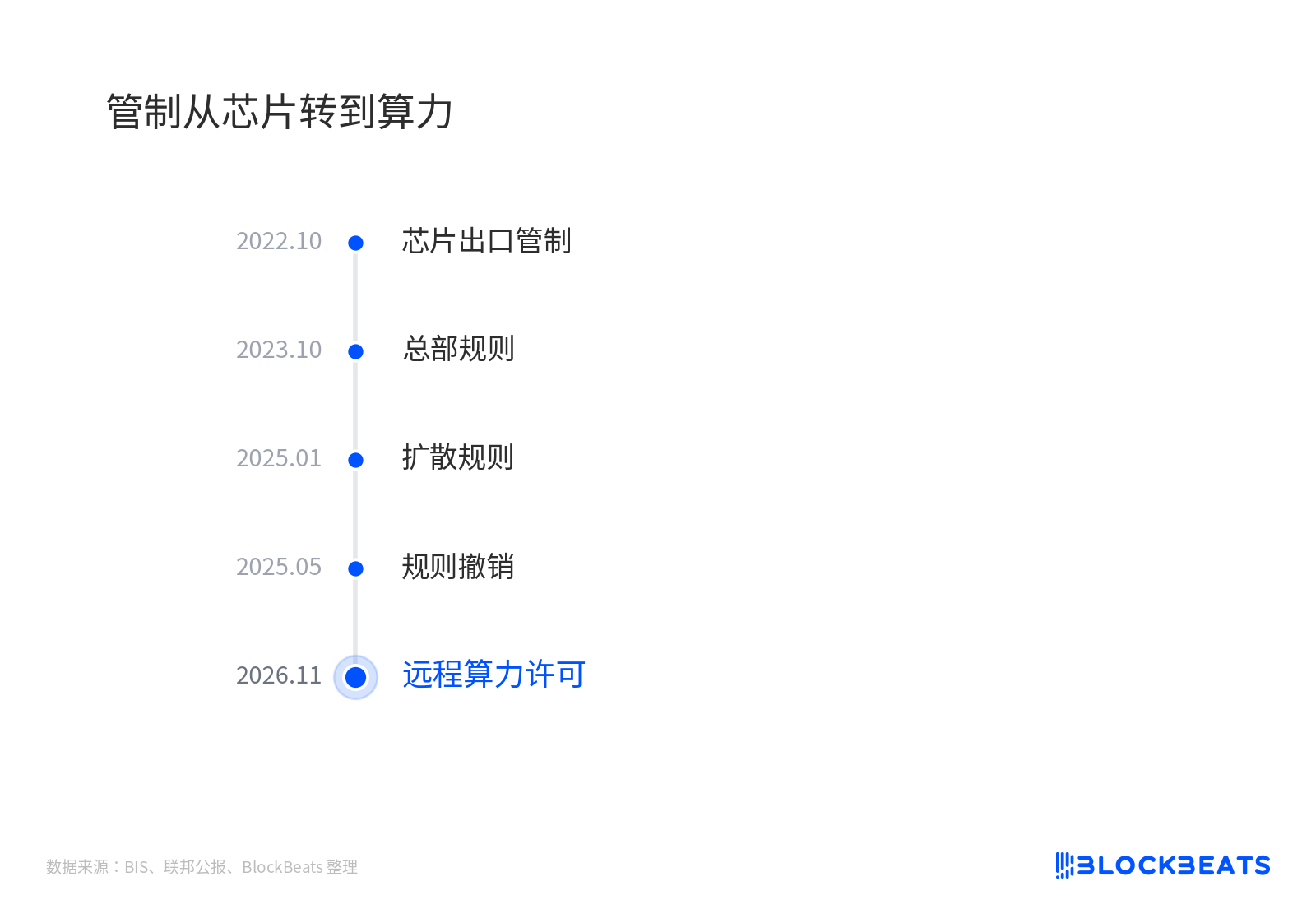
Controls shift from chips to computing power
The draft adds an end-use control that determines whether to issue a license based on whom the data center actually serves. When exporters know that a data center provides computing power exceeding 12 million total processing performance (TPP, a metric measuring total chip computing power) to companies headquartered in countries under U.S. embargo, they must apply for a license. This threshold roughly corresponds to several hundred to nearly a thousand high-end GPUs.
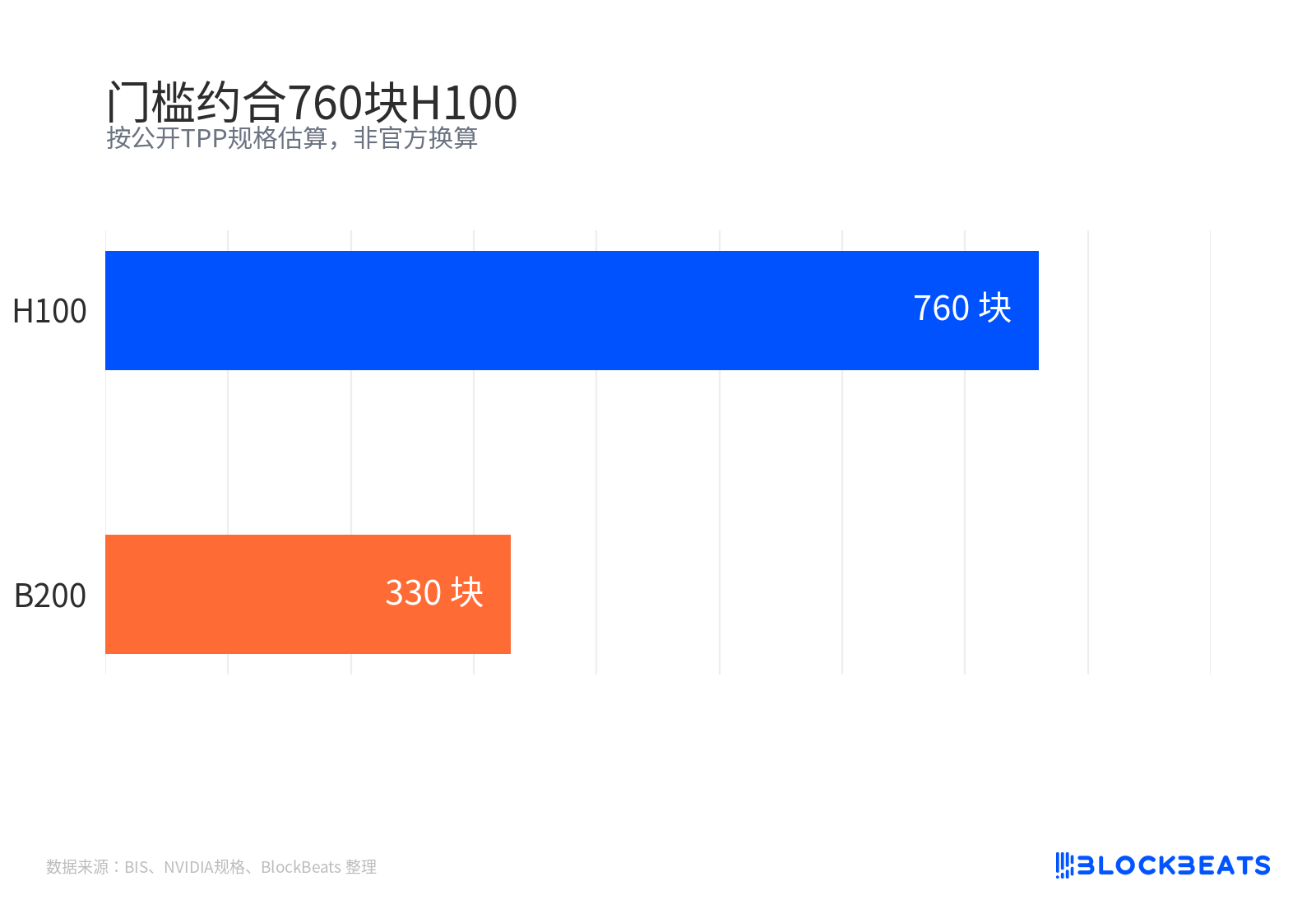
The threshold is equivalent to about 760 H100s
Complete server units are also included, not just the chips themselves.
The key lies in the definition of "linked facilities." The rule attempts to aggregate multiple networked data centers for calculation purposes, preventing operators from splitting computing power across different locations to circumvent the threshold. This definition determines the rule's scope of coverage and whether it can be circumvented. Companies must also conduct KYC (customer due diligence) to verify the ownership and control structure of customers; it would be rather risky for data centers to refuse to provide information.
The draft also lists Indonesia, Malaysia, Singapore, Thailand, and Brazil, requiring case-by-case license applications for exports of advanced chips to these countries. Operators already providing significant computing power to Chinese companies have a 90-day window to apply, or face subsequent export restrictions. US-headquartered companies may obtain exemptions but must report monthly. What was originally a legal leasing business now has an additional approval step.
The market reaction is preliminary data. On the day the rule was announced, Nvidia's stock price fell, and the semiconductor sector came under overall pressure.
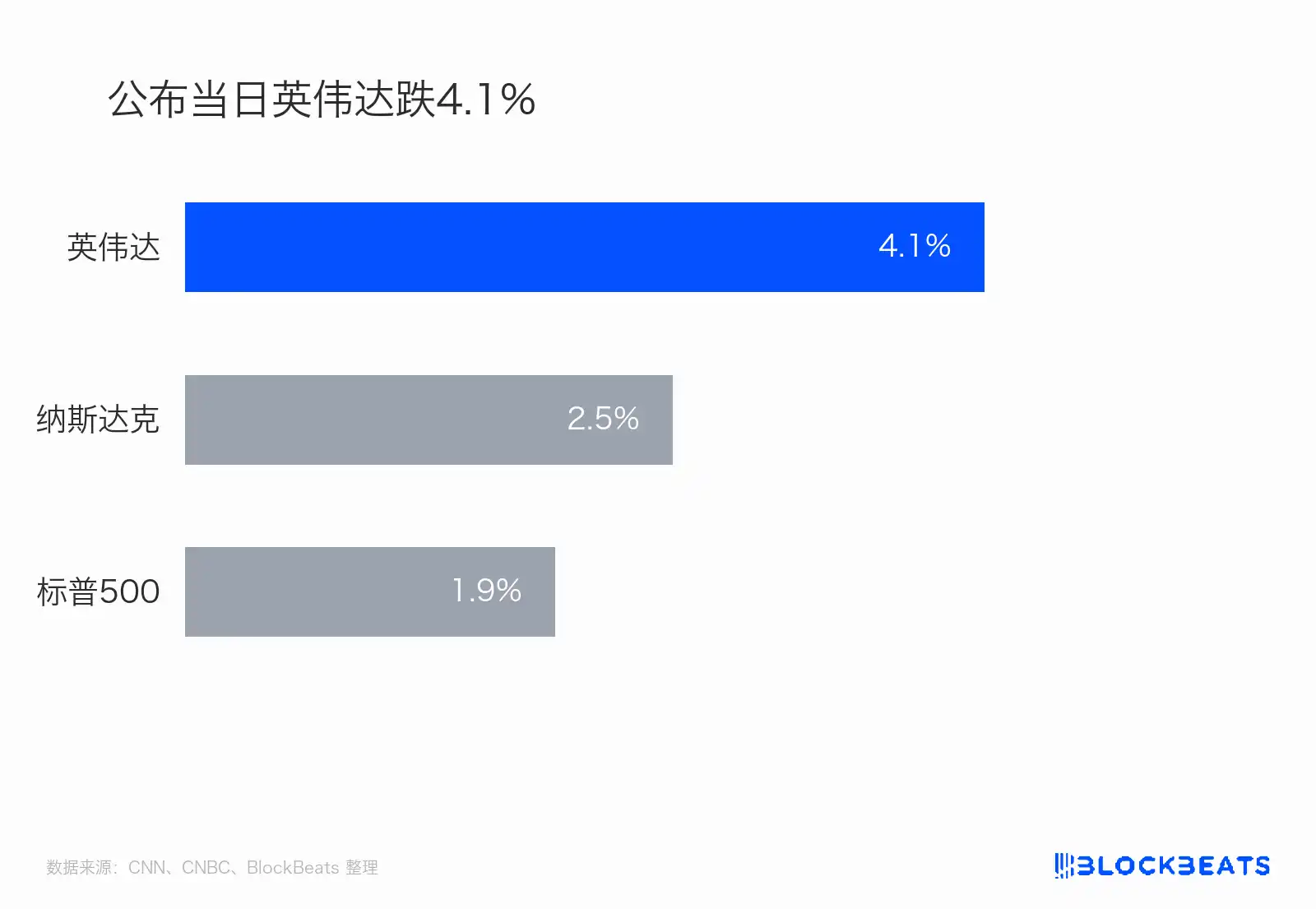
Nvidia fell 4.1% on the day of the announcement
Nvidia had already lost most of its China data center revenue due to export restrictions to China, and third-country channels were seen as one of the remaining growth buffers.
Supporters of controls argue that the loopholes should have been closed long ago. In public reports, Ryan Fedasiuk of the Foundation for American Innovation said that remote computing channels in Southeast Asia should have been brought under control in the first place. Tsinghua University scholar Sun Chenghao holds the opposite view: controls will cause US companies to lose customers and technological influence, and will instead accelerate China's shift to domestic chips.
The rule has not yet taken effect and must wait for publication in the Federal Register. The 90-day window starts from the date of publication, and the comment period is 60 days. What the market is trading on now is expectations, not an already implemented ban; the timing of publication itself is a variable yet to be confirmed.
The harder part is enforcement. Remote computing power is difficult to monitor, the threshold may be circumvented through splitting, and Chinese companies may also turn to domestic chips or other channels such as the Middle East. For BIS to determine who an overseas data center ultimately serves requires cross-border due diligence and intelligence capabilities, which is far more difficult than intercepting a shipment of goods.
The reason Biden's diffusion rule failed was partly due to the excessive global licensing burden and opposition from allies. The new rule attempts to avoid the same fate with a narrower approach, but the issue of enforcement resources remains the same old problem. The true weight of the rule will only be measured by the licensing issuance after publication and the first batch of enforcement cases. Until then, "comprehensive blockade of China's computing power" and "the rule fizzling out" are just two extreme assumptions.
Join the official Coincamps community:
Telegram: https://t.me/coin_camps
Recommended
Backpack Makes a Comeback to the US, Unveils First Compliant Perpetual Contracts
Nov 17, 11:20
Podcast Notes | Sam Altman: Jensen Huang is my hero, AI chip demand is overhyped, and OpenAI will eventually go public.
Nov 17, 11:16
Bitget UEX Daily | Nasdaq Drops 2.49%, AI Growth Expectations Tested Again; Bitcoin Hovers Below $65,000; Tonight's Focus on Retail and NVIDIA (November 17, 2026)
Nov 17, 11:11
The Money-Making Business Behind GTA VI: How One Game Has Kept a Company Profitable for Ten Years?
Nov 17, 10:57
The Trap of Revenue and Narratives: Why Minimalist Assets Navigate Crypto Cycles More Effectively?
Nov 17, 10:37
Backpack Founder's Latest Speech: Solana Will Become the API for US Finance, Ushering in the Era of Neobrokerage
Nov 17, 10:18