
Podcast Notes | Sam Altman: Jensen Huang is my hero, AI chip demand is overhyped, and OpenAI will eventually go public.
Curated & Translated: TechFlow
TechFlow Preview: At the "Silicon Valley & The World" summit hosted by Semafor, OpenAI CEO Sam Altman engaged in an in-depth dialogue with Reed Albergotti, President of Semafor's San Francisco bureau. This marks the first public appearance by a core top leader in AI since the turmoil surrounding Jensen Huang's resignation swept through the tech world. Altman not only directly addressed his complex feelings and heroic evaluation of Huang's departure, but also confronted the public opinion crisis caused by referendums opposing data center construction passing in multiple states across the U.S., criticizing Silicon Valley for pushing humanity into a PR disaster resembling an "agency-free Labrador pet."
The entire discussion delved into the "compute double-counting" bubble in the chip supply chain, the sustainability of hundreds of billions in data center debt, OpenAI's considerations regarding going public versus safety trade-offs, and how AI is evolving from chat and coding agents into the foundational scientific engine for the next generation of physics and mathematics.
Guest: Sam Altman (CEO, OpenAI)
Host: Reed Albergotti (President, Semafor San Francisco Bureau)
Source: Semafor (https://www.youtube.com/watch?v=oi-E6xB4wSU)
Original Title: Sam Altman: ‘It’s Hard To Imagine the AI Revolution Without Jensen’ | Silicon Valley & The World
Air Date: November 16, 2026
Key Takeaways
· Profound Empathy and Hero Worship Regarding Jensen Huang’s Departure: Sam Altman described Huang as a long-standing hero, noting that "heroes have flaws." He deeply empathized with Huang's situation following the board's removal action, expressing profound gratitude for NVIDIA's early mutual bets. While declining to state whether Huang should return, he emphasized that Huang's immense ambition remains an irreplaceable core engine for the entire AI revolution.
· NVIDIA Guarantee and Industry Resilience: Regarding the $105 billion guarantee NVIDIA provided for OpenAI's Ohio data center, Altman believes NVIDIA's massive scale still commands trust. Although Huang is deeply intertwined with NVIDIA, the true downstream demand and revenue growth for AI are exceptionally robust, ensuring the industry as a whole will not stagnate.
· Critique of the "Labrador Pet-Style" AI Propaganda Disaster: With anti-data center referendums passing in multiple states across the U.S., Altman bluntly pointed out severe missteps in Silicon Valley's communication strategy. If the narrative sold to the public is one where "human agency is traded for cures for cancer and cheap goods, leaving humans living like pampered pet dogs served by machines," it inevitably triggers reasonable global fear and instinctual resistance.
· Exposing the "Double-Counting" Bubble in the Chip Supply Chain: Historically, the industry relied on a single major chip supplier, aligning wafer capacity closely with actual demand. Now, numerous new players are simultaneously booking capacity from foundries, all blindly assuming they will capture the vast majority of orders from OpenAI or Anthropic, leading to significant false overlapping statistics in the upstream silicon supply chain.
· OpenAI's IPO Considerations and Safety Trade-offs: Altman revealed that OpenAI will eventually go public to meet the participation needs of everyday global investors. However, he acknowledged that in today's highly volatile industry with contentious safety decisions, remaining private offers unparalleled advantages in decision-making autonomy and security control compared to being publicly listed.
· Trillions in Compute Debt and Breakthroughs in Foundational Sciences: The high-leverage debt supporting current data center infrastructure has not deviated from rationality. Future generations of large models will completely surpass chatbots and coding agents, unleashing unprecedented exponential productivity in solving mathematical problems, deducing new laws of physics, automating chip design, and advancing frontier biotechnology.
Highlight Quotes
· "Jensen Huang has long been my hero, but heroes have flaws. On a personal level, I profoundly empathize with this experience; I still clearly remember what it feels like to be ousted by a board. But it's hard to imagine an AI revolution without Jensen Huang. He placed heavy early bets on us, and we placed heavy early bets on him. I harbor deep gratitude for that."
· "If the industry's messaging to the public is: We will provide you with a cure for cancer and cheap goods, but at the cost of you completely losing all agency, control, and voice in the future, living like a Labrador pet dog gently cared for by machines—that is simply the worst sales pitch ever. The vast majority of normal people do not want such a world."
· "What people truly resist isn't just the massive physical noise or energy consumption of data centers, but a deep layer of anxiety within the public consciousness: Are the Silicon Valley elites currently building AI truly on the side of 'humanity'?"
· "For a long time, the industry basically had only one chip supplier, making it easy for foundries to verify real end-user demand. Now, multiple emerging chip forces are giving guarantees to the silicon supply chain, convinced they will consume all of our and Anthropic's procurement volume. There is indeed serious double-counting happening in the industry."
· "We will inevitably go public at some stage. However, as a private institution burdened with extremely significant safety and ethical decisions alongside soaring public concern, a non-public company undeniably maintains greater strategic composure when upholding technical and ethical boundaries."
· "Building mere chatbots would make hundreds of billions in debt untenable. But now that we see AI beginning to break human cognitive boundaries in mathematics, physics, and materials chemistry—achieving in a year what previously took a century in scientific progress—the long-term value of compute will fundamentally reshape the entire world."
Main Article
On Jensen Huang's Departure and NVIDIA's Shift: Heroes Have Weak Points, but the AI Revolution Is Unimaginable Without Him
Reed Albergotti: Great to have you here, Sam, thank you for joining. Did you catch the latest sketch from Saturday Night Live this past weekend?
Sam Altman: I actually did watch it, found it pretty funny, and I've always enjoyed that show.
Reed Albergotti: The sketch satirizes the Jensen Huang resignation saga currently shaking Silicon Valley. Roughly three years ago, around this same time, you went through your own turbulent moment of sudden ouster by the board. Recently, even an open letter calling for Jensen Huang to return to NVIDIA circulated in the industry, with its copy almost entirely mirrored from the joint letter written by your supporters back then. I want to ask you directly: Do you think Jensen Huang should come back to take over NVIDIA?
Sam Altman: I don't consider myself to have sufficient insider information to pass judgment. Jensen Huang has long been my hero, but heroes equally possess flaws. I am deeply grateful for the company he built. Personally, I feel incredibly strong empathy for the situation he is facing right now; I vividly recall what it felt like to be at the heart of such a storm, even though looking back now, it feels like a lifetime ago.
That said, it's incredibly difficult for anyone to imagine an AI revolution without Jensen Huang. The NVIDIA he built firmly bet on us during our very weakest early stages, and we equally bet heavily on him early on. I hold immense respect and gratitude for that mutually rewarding relationship.
Reed Albergotti: Insiders reveal that NVIDIA previously even provided a roughly $105 billion guarantee backing for your Ohio data center project. They are essentially using their own balance sheet to safeguard the entire industry. Do you believe that after losing Jensen Huang at the helm, this hundred-billion-dollar guarantee would still carry the same weight today as it did a few weeks ago?
Sam Altman: NVIDIA has grown into a commercial giant of astonishing scale, and markets and financial institutions still heavily trust their financial履约 capabilities. Yet undeniable fact is that NVIDIA without Jensen Huang will face a completely different context; Jensen Huang and the NVIDIA brand symbol have long been deeply intertwined. His grand ambition and aggressive expansion scale injected into the entire semiconductor industry hold extraordinary milestone significance in history.
Reed Albergotti: Does this mean the entire incident could trigger industry-wide chain reactions?
Sam Altman: From a fundamental perspective, market demand for high-end compute is truly abundant. The practical value of AI technology is unquestionable, commercial client procurement willingness and revenue growth curves are extremely healthy, so the AI industrial sector's foundation is completely capable of moving forward steadily. But I must reiterate: Jensen Huang, with his forward-looking courage driving rapid industrial advancement, has played an irreplaceable and precious historical role.
Capital Markets and IPO Considerations: Anthropic's IPO Push and OpenAI's Long-Term Choices
Reed Albergotti: Meanwhile, it's rumored that Anthropic is pushing forward with its public offering process this week, while current secondary market investors' scrutiny of AI narratives is significantly diverging. If it were entirely up to you personally, would OpenAI prefer to completely bypass the public capital markets?
Sam Altman: I've noticed that skepticism is primarily driven by media journalists, while core investment institutions deeply familiar with industry pulse remain highly bullish on AI's medium-to-long-term trends. Any wave of cutting-edge technology inevitably experiences valuation fluctuations and cyclical swings. Infrastructure will certainly undergo periodic overbuilding alternating with supply shortages, but the macro consensus is undisputed: immense genuine value is being created.
As for whether OpenAI itself desires to go public? We will ultimately reach the public market at some point in the future. Frankly, becoming a public company comes with unignorable institutional costs and external interference. We operate in a highly volatile, high-stakes frontier track where critical decisions regarding system safety boundaries, social integration norms, etc., require immense strategic resolve; these explorations are undoubtedly easier to advance under a private structure. However, everyday citizens globally deserve access to share in this technological dividend, which is a social responsibility we must balance.
Reed Albergotti: Industry chatter recently suggests concerns that if both leaders go public sequentially, public market capital liquidity might not be enough to simultaneously bear such highly valued behemoths. Are you worried about this?
Sam Altman: That's entirely outside my concerns. I know media needs to continuously manufacture competitive conflict and win-lose drama, but looking at actual capital flows over the past few years, the market has consistently faced a shortage of quality asset supply rather than a lack of investment willingness. We are fully confident in partnering with the entire industry to unlock an unimaginably vast value space.
Doubts on Supply Chain False Prosperity: Deconstructing Chip "Double-Counting" and Wafer Allocation Shadow Wars
Reed Albergotti: Overseas media previously reported that in closed-door meetings, you warned supply chain executives like Samsung directly pointing out severe "double-counting" overheating in the semiconductor industry chain. Can you elaborate on this concern to the public?
Sam Altman: For quite a long period, the AI compute domain was almost entirely monopolized by a single core supplier. When foundries planned advanced node wafer quotas, they only needed to directly verify real procurement plans with a handful of top model R&D institutions like us to precisely outline downstream effective compute demand.
However, the current market landscape has evolved into an era of many contenders rising. Numerous emerging chip startups and in-house R&D teams are aggressively placing order forecasts with silicon foundries, and almost every single manufacturer assumes in their business plans that they can exclusively grab the vast majority of our procurement budgets from OpenAI or Anthropic. But reality dictates that even if our data center construction schedules with global partners proceed exactly as planned, our total comprehensive demand has strict boundaries. It's impossible to simultaneously absorb the capacity pies drawn by every independent chip fab. This is typical double-counting.
Reed Albergotti: Does this mean the chip market has currently bred irrational valuation bubbles?
Sam Altman: Cyclic expectation corrections are inevitable. Global long-term desire and underlying value realization for ultra-large-scale intelligent compute are indestructible, but short-term fluctuations caused by quarterly supply chain excesses and gaps are perfectly understandable. Our supply chain complexity is extremely high, frequently suffering alternating chokepoints from HBM packaging, server rack assembly, grid connections, and even basic component shortages. Breakthroughs in any single dimension cannot escape the collaborative constraints of the entire chain.
Data Centers Face Public Backlash: Harsh Critique of the "Labrador Pet-Style" AI Propaganda Disaster
Reed Albergotti: In recent local elections across multiple U.S. states, with extreme exceptions, virtually every voter referendum proposal for new data center construction suffered devastating failures. Cross-partisan voter resistance to data centers is rising unprecedentedly. As an industry leader, what severe narrative errors do you think Silicon Valley committed while telling the AI story externally?
Sam Altman: The core issue lies in Silicon Valley's currently sold narrative logic being extremely flawed. If the signal tech sectors communicate to society is: We promise to cure cancer and deliver cheap consumer goods, but the prerequisite is you must hand over leadership and agency over the future, living your life under the careful watch of intricate machines like a Labrador, this is undeniably the most repulsive future vision.
The vast majority of humans simply don't want to degenerate into pets devoid of self-control. Data centers have become targets because, as tangible colossal structures, they embody the public's genuine fear of unemployment pains and class marginalization. What people truly worry about internally is: While tech giants fiercely compete for supercomputing monopoly rights, are the people building AI still standing on the side of 'humanity'?
AI must firmly exist as a powerful tool to expand human agency, rather than be packaged as a substitute gradually taking over human destiny. The tech industry must produce unwavering action programs proving we will always firmly retain future decision-making power in human hands, otherwise facing public backlash is entirely logical.
Washington Politics and Transnational Espionage: From White House Banquets to Office Wiretapping Thrillers
Reed Albergotti: Last summer you publicly stated that Democrats are gradually losing their original innovative culture, even describing yourself as "politically homeless." Has your political mindset shifted now?
Sam Altman: As a manager of a tech enterprise, my primary duty is to work closely with any legally elected governing team chosen by the people. I firmly believe that a political environment that deeply embraces pioneering spirit and encourages frontier innovation is the cornerstone of sustaining America's long-term vitality. Whether Democrat or Republican, I welcome seeing more pragmatic, actively supportive shifts toward tech infrastructure.
Reed Albergotti: Media previously disclosed that you discovered hidden listening devices in your private office, and you've repeatedly cautioned internal staff against social engineering infiltration by foreign intelligence personnel. Facing complex transnational investors like Bayview Capital, does this undercurrent geopolitical power play change your external interaction guidelines?
Sam Altman: This series of frictions has made us realize more lucidly that frontier intelligent technology has long risen to the central nervous system of great power strategic competition. Whether it's protecting core model weights, securing infrastructure, or conducting compliance reviews on peripheral capital, we have established extremely rigorous physical isolation and sovereign security review standards. We maintain the highest level of professional vigilance against any potential systemic risks globally.
Trillions in Compute Debt and Scientific Singularity: AI Leaps from Code Tool to Physics and Math Engine
Reed Albergotti: Many Wall Street economists worry that the leverage debt currently supporting data center construction has reached hundreds of billions. Will this massive debt bill become a powder keg crushing industry prosperity?
Sam Altman: Debt only evolves into a destructive crisis if downstream technologies fail to deliver excessive investment returns. What we are witnessing today is the fastest technology revolution in terms of revenue and productivity expansion seen in any career.
Today's enterprise clients no longer treat AI merely as a chat tool. Next-generation reasoning models are demonstrating astonishing creativity in realms atop the human intellect pyramid: mathematical theory breakthroughs, quantum physics simulation, and complex advanced-process chip circuit design. We haven't only seen productivity doubling in software engineering, but exponential acceleration in foundational scientific research.
If AI can help humans conquer physics laws and molecular biology problems that previously required a century to solve within a single year, and rapidly translate them into real-world novel energy sources, controlled nuclear fusion, and rejuvenation cellular engineering, then the compute debt and infrastructure construction invested today are not only far from bubbles in the face of civilization's long-term compound interest, but will instead be proven as incredibly sound foundational keystones.
Join the official Coincamps community:
Telegram: https://t.me/coin_camps
Recommended
Backpack Makes a Comeback to the US, Unveils First Compliant Perpetual Contracts
Nov 17, 11:20
As restrictions on Nvidia's computing power rentals tighten, the U.S. plans to regulate remote computing power in overseas data centers.
Nov 17, 11:14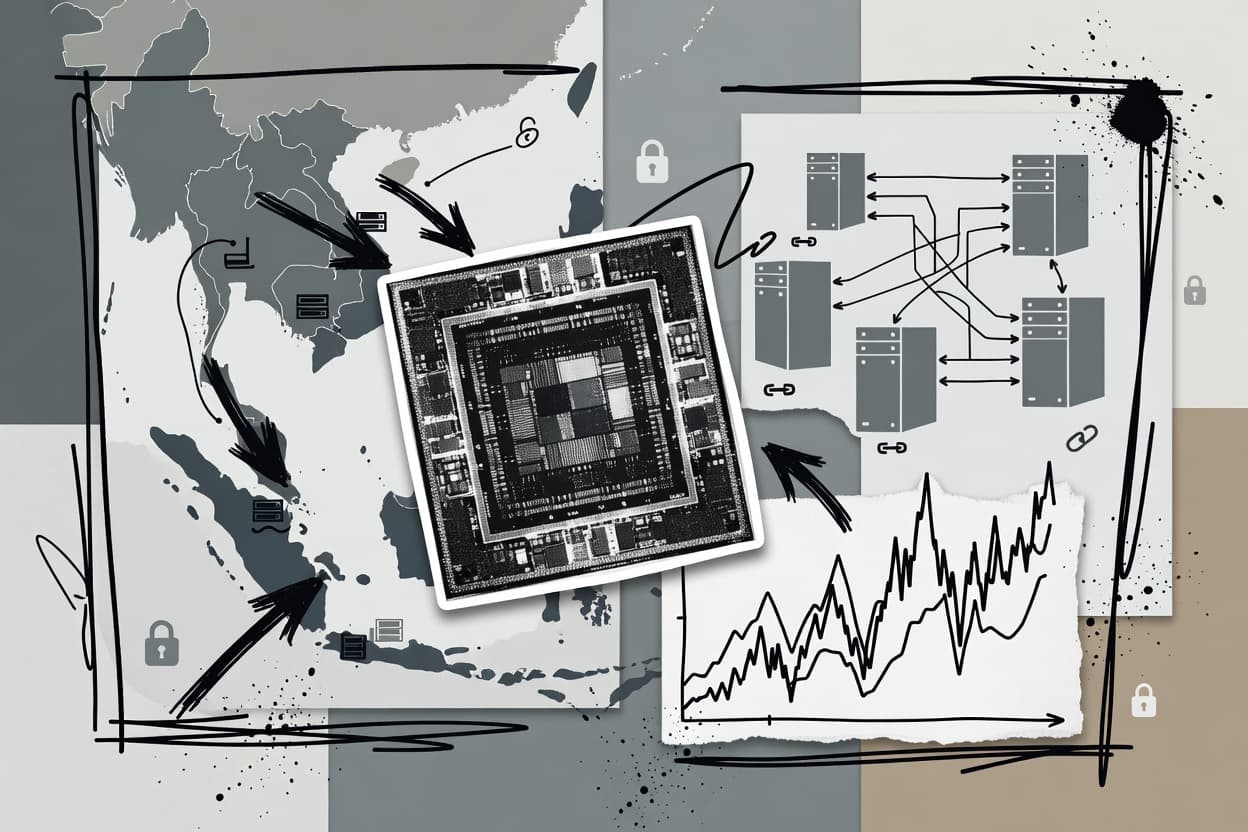
Bitget UEX Daily | Nasdaq Drops 2.49%, AI Growth Expectations Tested Again; Bitcoin Hovers Below $65,000; Tonight's Focus on Retail and NVIDIA (November 17, 2026)
Nov 17, 11:11
The Money-Making Business Behind GTA VI: How One Game Has Kept a Company Profitable for Ten Years?
Nov 17, 10:57
The Trap of Revenue and Narratives: Why Minimalist Assets Navigate Crypto Cycles More Effectively?
Nov 17, 10:37
Backpack Founder's Latest Speech: Solana Will Become the API for US Finance, Ushering in the Era of Neobrokerage
Nov 17, 10:18