Wall Street Extends an Olive Branch: Why Did HYPE Stall After Its Surge?
Hyperliquid is one of the standout stories to break out of the crypto market recently. From ICE extending a partnership olive branch to legendary Wall Street investor Stanley Druckenmiller getting involved, Hyperliquid is accelerating onto the stage of U.S. institutional-grade financial infrastructure, giving the market more to imagine about this Perp DEX leader.
Driven by a series of positive developments, HYPE staged a powerful rally at one point, approaching an all-time high. However, the brief upswing did not last, and HYPE subsequently reversed course and kept falling. Beyond the broader weakness in the crypto market, the realization of earlier positive catalysts, profit-taking by large holders, competitive pressure, and sell-off concerns stemming from team token unlocks were all important factors driving the price correction.
Founder Jeff Puts On a Suit as Hyperliquid Walks Into Wall Street
Not long ago, when Hyperliquid founder Jeff traveled to Washington, D.C. to meet with policymakers, he wore a dark suit and a tie to conform to the dress conventions of this political capital. This normally low-profile crypto tycoon almost always dresses casually in T-shirts, hoodies and shorts day to day. Colossus once disclosed details of Jeff's minimalist lifestyle in an in-depth report, saying he owns 15 pairs of Lululemon shorts and 10 T-shirts, and normally rotates among three colors.
From T-shirts and shorts to a suit and tie, what has changed is not only Jeff's dress style — the Hyperliquid he founded is also undergoing a transformation of identity. A crypto-native platform that once challenged Wall Street is now step by step entering the view of traditional finance, and has even begun to win the attention and acceptance of its former rivals.
Earlier this year, Hyperliquid broke down the trading barriers of traditional financial markets through on-chain perpetual futures trading, challenging Wall Street's long-standing trading rules and industry moats, and at one point triggered the displeasure and resistance of traditional financial forces. But within just a few months, the situation began to reverse.
In recent months, Hyperliquid has been moving from a star project within crypto circles toward the broader mainstream financial stage. From Trump publicly naming it at the White House, to Stanley Druckenmiller posting his first-ever tweet to endorse it and Musk retweeting the news, to traditional financial giant ICE investing in its ecosystem project Trade.xyz.
At the same time, in a crypto market full of noise and speculation, this team of just 11 people has already established a sizable commercialization path, and uses real protocol revenue to fund token buybacks.
Hyper Screener data shows that as of November 6, Hyperliquid's cumulative protocol revenue had surpassed $1.23 billion, of which about $1.2 billion was used for token buybacks, accounting for as much as 97.5%. Judging by recent performance, its profitability is equally impressive. DeFiLlama data shows that over the past 30 days, Hyperliquid's revenue reached $68.88 million, ranking third across the entire network, behind only the two major stablecoin issuers Tether and Circle.
The upside imagined by Wall Street, together with continuously generated protocol revenue and large-scale token buybacks, jointly lifted market optimism toward Hyperliquid, and HYPE accordingly embarked on a strong run.
In late September this year, HYPE touched $97.9 at one point, setting an all-time high. Although it went through a correction afterward, it rallied strongly again at the end of October, with the price approaching $97, just a step away from the previous high. Even without a bull market to propel it, HYPE still repeatedly launched assaults on its all-time high, becoming one of the few crypto projects able to chart an independent trajectory.
Buybacks Can't Hold Back the Selling, So Why Won't HYPE Rise?
Improvements in the U.S. regulatory environment, Wall Street's proactive embrace, and strong profitability should have provided sustained upward momentum for HYPE. However, after a brief spike at the end of last month, HYPE reversed course and kept declining. CoinGecko data shows that since the high on October 30, HYPE has fallen 19.6%.
Setting aside external shocks such as the Binance hack incident and the AI stock rout triggered by the "blue tsunami" of the U.S. midterm elections, HYPE itself has also faced multiple pressures recently.
· Catalysts Realized: Large Holders and Whales Take Profits in Concert
As HYPE's price approached its all-time high, some capital began choosing to lock in gains, especially large holders and whales who positioned early.
Santiment data shows that on October 30 alone, four whale wallets closed all their HYPE long positions, booking a combined profit of about $5 million. Among them, the largest wallet had been continuously accumulating HYPE since late May; Lookonchain monitoring shows that on October 31, two addresses sold a combined ~1.21 million HYPE, making over $26.5 million in profit; large holder Yeti0x also recently converted KHYPE worth $2.49 million into HYPE and then began selling.
At the same time, large HYPE movements by several institutions have also triggered market concerns. According to tracking by on-chain analyst Ai Yi, since October 30, a16z has transferred a cumulative 233,000 HYPE, worth over $20.6 million; Onchain Lens monitoring shows FalconX transferred a cumulative 350,000 HYPE to Coinbase within three days, worth about $30.57 million; on-chain analyst MLM monitoring shows Paradigm recently unstaked 2.55 million HYPE through 15 different wallets, worth about $224 million, but considering that Paradigm also carried out a similar large unstaking a few weeks ago, this time may just be wallet consolidation; Galaxy Digital's OTC desk recently deposited 47,000 HYPE worth about $4.06 million into OKX, presenting a potential for sale.
In addition, U.S. spot HYPE ETFs have also seen continued net outflows. SoSoValue data shows that from October this year to date, spot HYPE ETFs have seen net outflows of $42.14 million.
· Team Token Allocation Raises Concerns Over Potential Supply Pressure
Beyond the short-term selling pressure from profit-taking positions, the team token allocation is also a focus of market attention. Last month, Hyperliquid officially announced it would unlock 180,000 HYPE and planned to formally distribute them to team members on November 6, 2026. This arrangement sparked market concerns over potential new supply.
However, in terms of scale, the 180,000 HYPE distributed this time accounts for only 0.075% of the current circulating supply of about 239 million, a relatively limited share. In addition, the team's OTC (over-the-counter) targeted sales to specific institutions avoid direct selling pressure and price slippage on the public order book.
· Partnership Upside Not Yet Delivered; Institutional Narrative Faces a Reality Test
Uncertainty over the progress of external partnerships has also weakened market expectations to some extent.
Shortly after ICE announced its partnership with Trade.xyz, planning to bring Hyperliquid-based perpetual contracts into the U.S. market, the institution deleted the relevant partnership announcement, briefly fueling speculation about whether the collaboration had changed and causing a short-lived panic. ICE subsequently republished it, adjusting the wording to emphasize that the partnership is "planning to introduce" and "subject to regulatory approval."
Therefore, whether the story of Hyperliquid opening up the U.S. market can truly materialize still depends on the CFTC's approval progress, and in the short term it cannot be converted into actual user growth and revenue increments.
· More Players Enter "With Licenses", and Hyperliquid Faces New Competition
An improved U.S. regulatory environment does not mean Hyperliquid can exclusively enjoy the market's benefits. As the regulatory framework gradually becomes clearer, more trading platforms have also begun to accelerate their expansion.
Recently, the CFTC announced it would allow perpetual futures trading on individual U.S. stocks, with Kalshi, Coinbase Derivatives, Kraken and Crypto.com making the first batch. This means Hyperliquid may face more direct competition in the U.S. market in the future.
It is worth noting that while competitors enter, the Hyperliquid ecosystem is also actively seeking compliant access to the U.S. market. HypeStrat Markets, a subsidiary of HYPE treasury company Hyperliquid Strategies, recently disclosed that it has applied to register as a CFTC futures commission merchant (FCM). If approved, the FCM would be able to accept U.S. client accounts for permissioned markets deployed under the HIP-3 framework, helping the Hyperliquid ecosystem provide perpetual contract trading services to U.S. clients within a regulated framework.
· Congress "Changes Hands" After the Midterms, Policy Support Faces Uncertainty
Jeff's recent trip to Washington was aimed at pushing Hyperliquid into the U.S. market, and shifts in Washington's political winds may become an uncertain factor in Hyperliquid's U.S. expansion.
Before the midterm elections, crypto-friendly signals from the Trump administration, the CFTC's openness to perpetual contract-related trading frameworks, and ICE's partnership plan with Trade.xyz all gave the market high hopes for Hyperliquid opening the U.S. market. Jeff's personal trip to Washington at this time was also seen as a signal that the project was trying to further open up channels for policy communication.
But in terms of timing, the trip happened to coincide with the political landscape change after the U.S. midterm elections. In the midterm elections held on November 3, the Democratic Party won control of both the Senate and the House, while the Republican Party lost its majority in both chambers. As control of Congress changes hands, the pace of advancing related crypto legislation and regulatory frameworks, as well as the direction of congressional attention to DeFi, high-leverage derivatives and investor protection issues, may all see new variables. Although Trump will continue to hold office, over the next two years he will face a Congress led by the Democratic Party, and his legislative agenda and room to push policy may be further constrained. For Hyperliquid, this change may affect the market's judgment of its U.S. expansion prospects.
It is worth mentioning, however, that in the Bloomberg report, Jeff stressed that Hyperliquid is more like the internet or Linux, and what matters is providing a neutral set of underlying infrastructure. The report also disclosed a rather telling detail: during the shoot, the Hyperliquid team specifically requested that no portraits of any current or former U.S. president appear in the interview background. Perhaps what Hyperliquid wants to signal to the outside world is that what it seeks is not the political endorsement of any particular administration, but the status of infrastructure that can operate under different political environments.
In Jeff's view, Hyperliquid was never just about building a more efficient trading platform from the start; it aims to build a network capable of carrying the entire financial system, so that stocks, derivatives and even more financial activities can ultimately all run on this network.
"We didn't see this as building a trading platform, but as building an entire network," Jeff said in a recent interview explaining Hyperliquid's vision. They had examined the blockchains that existed at the time, but found that none could meet the throughput and latency requirements of global financial markets without major compromises.
Today, from making its mark in on-chain perpetual contract trading, to attracting the attention of Wall Street institutions, to attempting to connect with traditional financial infrastructure, Hyperliquid is step by step moving beyond the boundaries of the crypto-native market. But to truly move from a trading platform to financial infrastructure, walking into Wall Street may just be the beginning.
Join the official Coincamps community:
Telegram: https://t.me/coin_camps
Recommended
From a "Land of Happiness" to a financial zone: why BIT chose Bhutan's regulation
Nov 6, 17:37Podcast Notes | Conversation with Sam Altman: Taking No Equity Stake in OpenAI Was My Biggest Mistake
Nov 6, 17:28
Tonight, a strong nonfarm payrolls report could deliver another heavy blow to US stocks.
Nov 6, 17:17
GateHub EURGH: MiCA Euro Stablecoin Live on XRPL
Nov 6, 17:13
$189 Million Shelled Out: What Do Crypto Backers Get?
Nov 6, 17:01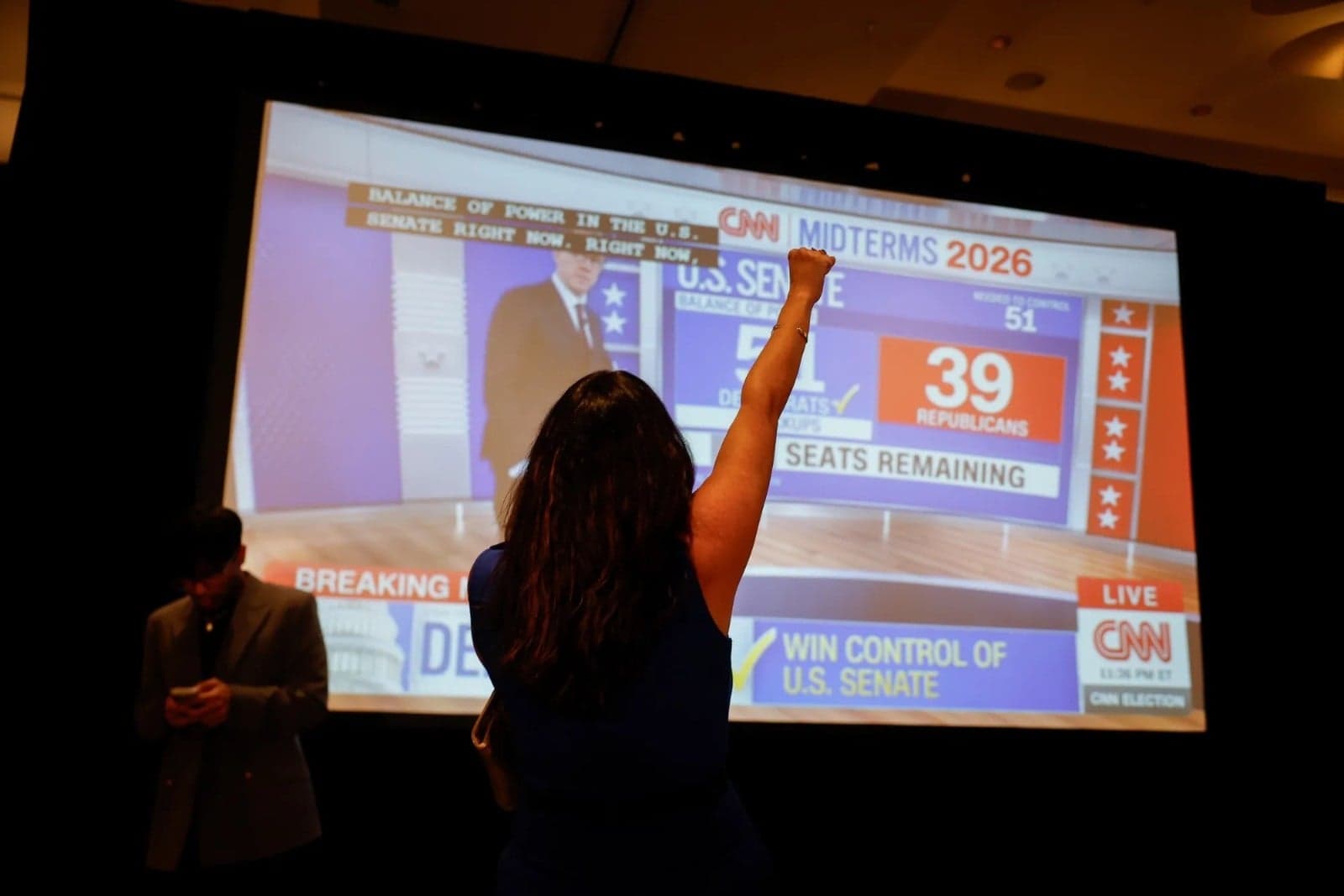
Two UK Retail Investors Share Their Story: Losses, Concerns, and Exit Plans
Nov 6, 16:56