Interview with NEAR Co-founder Illia: Integrating with NASDAQ, Launching Quantum-Resistant Features, Why Is NEAR Considered the Ethereum of This Bull Market?
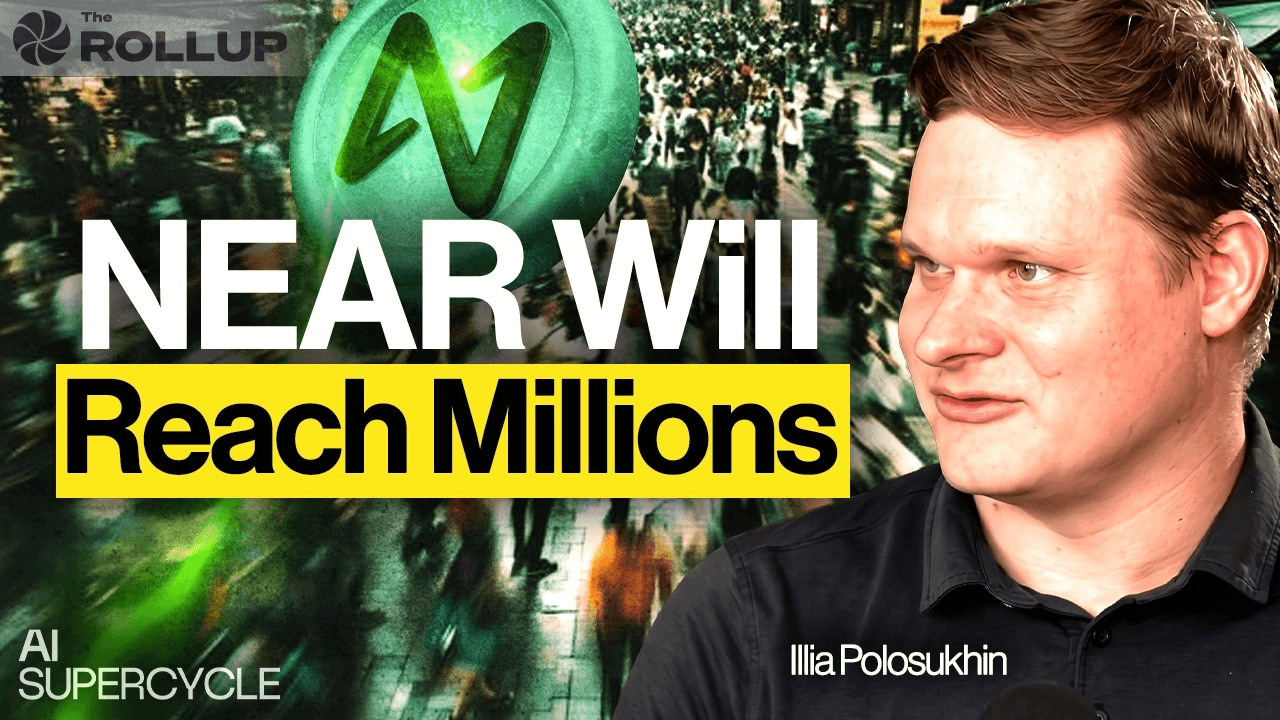
Organized & Compiled: TechFlow

Guest: Illia Polosukhin (Co-founder of NEAR)
Host: Robbie (The Rollup)
Source: The Rollup (https://www.youtube.com/watch?v=UXHT-7bvXos)
Original Title: Illia Polosukhin: The Future Of Finance Will Run On NEAR (Insider Take)
Publication Date: 2026-10-12
Key Takeaways
- A Market Within Markets: NEAR Intents is a universal trading aggregation layer. By submitting an intent, it finds the optimal counterparty across the entire network. Its scope has long since surpassed crypto, beginning to aggregate real-world assets like stocks from Nasdaq and the NYSE.
- The Trading Hub for On-Chain Speculative Assets: Assets like Quantus and Pearl, which are only listed on SafeTrade without centralized exchange listings, enjoy seamless private trading and robust liquidity on NEAR Intents and near.com. near.com has become an on-chain workspace alongside Druckbot.
- Natural Language Intents Are Next: In the future, a single sentence (e.g., "build a new skyscraper in New York") can be broken down for sub-agents to procure materials, acquire land, and execute tasks.
- Actively Breaking L1 Zero-Sum Games: NEAR positions itself as a "universal liquidity layer / Schelling point," collaborating with Aave, other chains, and protocols rather than competing against them. The more parties that join, the larger the flywheel becomes.
- Aave Integration Enables "No Sale, No Tax": Depositing Hyperliquid positions or stocks into Aave as collateral for loans avoids selling and triggers no taxable events. Essentially, this concentrates leverage-driven liquidity.
- Post-Quantum Security Is Already Live on Mainnet: The NEAR account model supports multi-key management and hot-swappable cryptography; adding a new curve takes roughly 200 lines of code. In July, Dilithium (ML-DSA) was deployed on mainnet. The Meteor wallet allows a one-click upgrade to post-quantum security without moving assets or triggering taxes. Upcoming ML-KEM is already the real-world standard adopted by the Chrome browser.
- Cross-Chain Asset Custody with Privacy: NEAR accounts can hold Bitcoin, Ethereum, and assets from other chains. The privacy mode hides public keys, further shrinking the quantum attack surface, while Shield provides proactive risk alerts.
Key Highlights
- "Some have recently called Zcash the 'Bitcoin of this cycle' and NEAR the 'Ethereum.' Sentiment heats up quickly, but we care more about converting that attention into a true product flywheel."
- "We didn't design another zero-sum game for L1s. We built a market within a market—a universal layer that aggregates any trading intent. It started with chain abstraction, now we've integrated Nasdaq and the NYSE, and we will connect to more venues in the future."
- "When other chains hear about quantum threats, they enter bunker mode, needing to re-derive keys and manage everything manually. On NEAR, you just click a button in the Meteor wallet to upgrade your account to post-quantum security."
- "Your NEAR account can hold Ethereum, Bitcoin, and assets from other chains. You don't need to worry about [quantum attacks]."
Transcript
1. The Current State of NEAR: The Market Finally Wakes Up
Host: NEAR has exploded in popularity over the past few weeks. Even at the opening of this event, everyone joked about calling you the founding father of AI, saying you wrote a book on zero-knowledge proofs and your office should display an "Attention Is All You Need" plaque. How do you view your current position personally?
Illia Polosukhin: NEAR has been building for nearly nine years, or nine years if you count our earlier AI research. We have always held a vision: as the world changes, we need decentralized technology, privacy, private AI, and private currencies to truly connect Web3 with broader traditional markets. Seeing more people join is exciting. Price volatility brings more resources and attention, which we will continue to convert into more products and value. Recently, some have even compared Zcash to the Bitcoin of this bull cycle and NEAR to Ethereum. Sentiment heats up fast, but what matters more to us is turning that attention into a genuine product flywheel, rather than letting it stop at mere hype.
2. NEAR Intents Is Becoming the Trading Hub for This Cycle's On-Chain Speculative Assets
Host: We are currently at Quantum Privacy Day. Quantus just launched and is performing exceptionally well. The perpetual contract privacy vault on near.com and its cross-chain bridge are incredibly smooth. I actually think you're becoming the primary trading hub for this cycle's on-chain speculative assets. Quantus is one example, and we also discussed another token called Pearl.
Illia Polosukhin: The broadest vision for NEAR Intents is a market within a market. It acts as a universal aggregator for any trading intent. You submit an intent, and it finds the optimal counterparty across the network to fulfill it. I'm not just talking about crypto or digital assets. If you want to book a hotel room or build a base on Mars, there will be counterparties willing to take the order—like Elon Musk saying, "Sure, I'll take on $2 trillion." That is the grand vision. Quantus is a typical example. It only lists on SafeTrade without centralized exchange listings, yet enjoys strong liquidity on NEAR Intents with fast execution and a seamless experience. Personally, I use Druckbot as my AI workspace and near.com as my on-chain workspace. These speculative assets trade, borrow, and bridge on near.com with exactly that level of smoothness.
3. From Chain Abstraction to Real Stocks, to Natural Language Intents
Host: You initially started with chain abstraction, and now this vision is really materializing. Did you solve the biggest pain point in crypto first, then gradually expand outward?
Illia Polosukhin: Exactly. Chain abstraction addresses the most critical pain point in crypto, so we started there. Later, we added stocks. Now, we are aggregating not just crypto venues but actually integrating directly with Nasdaq and the NYSE. When you send an intent saying, "I want to establish a position in a specific stock," the counterparty can respond, "Great, I'll buy it on Nasdaq, tokenize it, and deliver it straight to your wallet." You don't even need an existing on-chain trading pair to start; it happens in real time. As demand grows, more counterparties with different strategies will enter to provide liquidity. The next step is natural language intents. For example, if you say, "Build me a new skyscraper in New York," the system breaks it down for sub-agents to procure pipes, acquire land, and handle everything else. You'll see that this truly creates a market within a market, aggregating any type of activity—including turning intentions into reality—into one place.
4. Breaking L1 Zero-Sum Games to Become a Liquidity Aggregation Point
Host: You just finished discussing integrating Aave with near.com backstage. The logic flows so naturally. How do you gather so much intellectual capital, physical capital, people, and agents onto NEAR?
Illia Polosukhin: On one hand, as an L1, I've always felt that the zero-sum mentality of "you should build on top of me" is misplaced. What we really need to do is eliminate that mindset and shift to "okay, this is a universal liquidity layer, let's all get on board." On the other hand, it's about spreading the word together with you and other partners in the ecosystem. Historically, one of NEAR's biggest challenges was that while we built extensive technology and products, we couldn't get enough people to notice. When you integrate Aave with near.com, the logic clicks: I deposit my Hyperliquid position into Aave for a loan without having to sell or pay taxes; I deposit stocks into Aave for a loan, again without selling. While this essentially adds leverage, that's the value of a liquidity aggregation point. The more parties that connect, the bigger the flywheel gets.
5. Post-Quantum Security: Designed Ahead for the Quantum Era
Host: Justin Drake posted about preparing to enter bunker mode, and NEAR responded that it's already prepared with X, Y, Z. Why is NEAR ready for the quantum era? Today the whole market is red due to quantum threats, yet NEAR seems to be strengthening inversely.
Illia Polosukhin: Specifically, NEAR accounted for quantum risks during its 2018 design. Cryptography will inevitably evolve, and we designed the ability to adjust and upgrade to the required cryptographic standards anytime. The NEAR account model is unique; it allows key rotation, key addition, and the use of multiple cryptographic suites. I personally wrote that code, and adding a new cryptographic curve only requires about 200 lines. Earlier this year, when new algorithms for recovering private keys from public keys started emerging, we pushed post-quantum solutions to mainnet. Standardized implementations now exist. In July this year, we deployed the first post-quantum curve on mainnet: Dilithium, also known as ML-DSA. Anyone can now upgrade their account to post-quantum security with a single click in the Meteor wallet without transferring assets, withdrawing coins, or triggering taxes. Other chains entering bunker mode would require complex processes to re-derive keys and manage everything manually.
Host: So what about the standards? Which suite do you use?
Illia Polosukhin: We still have a comprehensive multi-step plan to add more systems and cryptographic methods. One clear, available standard is ML-KEM, which is the standard currently used across the internet. The Chrome browser you are using right now has already updated to it; it is the de facto real-world standard. More importantly, NEAR accounts can custody Ethereum, Bitcoin, and assets from other chains. Combined with privacy mode hiding public keys, there is virtually nothing left to derive, further compressing the quantum attack surface. We are still deeply discussing cryptography with Justin and his team, and using Shield for proactive analysis to alert us before issues occur, ensuring these structures safeguard everyone's assets.
Host: Illia, thanks for your time. The event is great. This is just the beginning.
Illia Polosukhin: Thank you. Let's grow this together.
Join the official Coincamps community:
Telegram: https://t.me/coin_camps
Recommended
Tian Keyu swore that lying would result in "lifelong research setbacks."
Oct 13, 18:06
Latest Ruling in the Qian Zhimin Case: 61,000 Bitcoins Surge 200-Fold, Chinese Victims May Only Recover Their Principal
Oct 13, 17:00
Bitcoin's public key exposure may be the most critical topic to watch in 2027.
Oct 13, 16:15
$20 billion short: How OpenAI's revenue controversy is shaking up the AI market
Oct 13, 16:04
Institutional Interpretation: Why Can't Hyperliquid Compete with Polymarket in Prediction Markets?
Oct 13, 15:58
Morgan Stanley Research Analysis: Samsung Leads Global Profit Rankings, Yet Memory Super Cycle Remains Hard to Fully Value
Oct 13, 15:37