The Biggest Gamble, the Biggest Loser: Where Will Musk’s Business Empire Go After the Midterm Elections?
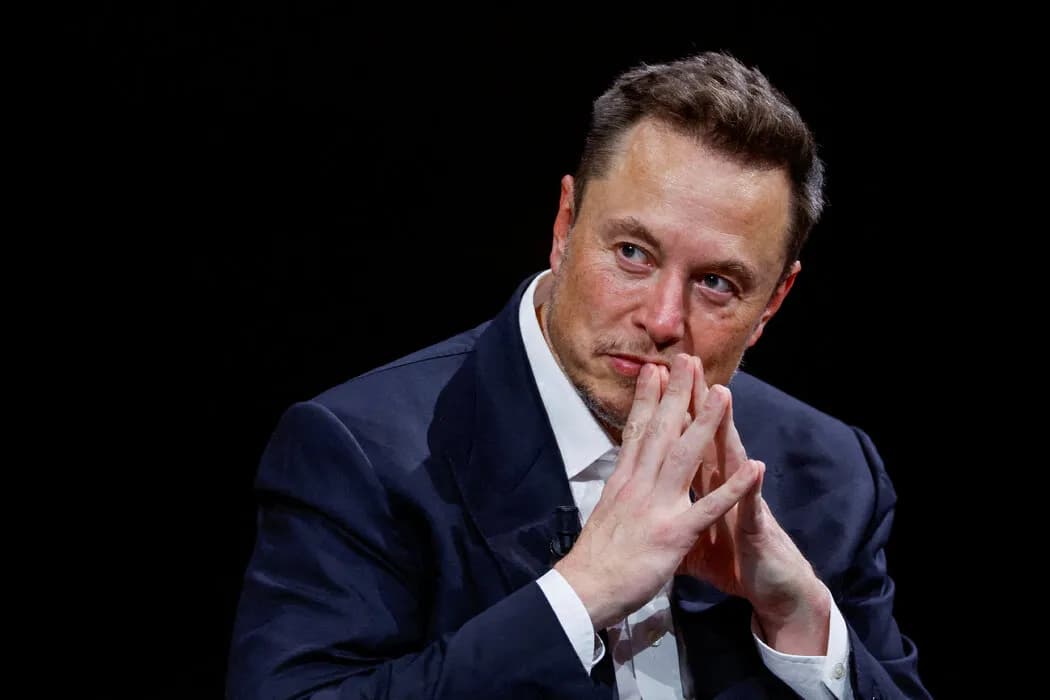
As the tide receded, it became clear that the cost of this defeat was by no means confined to the votes; it struck precisely at the critical arteries of Tesla and SpaceX.
Author: David, TechFlow
After Democrats took control of both the House and the Senate, Wall Street and Washington are settling the bill for Musk’s political gamble in the coldest way possible.
As the largest single political donor in this election, Musk contributed over $470 million; $276 million alone came since July, with nearly half poured into Texas, a state with profound Republican historical advantages. Yet the Republican camp he bet on nearly collapsed entirely.
As the tide recedes, people suddenly realize that the cost of this defeat extends far beyond the ballots, striking precisely at the vital arteries of Tesla and SpaceX.
Wealth Drain and Valuation Backlash
The first shockwave of political upheaval was priced by the capital markets.
On November 5, Tesla plummeted 11% in a single day (down 3.3% the previous day); unlisted SpaceX was also bloodied in the secondary market, with its share price slumping 9% and directly breaking below its $135 IPO offering price.
Under this double blow, Musk’s personal net worth evaporated by approximately $74 billion in a single day. This number did not stem from actual divestment, but rather the market’s ruthlessly cold repricing:
With his political moat in Washington gone, the high valuation premium once enjoyed by Musk is rapidly dissipating.
Data Center Compute Expansion Crashes Into Solid Blue Walls
More severe than the stock crash is the forced halt of fundamental growth.
The future valuations of SpaceX and Tesla are deeply anchored to massive “AI and compute data centers,” which have now become the new administration’s primary target.
Texas is Musk’s most crucial business foothold, but newly elected Democratic Governor Hinojosa has taken an extremely hardline stance, advocating for a suspension of data center approvals, revocation of tax incentives, and previously even filing a lawsuit demanding the public release of email correspondence between the former governor and Musk.
This means SpaceX’s grand blueprint to double compute capacity from 1.7GW at the end of September to 3GW by year-end, and aim for 13GW next year, has directly collided with a policy red light.
According to Goldman Sachs data, approximately 45% of the under-construction and planned compute capacity nationwide is located in Democratic states that backed the suspension directive.
Following the midterm elections, Musk even deleted a “Vote For Red” campaign post on social media and quipped that “building data centers in space sounds quite appealing.”
Behind the post deletion and this joke lies a helpless concession to comprehensive blockades in ground-level permitting.
The Sword of Regulation Hovering Overhead
The retaliation from Washington has only just begun. Democratic lawmakers, who will soon chair the House Oversight Committee, have publicly warned Musk:
“Get your lawyers ready.”
The strike targets of the incoming power holders are already very clear: Musk’s layoffs and budget cuts during his tenure at the Department of Government Efficiency (DOGE), restrictions on Starlink usage during the Russia-Ukraine conflict, and the massive procurement contracts and subsidies flowing from federal agencies to Tesla and SpaceX...
This sword of comprehensive regulatory oversight may not produce immediately fatal consequences, but it will indefinitely drain corporate focus, escalate compliance costs, and force the market to reassess their political risk premiums.
Nevertheless, will Musk’s commercial empire collapse because of this? In my view, it will not. However, he must confront a harsh paradigm shift.
In the past, the market assigned a valuation premium to Tesla and SpaceX for “extreme innovation and a Mars-bound vision”; over the next four years, however, these enterprises will be forced to bear heavy “political risk” discount labels.
For Tesla, the narratives surrounding AI and autonomous driving will face unprecedented local pushback; for SpaceX, the “compute expansion” that serves as the core prerequisite for a $28.5 trillion potential market has already been slowed to a crawl.
Once the former tech visionary is thoroughly dragged into the quagmire of partisan combat, Musk’s commercial empire will inevitably transition from an “expedition to the stars and seas” into a grueling “political defense war.”
Join the official Coincamps community:
Telegram: https://t.me/coin_camps
Recommended
Trading Moments: Crypto and Asia-Pacific Stocks Fall in Tandem; Short-Term Pressure May Persist
Nov 6, 18:25Anthropic Shareholders' Latest Report Exposes the Most Lucrative Chinese Model in the Enterprise Market
Nov 6, 18:21
From a "Land of Happiness" to a financial zone: why BIT chose Bhutan's regulation
Nov 6, 17:37Podcast Notes | Conversation with Sam Altman: Taking No Equity Stake in OpenAI Was My Biggest Mistake
Nov 6, 17:28
Tonight, a strong nonfarm payrolls report could deliver another heavy blow to US stocks.
Nov 6, 17:17
GateHub EURGH: MiCA Euro Stablecoin Live on XRPL
Nov 6, 17:13