
A $2.25 billion Green Bond, How Jane Street's Lease Made Its Way into the Financing Structure
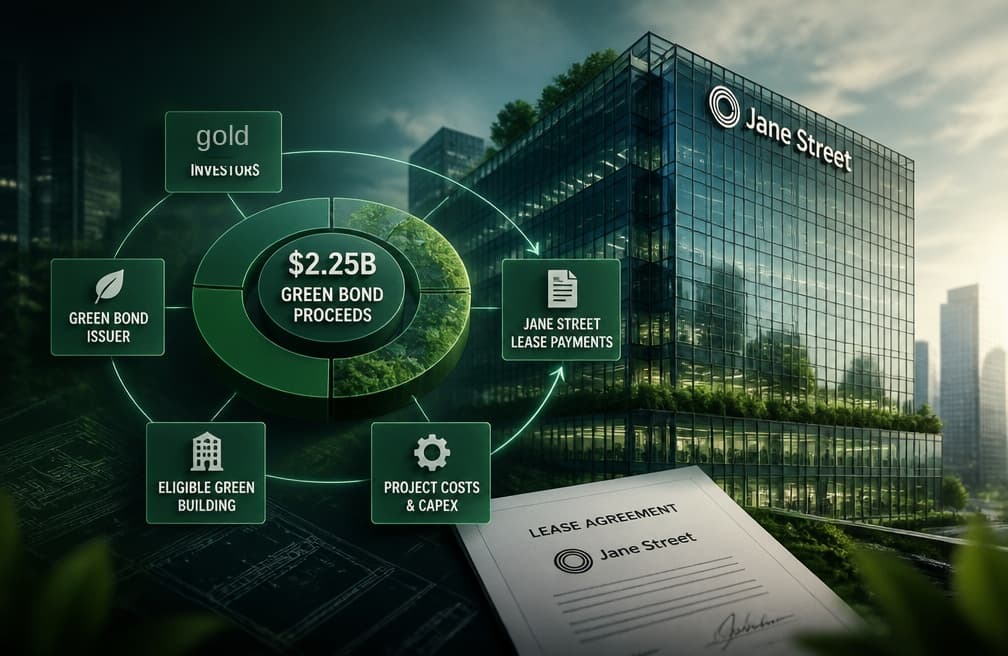
According to Bloomberg News on August 13, the Oklahoma data center project Zenith Arc is planning to price a $2.25 billion green bond, with the facility already leased to a subsidiary of the U.S. market maker Jane Street Group under a long-term lease agreement. Compared to a typical project financing, this transaction first presents a long-term lease to the bondholders.
The bond, as reported, is a senior secured note with a Ba2 rating from Moody's. The funds will be allocated to the computing facility and substation. As of the time of this retrieval, no public confirmation of the pricing or delivery of the bond has been found, so this article uses the term "proposed issuance."
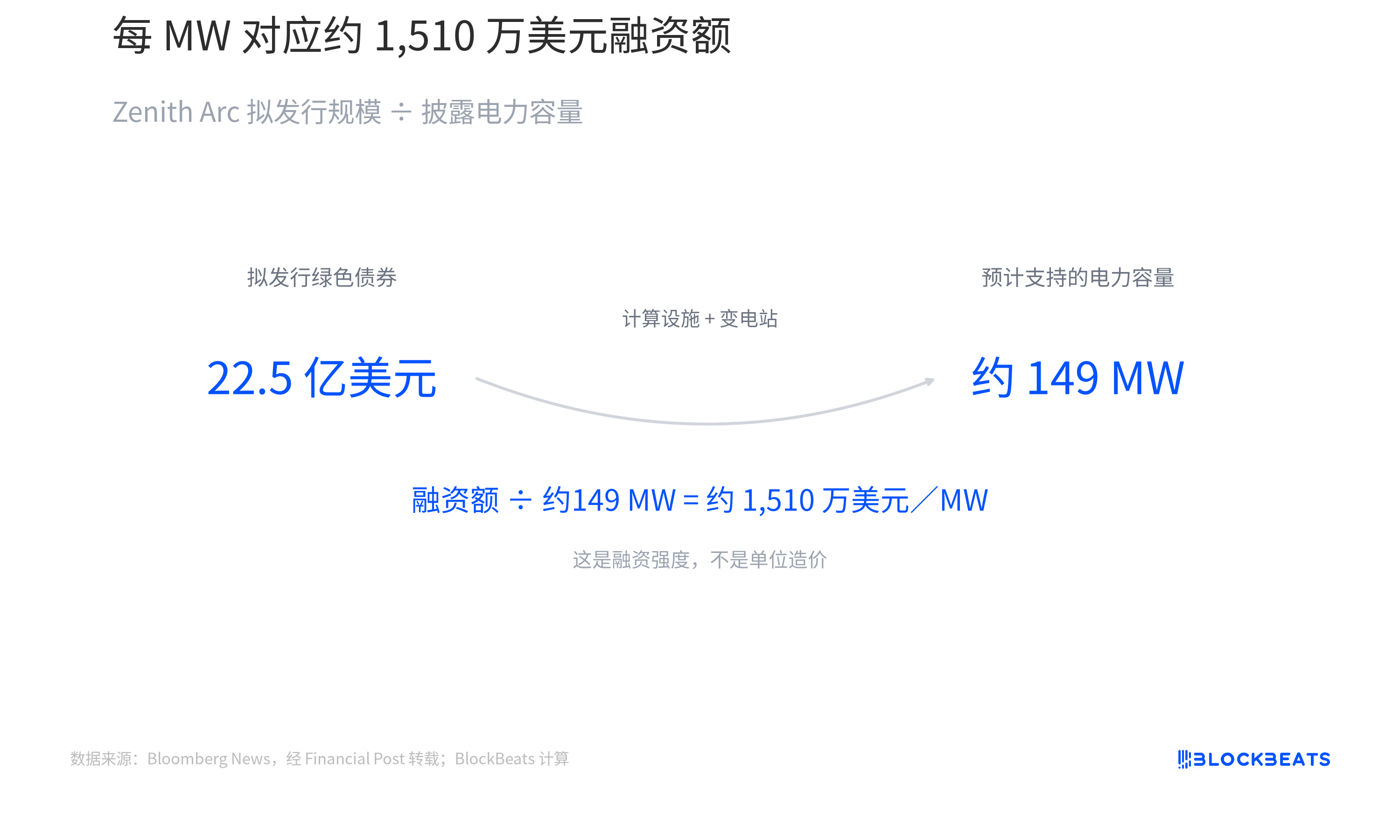
According to Bloomberg News, the disclosed power capacity of the project is around 149 MW. Dividing the proposed financing amount by this capacity, it is calculated that the financing intensity is approximately $15.1 million per MW.
This figure does not represent the cost per rack. The bond funds cover both the computing facility and the substation, with the denominator being the projected supported power capacity of the project, not the already operational load. It is more akin to dividing a construction loan for a mall by the future leasable area, showing how much financing has been bet on the project but cannot be used to deduce the cost of each floor.
This is also one of the three things that are easy to be confused in AI data center financing. The bond amount represents the funding source, MW is the capacity metric for power supply and access, and construction costs require further disclosure of detailed items such as equipment procurement, civil engineering, grid connection, and operational design. Folding these three into a "cost per MW" may misinterpret the financing structure as an engineering quotation.
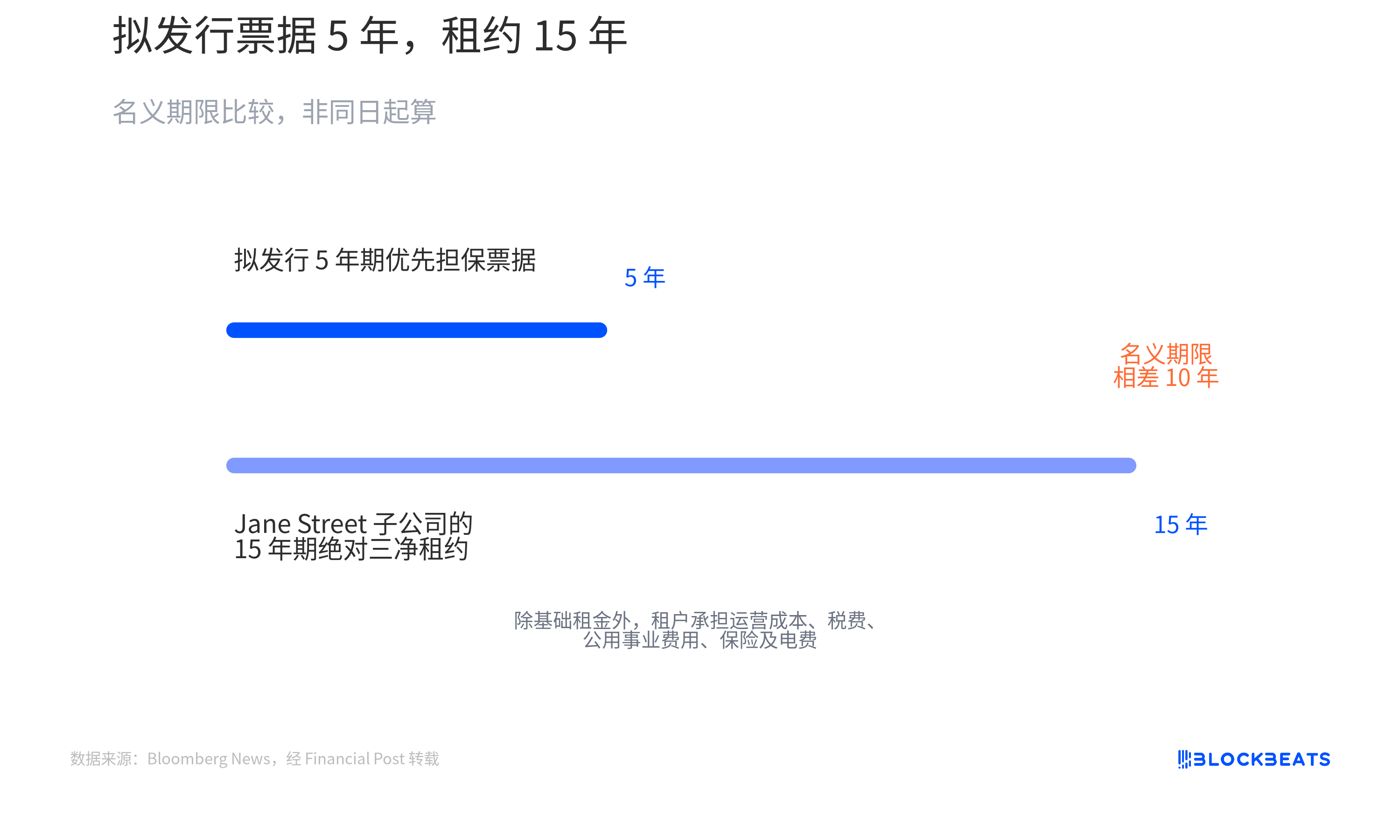
According to the same article, Zenith Arc is a joint venture project between Fluidstack and Next Frontier, with a subsidiary of Jane Street Group signing an absolute triple net lease. Jane Street's computing power arrangement did not start with this project. The report also mentioned that part of its computing power comes from a data center in Dallas and collaborates with AI cloud service providers like CoreWeave.
The so-called absolute triple net lease is not just about "long-term leasing." In addition to the base rent, the lessee is also responsible for operating costs, taxes, utilities, insurance, and electricity. For the project company, this shifts more daily expenses and some price fluctuations to the tenant's side, making the lease look more like a foreseeable long-term revenue contract.
For creditors, this turns an operational project that could fluctuate with the market into a contract relationship with a name, a term, and a delineation of responsibilities. The length of the lease does not answer whether construction can be completed on time, nor does it replace judgment on the lessee's future business needs. A long lease is a cornerstone of the financing structure, not a roof that covers all risks.
The two lines in the graph are not a cash flow coverage table, nor do they disclose a common start date. It merely illustrates that the lease's nominal term exceeds the proposed note issuance by 10 years. Jane Street Group also provides a conventional lease guarantee, but this should not be magnified to imply an unconditional corporate guarantee, or an additional commitment to bond principal and interest.
This lease adds an identifiable long-term lessee to the public financing structure, but it should not be written as the sole reason the project could enter the bond market. Creditors are not faced with just a data center and a substation, but with a market maker's long-term leasing commitment for hashing site locations. The Ba2 assigned by Moody's should also be limited to this debt issue and should not be extrapolated to the corporate credit ratings of Zenith Arc or Jane Street Group.
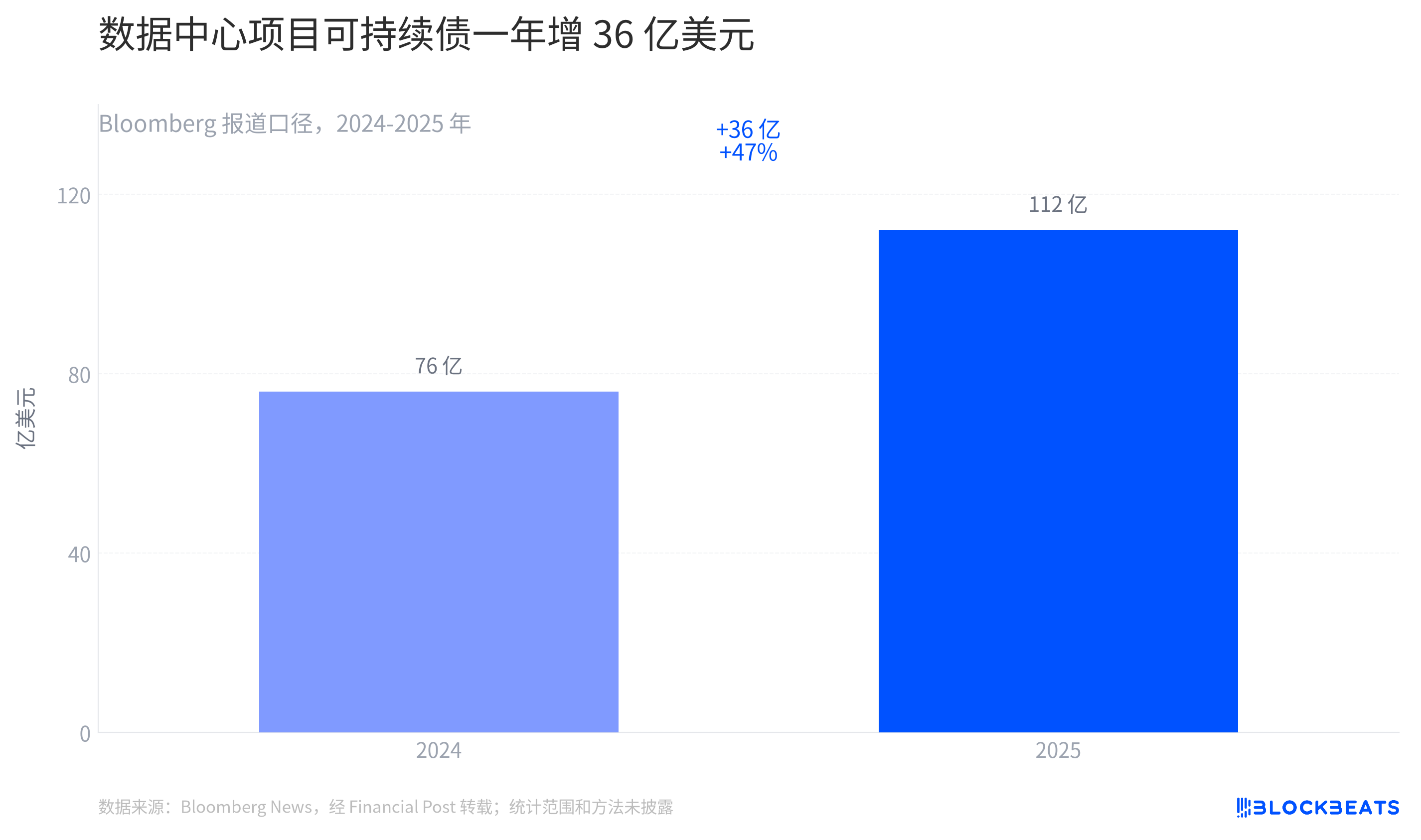
According to Bloomberg News' caliber, sustainable bond issuances for data center development and construction have expanded by almost half in 2025 compared to the previous year. The chart juxtaposes this change next to Zenith Arc, indicating it is situated within an existing context of similar sustainable bond financing. The scope, sample, and methodology of the statistics have not been disclosed, so these data cannot be interpreted as the total global green bond market value, nor can they be extrapolated to all AI infrastructure bonds.
The key to such labels lies in the use of funds and disclosure, rather than automatically labeling data centers as environmentally qualified. The report mentions that some projects have entered the green bond market by committing to meeting standards related to renewable energy and sustainable water management. The subject here is "some projects," not the environmental performance already disclosed by Zenith Arc.
Financing labels answer whether funds are allocated to a certain use, while environmental performance answers what resources are actually consumed and how much is emitted after the project is operational. They are related but are not two different wordings of the same question. For data centers, bond names cannot replace operational data such as energy efficiency, power supply, and water usage.
In publicly verifiable documents, Zenith Arc's green financing framework, second-party opinions, PUE energy efficiency metric, power structure, or water usage metrics have not been found. This does not mean the project lacks these arrangements; it simply indicates that the existing information is insufficient to directly translate "green bonds" into low carbon, low water consumption, or clean power.
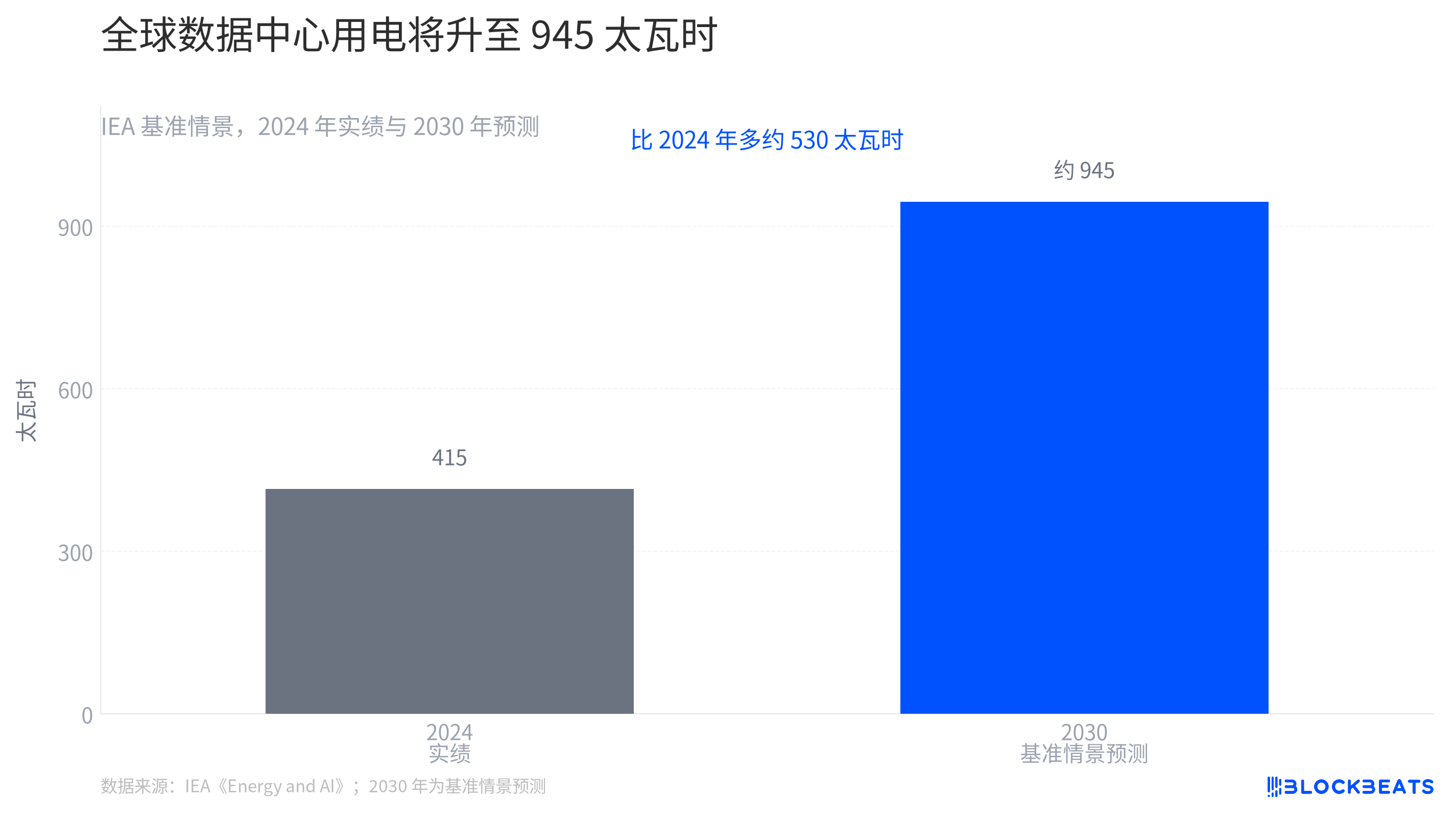
According to the International Energy Agency's "Energy and AI" report, the annual electricity consumption of all global data centers is projected to more than double by 2030 compared to 2024 under its baseline scenario. The scope in the figure covers all data centers, where AI is a key driver but not the sole factor, and it cannot be used to estimate Zenith Arc's own energy consumption, emissions, or water usage.
However, this global curve explains why the market associates the resource issue with a financing tag. AI data centers require not only servers but also reliable power access, cooling systems, and land and water resources. If green bonds are to become a compelling financing tool, environmental performance needs to be answered by verifiable project-level data, rather than by bond names.
The bond planned to be issued by Zenith Arc transforms the expansion of AI data centers into a very specific balance sheet asset, with long-term leases providing revenue clues. The financing amount indicated represents the disclosed financing scale, rather than a unit cost or the full construction cost. The green label leaves behind a checklist that is still to be filled in pending project disclosure.
Recommended
BofA Analysis: Micron's $100 Billion Cash Flow, Can It Navigate the NAND Cycle?
Aug 14, 13:17
X Publicizes Full Recommendation Algorithm, How to Write Posts for High Exposure
Aug 14, 13:14
Before the AI Bubble Bursts, 'Big Short' Makes $100 Million from Subscription Fees
Aug 14, 12:48
Miner Outlook for the Second Quarter: Battling for AI Data Centers, Are They Making Money Yet?
Aug 14, 12:14
Still remember NFTs? The price of the new project has surpassed Bored Ape Yacht Club!
Aug 14, 11:49
Santander Investor Day Slogan, How Goldman Sachs Interprets
Aug 14, 11:41