
Miner Outlook for the Second Quarter: Battling for AI Data Centers, Are They Making Money Yet?

Original Article Title: "Q2 Overview of Mining Companies: Battling for AI Data Centers, Are Mining CEOs Making Money?"
Original Article Author: KarenZ, Foresight News
In the mining world, the loudest noise still comes from the mining machines; however, in the Q2 financial reports, the AI business of most crypto mining companies has become increasingly prominent.
MARA reported a quarterly net loss of $611.3 million, including a $343 million unrealized Bitcoin fair value loss. On the other hand, Core Scientific's high-density hosting revenue increased from $10.6 million in the same period last year to $136.7 million, becoming the company's main source of revenue.
On one side, there is a contraction in mining revenue and unrealized fair value losses due to the drop in coin prices, while on the other side, there is long-term rent revenue being recognized after data center deliveries. These financial reports present two sets of results: one belonging to Bitcoin mining machines still supporting the business, and the other belonging to gradually expanding AI data centers.
The market is already flooded with multi-billion-dollar contracts. The next step is to verify how much capacity the mining companies have delivered, how much rent has been recognized, and after deducting construction input, depreciation, and interest, how much profit can ultimately be retained.
More Mining, Doesn't Necessarily Mean More Profits
The most direct pressure in Q2 came from the Bitcoin price.
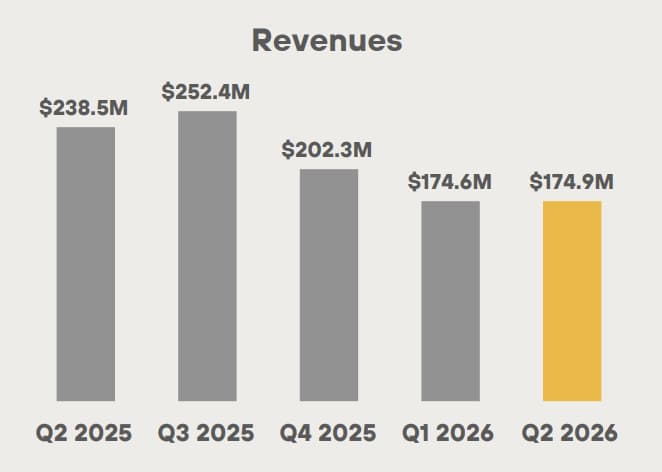
In Q2, MARA mined 2,422 bitcoins, slightly more than the 2,358 mined in the same period last year, but revenue still decreased by 27% year-on-year to $174.9 million. MARA reported a quarterly net loss of $611.3 million, which also included a $343 million unrealized Bitcoin fair value loss. In other words, the increase in production can only offset a portion of the price drop and cannot fully maintain revenue.
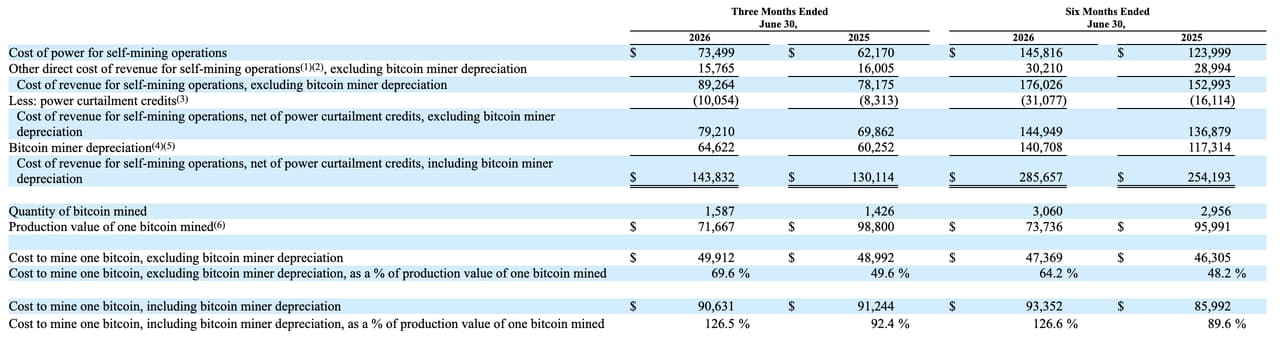
The situation at Riot Blockchain is even more typical. The company mined 1,587 bitcoins in Q2, an increase of about 11% year-on-year, but mining revenue decreased from $140.9 million to $113.7 million. The main reason is also the decrease in the average Bitcoin price and the increase in network hash rate. The production cost per bitcoin dropped from $98,800 to $71,667, while the cost of mining per bitcoin excluding machine depreciation increased from $48,992 to $49,912, causing the cost as a percentage of production value to increase from 49.6% to 69.6%.
This does not mean that the mining model is no longer viable but that scale, machine efficiency, and electricity prices must all work together. In Q2, American Bitcoin mined approximately 932 bitcoins, an increase of about 14% from the previous quarter; mining revenue was around $67 million, up about 8%. The cost of mining per bitcoin was around $36,500, with a gross profit margin close to 50%.
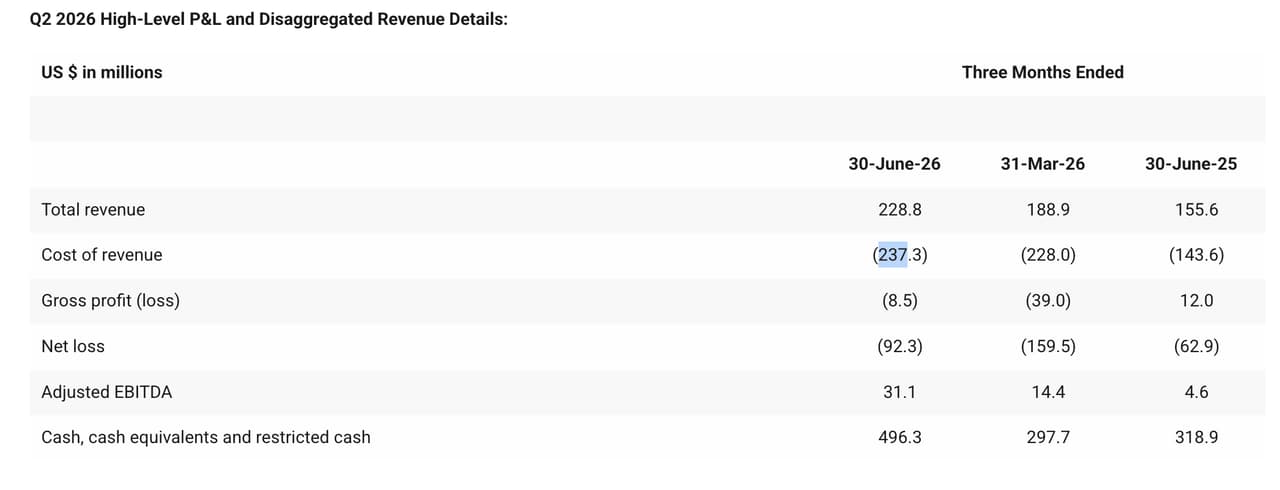
On the other hand, Bitdeer demonstrated that while hashrate and output can expand rapidly, profits may not necessarily follow suit. In the second quarter, the company mined 2,694 bitcoins, compared to 565 in the same period last year; total revenue increased by 47% year-on-year to $228 million, with self-mining revenue at $168.4 million. However, the company's quarterly revenue costs reached $237.3 million, resulting in a gross loss of $8.5 million and a net loss of $92.3 million. Merely looking at output and revenue could easily overlook the fact that electricity, depreciation, and expansion costs have already exceeded current period revenue.
AI Revenue Emerges, but Companies Are Not on the Same Starting Line
What has truly transformed the industry is that some mining companies have shifted from "selling mined bitcoins" to "renting out power and data centers."
One of the most notable advances in this aspect is Core Scientific. In the second quarter, the company had total revenue of $164.2 million, with high-density hosting revenue reaching $136.7 million, accounting for approximately 83% of total revenue; self-mining revenue was only $21.5 million. In the same period last year, Core Scientific's hosting revenue was only $10.6 million. This means that its main source of revenue has shifted from mining to data center hosting, rather than just announcing a long-term project.

TeraWulf has undergone a similar transformation. In the second quarter, the company had revenue of $44.73 million, with HPC leasing revenue at $31.93 million, accounting for approximately 71%, and digital asset revenue at $12.83 million. In contrast, in 2025, out of TeraWulf's total revenue of $168.5 million, mining still accounted for 90% (about $150 million), although at that time, HPC leasing revenue had already been realized for the first time ($16.9 million). The company has explicitly stated that capital allocation and operational focus will mainly revolve around HPC data centers, and some of the original mine infrastructure is also being restructured.
Riot's transformation is still in its early stages. Its total revenue in the second quarter was $174.2 million, a 14% year-on-year increase; data center revenue was $23.2 million, while mining revenue was still at $113.7 million. It is worth noting that Riot's data center revenue includes $4.9 million in leasing revenue and $18.3 million in customer data center construction revenue, both of which are actual revenue included in the quarterly report, but are not yet sufficient to replace the mining business.
Cipher Digital, on the other hand, reminds the market that "beginning construction" and "already generating HPC revenue" are two different things. In the second quarter, the company's revenue was approximately $24.84 million, all from bitcoin mining, with an adjusted EBITDA of negative $30 million and a net loss of $267 million. Cipher only began delivering the initial capacity of the Black Pearl project in early August and has started billing, so this revenue has not yet been reflected in the second quarter.
In the second quarter, Hut 8's revenue increased from $41.3 million in the same period last year to $74.9 million, with $72.5 million attributed to its mining operations. However, this classification includes ASIC mining, AI cloud, and traditional cloud services, so the full $72.5 million cannot be directly labeled as AI revenue. Nevertheless, despite this, in the second quarter, Hut 8 still reported a net loss of $177.1 million, with $138.6 million attributable to unrealized losses from digital assets.

AI Dominates Headlines, Revenue Realization Takes Time
One common misconception during a mining company's transformation is mistaking the total value of long-term contracts as already realized revenue.
Core Scientific disclosed that its leased customer power capacity is approximately 1.1GW, corresponding to over $24 billion in potential contract revenue. However, the hosting revenue recognized in the second quarter was only $136.7 million; TeraWulf's initial 20-year lease contract with Anthropic had a value of approximately $19 billion, but the company's second-quarter HPC leasing revenue was only $31.9 million; Riot's post-quarter 191MW data center lease had an initial value of around $9.1 billion, while the second-quarter data center revenue was $23.2 million.
These figures are not contradictory. The contract value represents the potential income that may be generated over the entire lease term, usually entering the financial statements gradually as the data centers are built, staged delivery begins, and rent commences. Project delays, changes in construction costs, financing arrangements, and customer performance can all impact the actual recognition timeline. Therefore, when comparing mining companies' AI businesses, at least three things need to be distinguished: how many contracts have been signed, how much capacity has been delivered, and how much revenue has been recognized in the quarter.
Net profit figures also cannot be read in isolation from accounting items. For example, Core Scientific reported a net loss of $1.1553 billion in the second quarter, mainly due to the impact of the fair value change of warrants; Cipher had a net loss of $2.675 billion, including a $1.505 billion fair value loss of warrants; MARA's loss was affected by the reassessment of Bitcoin prices. In comparison, Bitdeer had a gross loss for the quarter, indicating that costs exceeded revenue, which is a different situation.
Mining Companies Are Diversifying into Three Types
The second-quarter financial reports show that listed mining companies can no longer be measured by the same standard.
American Bitcoin continues to focus on expanding hash rate, increasing output, and lowering per-coin costs as its primary strategy; Core Scientific and TeraWulf already have a large proportion of hosting or HPC revenue entering the current period's financial statements; Riot, Cipher, and other companies are in the midst of gradually delivering new projects.
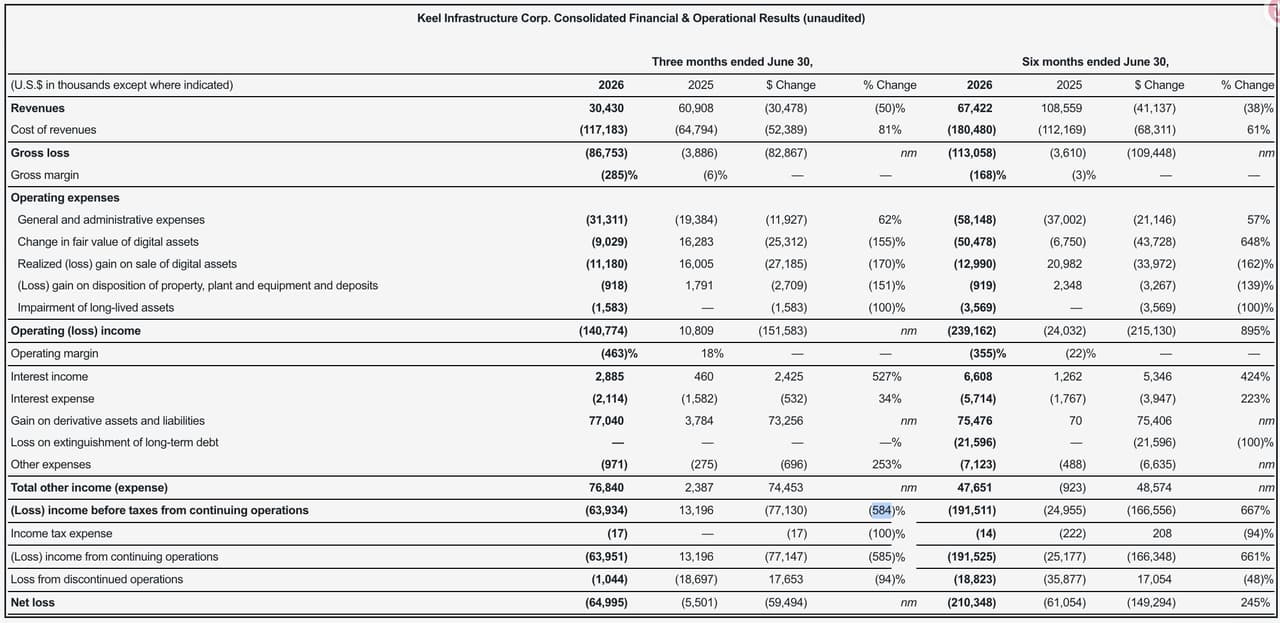
Keel Infrastructure Goes All-In. The company, formerly known as Bitfarms, has completed the shutdown of its U.S. Bitcoin mining operations. In the second quarter, the revenue was approximately $30.43 million, a 50% year-on-year decrease due to the Bitcoin price decline and the shutdown of its cryptocurrency mining operations in the Moses Lake region of the U.S. in April 2026; the adjusted EBITDA was -$23.7 million. The company has chosen to transition into an HPC infrastructure developer, but the new business has not yet reached a scale sufficient to replace the mining revenue.
Therefore, what is truly noteworthy this quarter is not whether mining companies are all talking about AI, but how far they have progressed: some are still relying on mining machines to increase output, some have started to charge monthly data center rent, and some are going through a transition period where old revenue is disappearing while new revenue has not yet materialized.
The mining machines are still roaring, but what is beginning to determine the next stage of financial performance is who has stable power supply, who can deliver data centers on time, and who can truly turn a long-term contract into current revenue.
Original Article Link
Recommended
A $2.25 billion Green Bond, How Jane Street's Lease Made Its Way into the Financing Structure
Aug 14, 13:08
Before the AI Bubble Bursts, 'Big Short' Makes $100 Million from Subscription Fees
Aug 14, 12:48
Still remember NFTs? The price of the new project has surpassed Bored Ape Yacht Club!
Aug 14, 11:49
Santander Investor Day Slogan, How Goldman Sachs Interprets
Aug 14, 11:41
Gemini Earnings Report Breakdown: Credit Card Takes the Lead as Trading Volume Plummets
Aug 14, 11:41
The Best Summer of the Korean Girl is Over, But the Taiwanese Girl's Isn't
Aug 14, 11:40