
Cook Steps Down, What's Next for Apple

Article Title: "Cook Steps Down, What Apple Leaves Behind"
Apple, as a company, has never been good at goodbyes.
The last leadership transition, from Steve Jobs stepping down to his passing, took only six weeks. There was no time for a farewell party.
This time, they held one. Around two hundred people gathered at Apple's headquarters, Apple Park, to bid farewell to someone who had been here for twenty-eight years.
The band OneRepublic performed live, and his successor, John Tanus, took the stage to speak, repeatedly emphasizing one word, continuity.
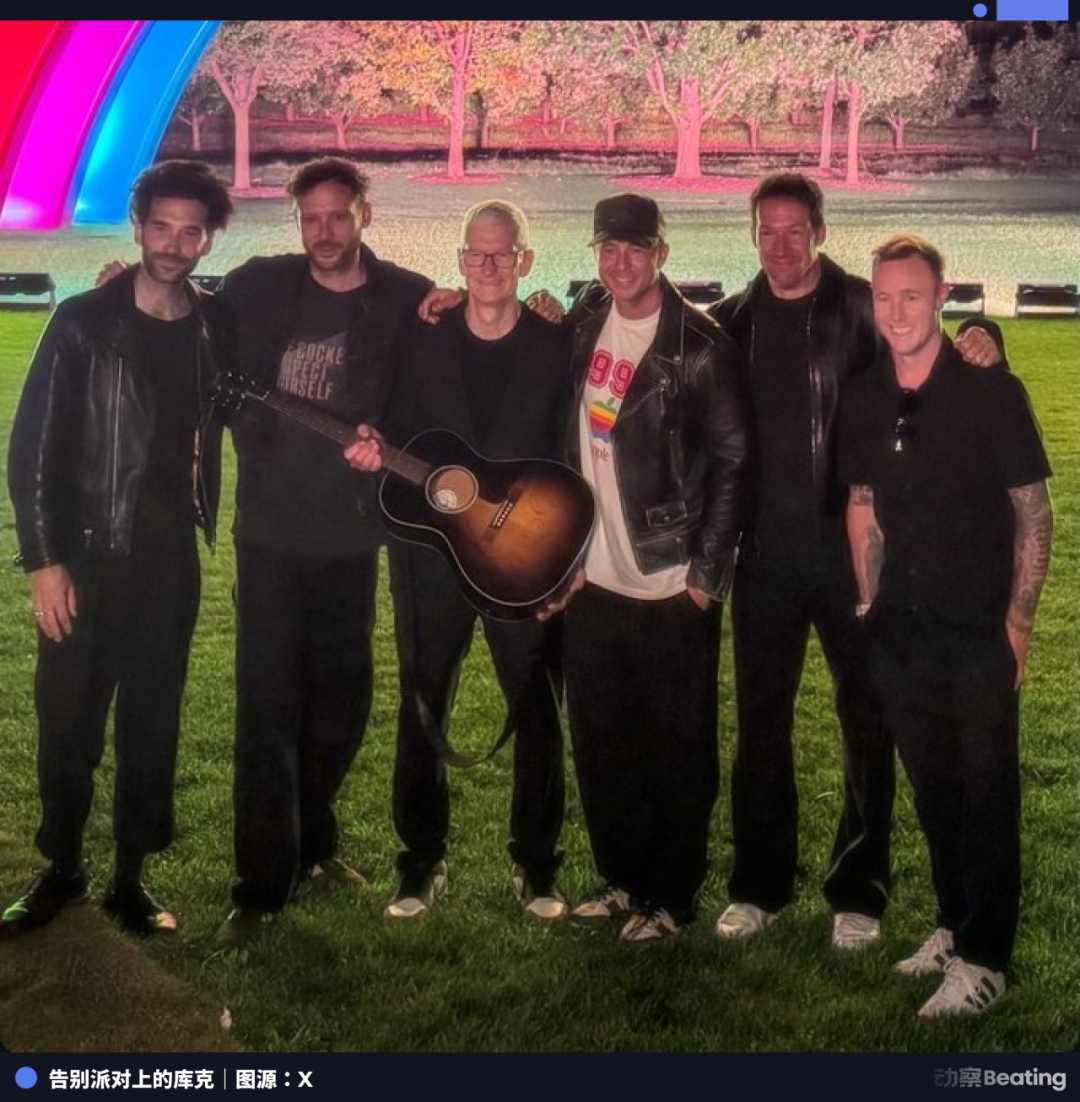
According to those present, his partner Mike stood publicly by his side for the first time. This relationship had been kept hidden for many years and only stepped into the spotlight on his last day at work. Reports say that when it was his turn to take the stage, this typically composed individual during earnings calls had tears in his eyes.
His name is Tim Cook. Today is his last day as CEO at Apple.

Robertsdale
In 1960, Cook was born in the port city of Mobile in Alabama, on the north shore of the Gulf of Mexico, in red clay country, where his family has been involved in shipbuilding for generations. His father worked in a shipyard, and his mother worked in a drugstore. He was the middle of three sons in the family. His parents had no other expectations for him except to excel in his studies.
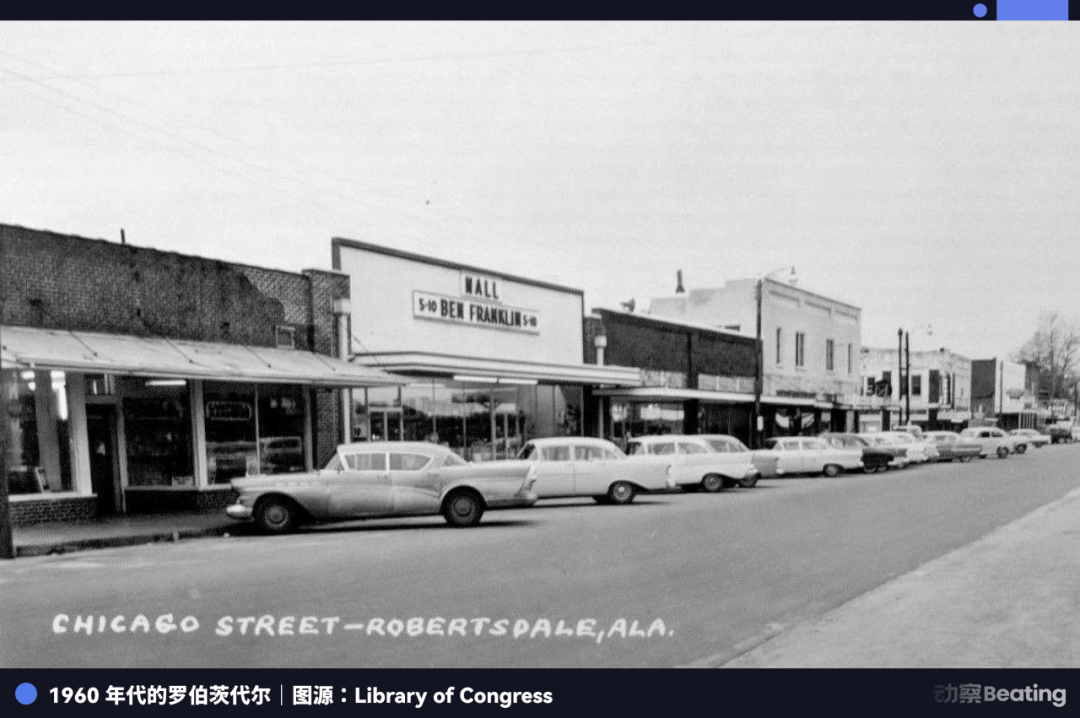
He did excel in his studies. Teachers remember the young Cook as quiet, well-behaved, and always the first to turn in his homework.
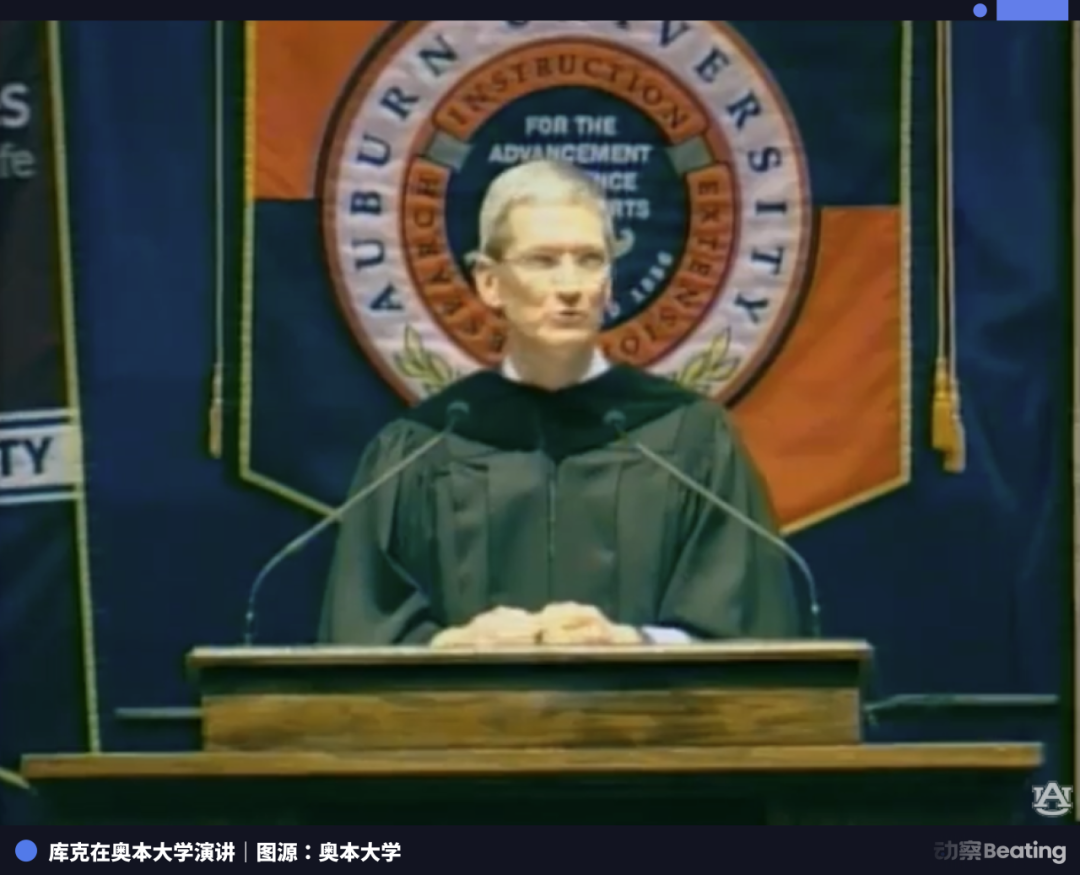
For college, he went to Auburn to study industrial engineering. This field of study focuses on assembly lines, inventory, production flow, how to make a batch of parts move with minimal waste, and turn into a finished product on time.
It's a subject he studied for a lifetime and used for a lifetime.
His twelve years after graduation at IBM took him from the grassroots to the North American fulfillment director, still dealing with that same thing, ensuring that computers appear where they are supposed to be on time. Colleagues recall that during those years, he hardly took any vacations; he worked while others celebrated holidays.
Next was Compaq, the world's largest personal computer company at the time, where he became a vice president in charge of materials. His career was a visible upward trajectory, with the next step being the CEO position at which company.
He never lost his Alabama accent. Later, standing in front of the world for product launches, as soon as he spoke, that southern small-town accent was still there.
The son of a shipyard worker, he honed the craft of 'making things flow' to the top of the industry.
His connection with his alma mater was never severed. As his reputation grew, he joined the Auburn board of trustees. When he went back to speak, it wasn't about business, but about 'doing things right'.
The Alabama of the 1960s was not a gentle place. Racial segregation had just been abolished, but the hostility had not dissipated. Cook said he saw the Ku Klux Klan burn a cross in the night when he was young, the moment he first understood that 'some things are not right'.
A Southern town doesn't offer much to a child, but it offers it early.
In 1998, he received a phone call.

The Man Outside the Spotlight
The call was from Steve Jobs.
In 1998, Apple was not yet the myth it is today. The year before, it had lost over $10 billion, with a market cap of less than $30 billion. The media was no longer discussing whether it would go bankrupt, but when.
Leaving a flourishing Compaq to join this company, everyone around thought Cook was crazy.
He had only spent six months at Compaq. He later recalled that after talking to Jobs, in less than five minutes, he knew he wanted to go to this company. The decision was somewhat impulsive, without much deliberate thought.
Twelve years later, when he returned to Auburn University to speak, he said that the most important decisions in life are often made without much thought.
That year, at the age of 37, he cut off a visible upward trajectory and boarded a sinking ship.
After he joined Apple, he shut down Apple's own factories, outsourced production; closed warehouses one by one, reduced inventory from months' worth to just a few days.
He once said:
'Inventory is evil.'
Later, the world came to know the names of those contract manufacturers, Foxconn, Pegatron, and Zhengzhou's 'iPhone City'. Hundreds of thousands of workers assembled on assembly lines, parts flew in from hundreds of suppliers, and the finished products hit global shelves within weeks.
This machine, its chief architect was Cook. Jobs was responsible for envisioning the next product, Cook was responsible for ensuring the previous product made enough money to fund the next imagination.
In those years, the consensus in Silicon Valley was that Apple's success could not be replicated because Steve Jobs could not be replicated.
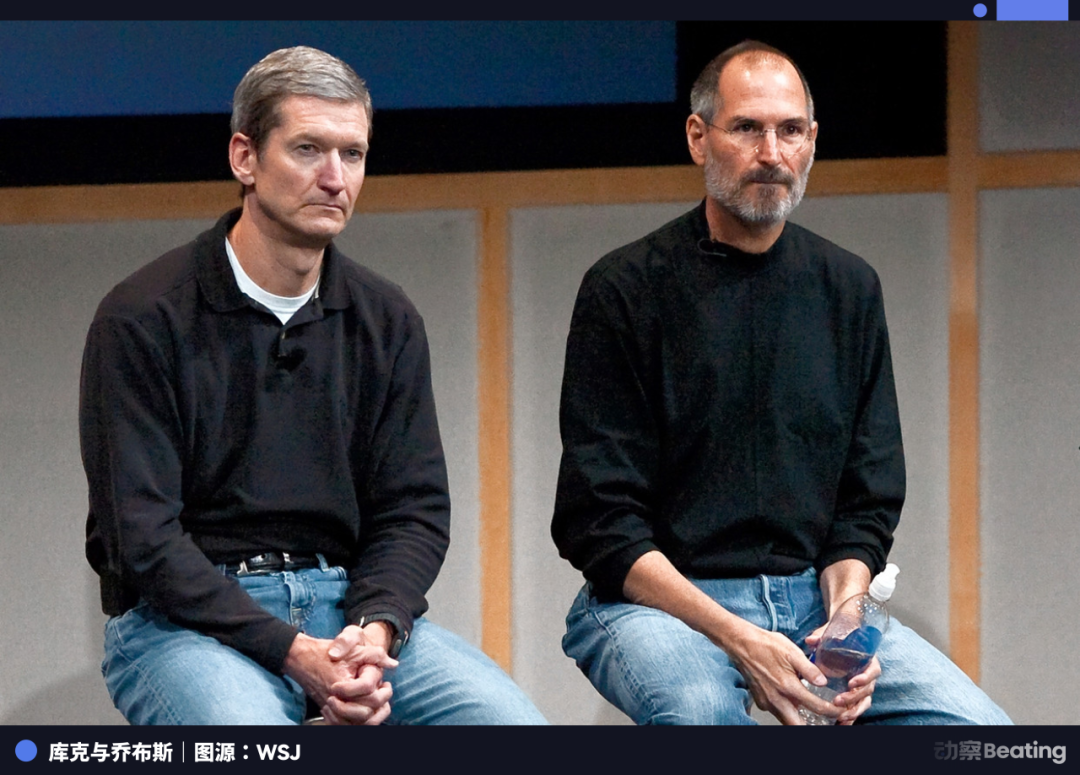
Jobs stood under the spotlight on stage, unveiling several products each year, with the whole world looking up to him. Cook stood outside the spotlight, ensuring those products appeared worldwide on time.
Articles were written about Apple, about Jobs' genius, about Jonathan Ive's design. When it came to Cook, the descriptors were reduced to just four words: operations expert. He only knew how to crunch numbers; in Silicon Valley's words at the time, he was a screw tightener.
Their temperaments were also at two extremes. Jobs' outbursts could be heard throughout the entire floor, while Cook very rarely exploded. Employees recall that in meetings, when he identified an issue, he would just stay silent and look at you, silently, continuously silent.
He almost never gave interviews, never graced magazine covers, never told his own story. Jobs took medical leave three times and each time handed over the reins to Cook as the acting CEO. In 2009, during one such instance, Jobs took half a year off, and when he returned, the company's market value had soared significantly.
Each time Jobs came back, he would hand back the position, stepping back into the shadows once again.

Do What You Think Is Right
On August 24, 2011, Jobs resigned, and Cook took over as CEO. Six weeks later, Jobs passed away.
Before his death, Jobs left him with a sentence, a sentence that Cook later repeated in countless interviews:
"Don't ask what I would do; do what you think is right."
In his first year in office, almost everyone was waiting for Apple to make its first big mistake, for the media to finish writing the eulogy for the "post-Jobs era," and for the company to slowly fade like all companies that lose their founder.
During his fifteen years in office, every time Apple released a new product, the headline was always the same: "Jobs wouldn't have done it this way."
The iPhone had a larger screen, Jobs wouldn't have done it; they released a watch, Jobs wouldn't have; giving dividends to shareholders, buying back stock, Jobs definitely wouldn't have. He lived in a long shadow of comparison.
The few things he did were unlike Jobs.
When Apple Maps had a major issue, he publicly apologized and even suggested that users use a different mapping service until Apple fixed theirs.
When child labor and excessive overtime were discovered in supplier factories, he published the audit reports on the company's website year after year.
In 2016, the FBI asked Apple to unlock the iPhone of a shooting suspect. Apple's CEO chose to take the lawsuit to the world stage rather than create a backdoor. He argued that if this precedent was set, everyone's phones would no longer be secure. The case was eventually dropped, as the government found a third party to unlock the phone.
He compressed his life to only work. For decades.
During his tenure, he visited China over twenty times. He went to Zhengzhou to see the factories, to Beijing to see the stores, to Hangzhou to meet developers. This trans-Pacific supply chain was a canal he dug out year after year.
Every year, billions of iPhones flowed through this canal to the world. In the age of discussing the future in Silicon Valley, half of his time was spent in factories and on shelves.
“Do what you feel is right,” he used it for apologies, for lawsuits, and for business. But the most courageous time had nothing to do with any of these.
Cook has always placed great emphasis on privacy, refusing interviews, not writing an autobiography, and never publicly revealing his partner's name.
However, in October 2014, he broke this tradition. He returned to his hometown in Alabama to give a speech, criticizing the discrimination against the LGBT community in his hometown. On October 30, he wrote an article in Bloomberg Businessweek admitting he was gay. Among the Fortune 500 CEOs, he was the first.
He said that if the fact that Apple's CEO is gay could make a struggling child with their identity feel a little less lonely, could bring a little comfort to a bullied individual, then trading privacy for this was worth it.
A line in the letter reads:
“I’m proud to be gay, and I consider being gay among the greatest gifts God has given me.”
At that time, Alabama had not yet recognized same-sex marriage, and the laws in most U.S. states still allowed employers to fire employees based on sexual orientation.
The following year, same-sex marriage was legalized nationwide in the United States.

Toothbrush Head
The skepticism never stopped. But the numbers on the financial reports told a different story.
At a fall event in 2014, Cook uttered “One more thing.” After Jobs had left, this phrase had not been used for three years. As the words faded, the big screen lit up, and a watch appeared. That was the first brand-new product of the Cook era, although it was unveiled using Jobs' signature phrase.
In the second year after its launch, the smartwatch faced media skepticism about who would need such a device. At that time, no one imagined that it would quietly grow into the world's largest watch business, surpassing the entire Swiss watch industry in terms of units sold.
In 2016, AirPods were released, and the entire internet ridiculed them for looking like a pair of broken toothbrush heads. Later, it was estimated by outsiders that these "toothbrush heads" sold over a billion units in a year.
By 2017, the iPhone had been on the market for a decade, with a total of approximately 1.4 billion units sold. However, the sales growth peaked in the 2015 fiscal year when 231 million units were sold. After that, sales never exceeded that figure, and Apple stopped disclosing sales numbers. Two years later, the iPhone X raised its starting price to $999. Since they couldn't sell more units, they made each unit more expensive.
The businesses within the iPhone ecosystem, such as the App Store, iCloud, Music, and Apple Pay, also grew from nothing to nearly a hundred billion dollars in annual revenue.
Of course, there were also failures. The "Titan" car project launched in 2014, which was secretly developed for ten years, was internally halted by Cook in February 2024, and two thousand engineers were reassigned to work on AI. The Vision Pro, launched in the same year, had a selling price of $3499, packed with top-notch technical specifications, but it failed to attract customers, selling only about four hundred thousand units throughout the year. In these fifteen years, it wasn't all victories.
On Wall Street, Warren Buffett started buying Apple in 2016 and gradually made it Berkshire's largest holding. This old man who always claimed he didn't understand or invest in tech stocks placed most of his bets on Apple, a company that has always been criticized for "lack of innovation."
In 2017, Apple moved into its new headquarters, Apple Park, the iconic circular building. The blueprint was drawn by Steve Jobs before his passing, and it was Tim Cook who turned it from a drawing into reality. The farewell party nine years later was also held in this building.
In 2020, after fifteen years of partnership, Mac parted ways with Intel and switched to Apple's self-designed M-series chips. At that time, most people interpreted this decision more from an economic standpoint – lower costs and longer battery life. No one thought it had much relevance to the future.
Apple's market value has climbed step by step over the years, surpassing $1 trillion in 2018, $2 trillion in 2020, and $3 trillion in 2022. Each milestone marked a first in human commercial history.
The day he took over, Apple's market cap was $350 billion. The day he left, it was $4.5 trillion. Over fifteen years, Apple's market cap increased by an average of $32 million per hour.
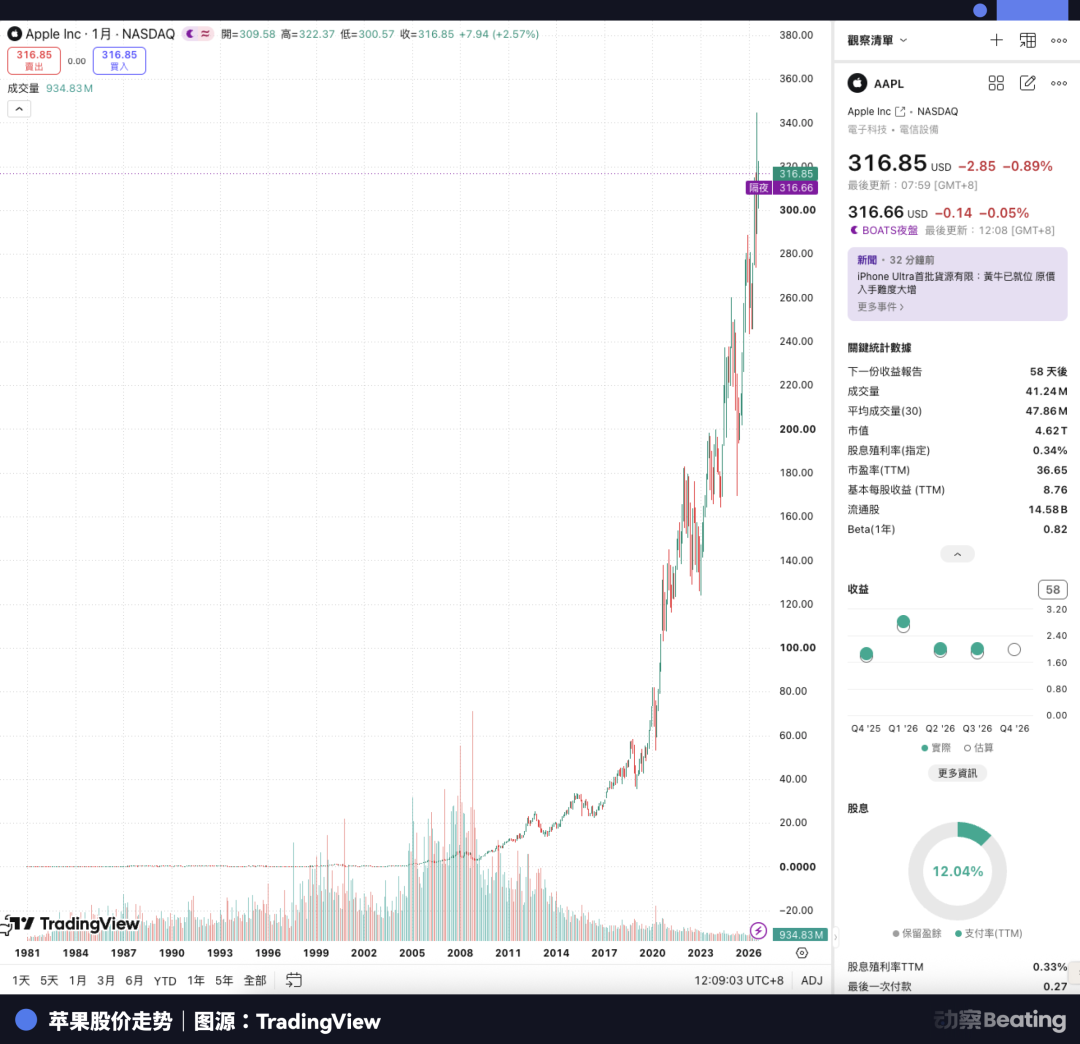
He also announced a $877 billion share buyback during his tenure, the largest in corporate history. Jobs never believed in dividends and buybacks, insisting on keeping the money in hand to build products. Cook, however, had a different approach. He returned profits to shareholders, using buybacks to boost the stock price.
The skepticism of “lack of innovation” walked alongside this steadily rising market cap for fifteen years.

Retake Fee
In 2010, Apple acquired a voice assistant called Siri, one of the acquisitions personally approved by Steve Jobs. On October 4, 2011, the day before Jobs passed away, the iPhone 4S was released, featuring the talkative Siri.
As the voice assistant entered the pockets of the public for the first time, OpenAI did not yet exist, and ChatGPT was still eleven years away from being developed. However, Siri was controversial from the start because its functionality was limited at the time and did not meet users' needs effectively.
This race was pioneered by Apple. Yet, fifteen years later, when Cook stepped down, the biggest criticism of Apple from the outside world was still Siri.
After the emergence of ChatGPT, Siri quickly went from a pioneer to a joke. Despite being released for so many years, its most common use case for users is still setting alarms and it cannot handle other important tasks. In 2024, Apple introduced Apple Intelligence to compete, but the features demonstrated at the event were repeatedly delayed, the polished promotional videos quietly removed, the AI team underwent several transformations, and the release date of the new Siri was continuously pushed back.
In 2026, the market's accumulated anxiety finally erupted, causing Apple's market value to plummet by $230 billion in a short period. Some media outlets referred to this drop as the “retake fee paid by Apple’s shareholders for the AI exam.”
Over the past fifteen years, people compared Cook to Jobs; now, they are comparing him to Ultraman and NVIDIA's Jensen Huang.
Throughout his life, Cook has always been criticized for being slow. The Apple Watch, the AirPods, and the custom chips were all initially criticized for being slow, but these products eventually succeeded. His response has always been the same: Apple doesn’t need to be the first; it needs to get it right before releasing it.
His approach to AI this time is also different from others. While other companies send data to the cloud and use enormous models for the best results, Apple insists on pushing the model into the user's device to run locally, keeping data on the device. Critics say this is due to insufficient capability, but he claims it is a matter of principle. Privacy has been the bottom line he has upheld for over a decade, and he has no intention of compromising that principle just to catch up with the trend.
This time, can he pull it off? No one dares to bet on him.

Shack
On his last week at work, the answer emerged from the most unexpected corner.
According to reports, OpenAI has purchased tens of thousands of Macs, mainly the cheapest Mac minis, for artificial intelligence reinforcement learning training.
Training the next generation of intelligent agents requires AI to practice in a massive real-world computer environment, using computers just like humans. Reinforcement learning involves allowing AI to learn to do tasks on its own through millions of trial-and-error attempts, a practice that requires tens of thousands of inexpensive, energy-efficient machines with ample memory.
The Mac mini is the most unassuming product in Apple's lineup. A square box, without a screen or a keyboard, briefly mentioned at Apple events, sitting in the corner of Apple stores. For twenty years, no one expected it to achieve anything significant.
Now, they are entering AI data centers in batches.
In the entire market, only Apple can do all of these simultaneously. They design their own chips, write their own systems, manufacture the whole machine, and control the supply chain and inventory. Other companies can only provide you with one of these aspects, but only Apple, from chip to shelf, has its entire supply chain. This has been meticulously built by Cook over fifteen years. Every step of the way, he was mocked for just being a "screwdriver assembler."
None of these capabilities were intended for AI. They were the "boring" decisions made back then to break free from Intel, improve profit margins, and enhance battery life. Fifteen years later, they have become the foundation on which others train artificial intelligence.
Cook spent fifteen years as a "non-innovative" CEO. In the end, in the most innovative sector, when training its next generation, Apple is standing on the foundation he laid.
In this AI gold rush, everyone saw NVIDIA, the seller of shovels, making the most money. Only later did people realize that a gold mine requires not just shovels, but thousands of livable shacks.

Continuation
On the day of his resignation, Cook wrote one last letter to all Apple employees.
The letter was not long, only a few hundred words. The first sentence said, "Today is my last day as Apple's CEO." He mentioned that he had known this day would come, but actually writing that sentence, he still couldn't believe it. Apple prepared for this farewell with a seven-month transition, the most thorough one in its history.
He skipped over fifteen years of market cap growth and didn't explain Siri and AI.
In the letter, he wrote that he is proudest of what "can never be captured in an annual report."
He said the company has proven that culture triumphs over everything. He said these people believe in what they do, believe they have a responsibility to make the world a little better. He borrowed Jobs's phrase about putting a dent in the universe and said that if this has been accomplished, it is thanks to the belief of these people. As he wrote this, he said, "How lucky are we, how lucky I am."
He said he did not leave Apple, just a position he had loved for so long. He said he will miss the job, to what extent he can't imagine, but he is at peace.
In the latter part of the letter, Cook passed the baton to Ternus. He said few people understand how to create world-changing products like he does, entrusted the helm to him, and felt very at ease.
John Ternus, who will succeed Cook, has been at Apple for twenty-five years.
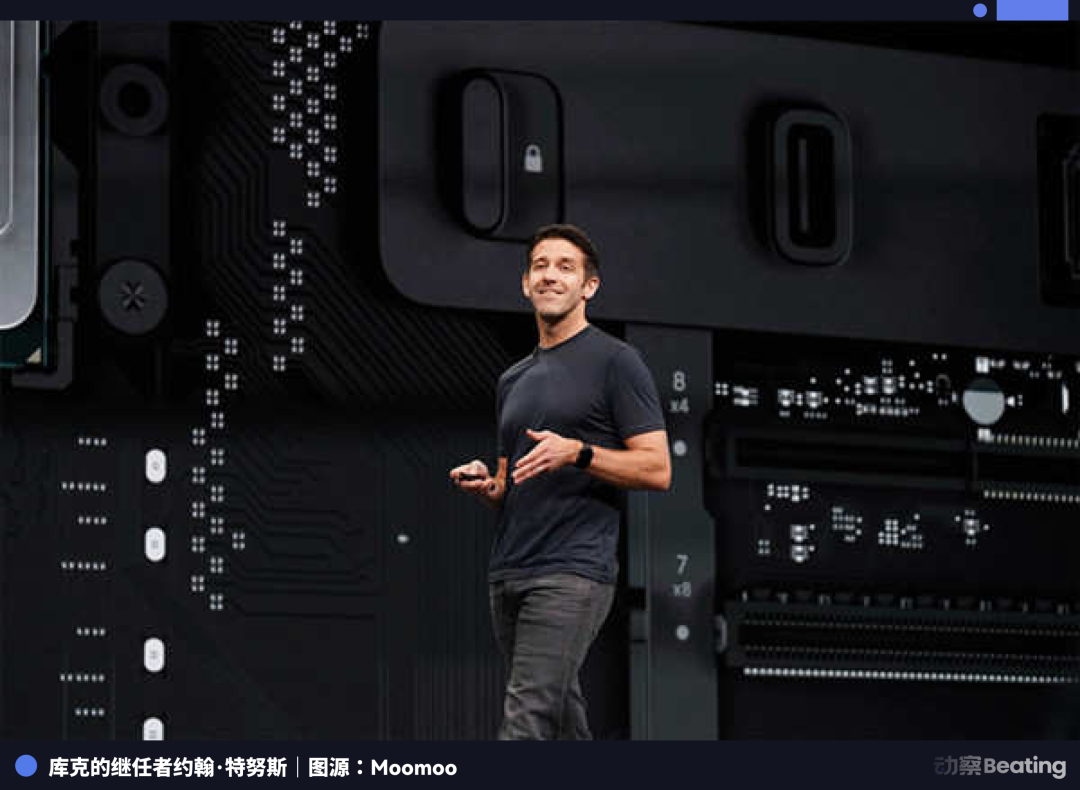
He joined the company in 2001, the year the iPod was launched. Starting as a hardware engineer, he has been in charge of hardware for iMac, MacBook, and iPad along the way. The core product, AirPods, known as "toothbrush heads," was introduced by him. In 2021, he was promoted to Senior Vice President of Hardware Engineering.
The media said Apple has transitioned from the "operator era" to the "hardware fanatic era." At the farewell party, he emphasized only one word, continuity.
He is also someone who has been in the shadows for twenty-five years. At the event, he talked about chip packaging and titanium metal frames, with a speaking pace similar to Cook's.
Cook will remain as chairman for some time to support the new appointee.
Kazuo Ishiguro wrote a novel called "The Remains of the Day." An English butler, Stevens, serves a lord for decades, always standing behind the master, behind the door, in the shadows of all the lights, doing what the lord asks.
At the end of the book, he sits alone on a pier by the sea, watching the evening lights come on one by one. A stranger tells him that evening is the best time of the day.
Cook's story is the other half of this story. He stood behind Jobs, ensuring products appeared on shelves worldwide year after year. People remember those products, like remembering the lights on in an old house; yet, no one remembers who polished the lights every day.
The party was over, and the lights in the circular building dimmed floor by floor. Meanwhile, thousands of Mac minis in a server room thousands of miles away were being plugged into racks, powered on, and booted up, with each indicator light turning on one by one.
He had spent his whole life in the shadow of the limelight. This time, he was the one who lit up those lights.
Dusk is the most beautiful time of the day.
Original Article Link
Recommended
Morgan Stanley Analysis: Half-Year Revenue Quadrupled, Has Smart Alpha Reached a Commercial Inflection Point?
Sep 1, 17:32
AllianceDAO and FOMO Founder's Latest Portfolio: 70% in Stocks, Crypto Holdings Limited to BTC and Zcash
Sep 1, 17:13
$1.4 billion Flows into ETH ETF, Is this Just the Beginning of ETH's Liquidity Rally?
Sep 1, 15:54
Latest Non-Farm Payrolls Forecast: Job Growth Could Slow Down, Putting the Fed in a Tight Spot
Sep 1, 15:22
$300 million Follow-On Investment in Polymarket Revealed, Unveiling Trump's Eldest Son's 1789Capital
Sep 1, 14:30
Non-Farm Payrolls Friday: Job Growth Cools – Can It Deter Fed's Hike?
Sep 1, 13:37