Goldman Sachs raises global equities, but Citi closes longs, should you add or reduce positions?

TL;DR
· On October 12, Goldman Sachs raised its three-month tactical view on global equities from neutral to overweight. The next day, Citi withdrew its overweight recommendation on U.S. equities and closed its long position in the S&P 500 equal-weight index.
· Neither side denies that earnings are still growing; the disagreement is over signal priority. Goldman Sachs believes the valuation pullback since summer has improved short-term odds, while Citi believes positioning and optimism have reached levels that historically often coincide with market tops.
· Related instruments: S&P 500, S&P 500 equal-weight index, global tech stocks, rate-sensitive and high-dividend sectors, U.S. Treasuries.
On October 12, Christian Mueller-Glissmann, head of Goldman Sachs' asset allocation team, raised the bank's three-month tactical view on global equities from neutral to overweight. The next day, Citi's U.S. equity strategy team withdrew its overweight recommendation on U.S. equities while closing its long position in the S&P 500 equal-weight index.
The two Wall Street majors made opposite moves in the same window, pointing to the same question: with the index near record highs and long-end yields back above 5%, should investors add or trim in the near term? Neither side denies that earnings are still growing.
In the language of institutional allocation, overweight means holding a bit more weight relative to the benchmark, while underweight means holding less; neither is an on-off buy or sell signal. Goldman Sachs' adjustment this time was to bring its three-month tactical stance back in line with its own twelve-month framework, which was already bullish. What Citi removed was only its U.S. equity overweight and equal-weight long, and it did not declare a bearish view on U.S. equities.
Goldman Sachs' logic is not complicated. The index has traded sideways for nearly three months, earnings expectations are still moving higher, so valuations have come down on their own, and the risk-reward ratio has improved accordingly.
The team's basis is that the consensus estimate for S&P 500 third-quarter earnings year-over-year growth is around 25%. At the same time, the forward P/E has fallen from about 21x in early June to around 19x. Prices have not risen while earnings expectations have been revised upward, and the combination means the odds entering earnings season are no longer as one-sided as they were in summer.
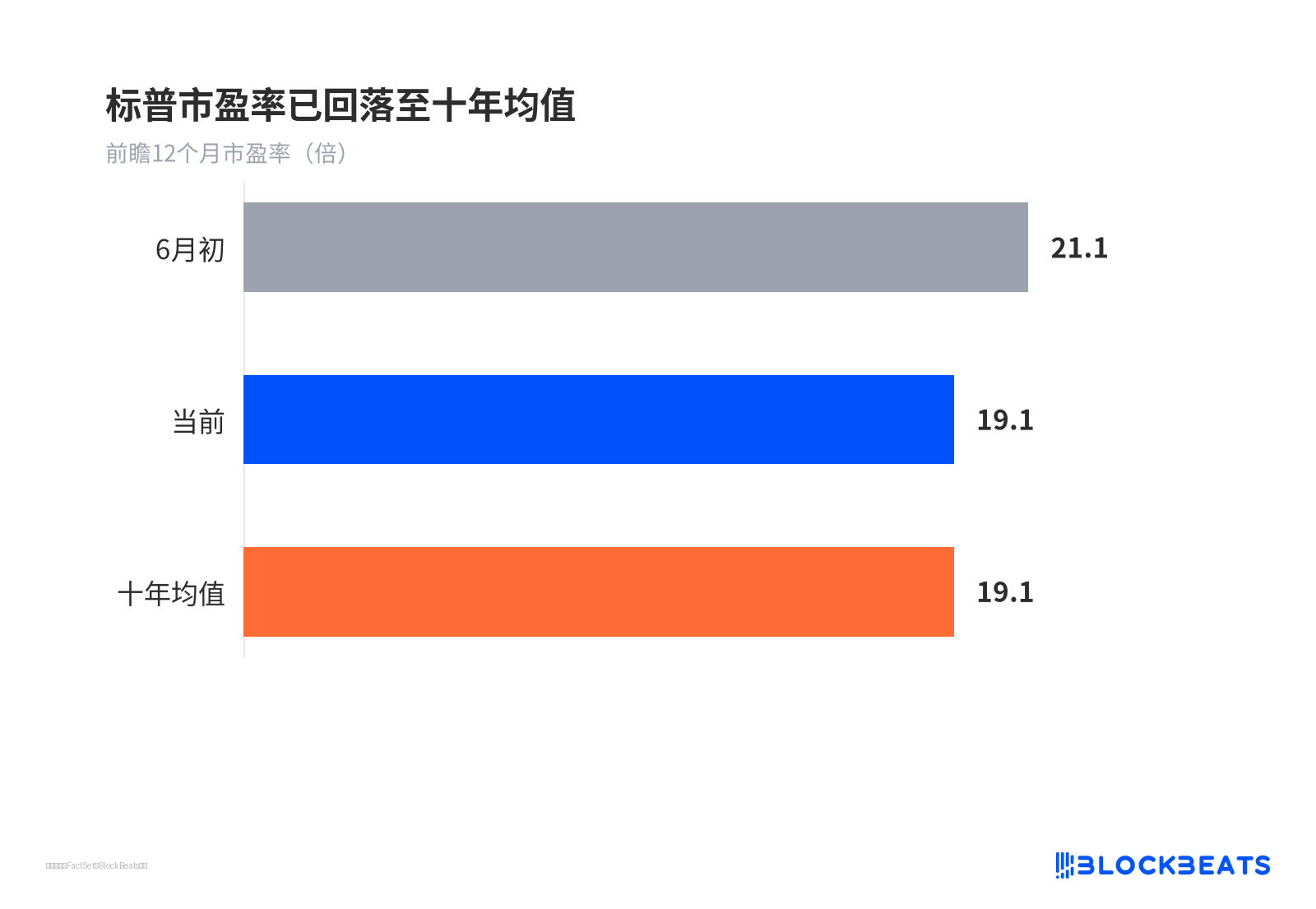
S&P P/E has fallen back to its ten-year average
By region, Goldman Sachs maintains overweight on the U.S. and Asia and underweight on Europe. By sector, it recommends a barbell structure: on one end, global tech; on the other, rate-sensitive, low-volatility, high-dividend bond-like stocks. The logic for the former is AI demand, while the latter bets that if tech pulls back or growth concerns intensify, it can provide a buffer.
This rating is position advice, not a new index level forecast. The so-called more attractive valuation is relative to the summer highs, not absolutely cheap.
Citi's trigger indicator is POLLS, a framework that combines five components: positioning, optimism, liquidity, leverage and stress. Its recent reading has entered a range that historically often coincided with market tops, which is the direct reason Citi first pulled its overweight.
What was closed was a long position in the S&P 500 equal-weight index. The equal-weight index is like giving each of the 500 companies one vote, diluting the weight of giants like Nvidia, so it better reflects market breadth rather than the market-cap-weighted index driven by a handful of tech leaders.
In other words, Citi is targeting crowding risk in breadth, which does not amount to declaring the end of the U.S. tech bull market. The bank itself also stressed that this is a tactical de-risking, not a turn bearish, and it does not advocate a full flight to safe-haven assets.
In the same week, BofA's Michael Hartnett offered a third voice. In his October 9 fund flow report, he maintained the sell signal on the bull-bear indicator, noted that money market funds saw their largest weekly net inflow since April 2020, and identified the November midterm elections as the biggest source of volatility before year-end. His overall stance sits on the more cautious side of the sell side.
One easily misread point is bonds. Goldman Sachs raised its 12-month government bond view from neutral to overweight, and said bonds should gradually shift from a portfolio drag to a hedge, but its three-month bond view remains neutral, with a near-term preference for short duration and cash.
Near-term neutral and long-term overweight can both be true at the same time. Merging them into a single upgrade of both stocks and bonds to overweight loses the key variable of duration.
Another reference-frame issue lies in stocks themselves. The S&P 500 forward P/E is about 19 times, corresponding to an earnings yield of about 5.3%, while the 10-year U.S. Treasury yield is around 5.2%, leaving the equity risk premium in a lower historical percentile. Relative to its own high of about 21 times in June, U.S. stocks are indeed somewhat cheaper, but relative to Treasuries, they are still expensive. With the same set of data, change the benchmark and the conclusion flips.
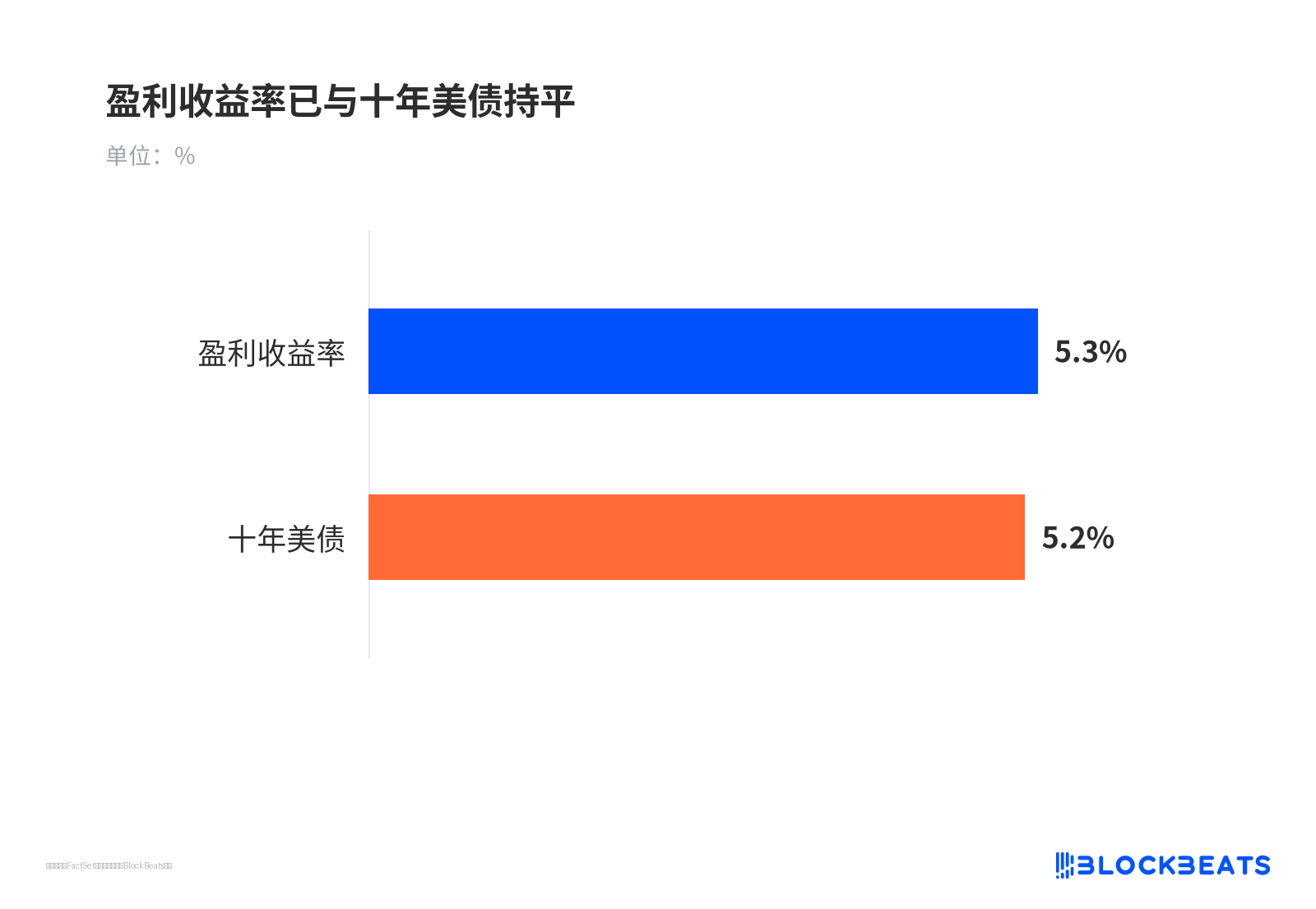
The earnings yield has caught up with the 10-year U.S. Treasury
The third-quarter earnings season has begun, and the market needs to test two things: whether earnings growth of around 25% can be delivered, and whether AI capital expenditure can turn into profits beyond what is on paper.
At present, earnings are highly concentrated, with Nvidia and Micron estimated to contribute more than one-third of the incremental growth combined, making upside surprises seem more like a matter for a small number of companies. Once their guidance runs into problems, the earnings story at the index level will loosen.
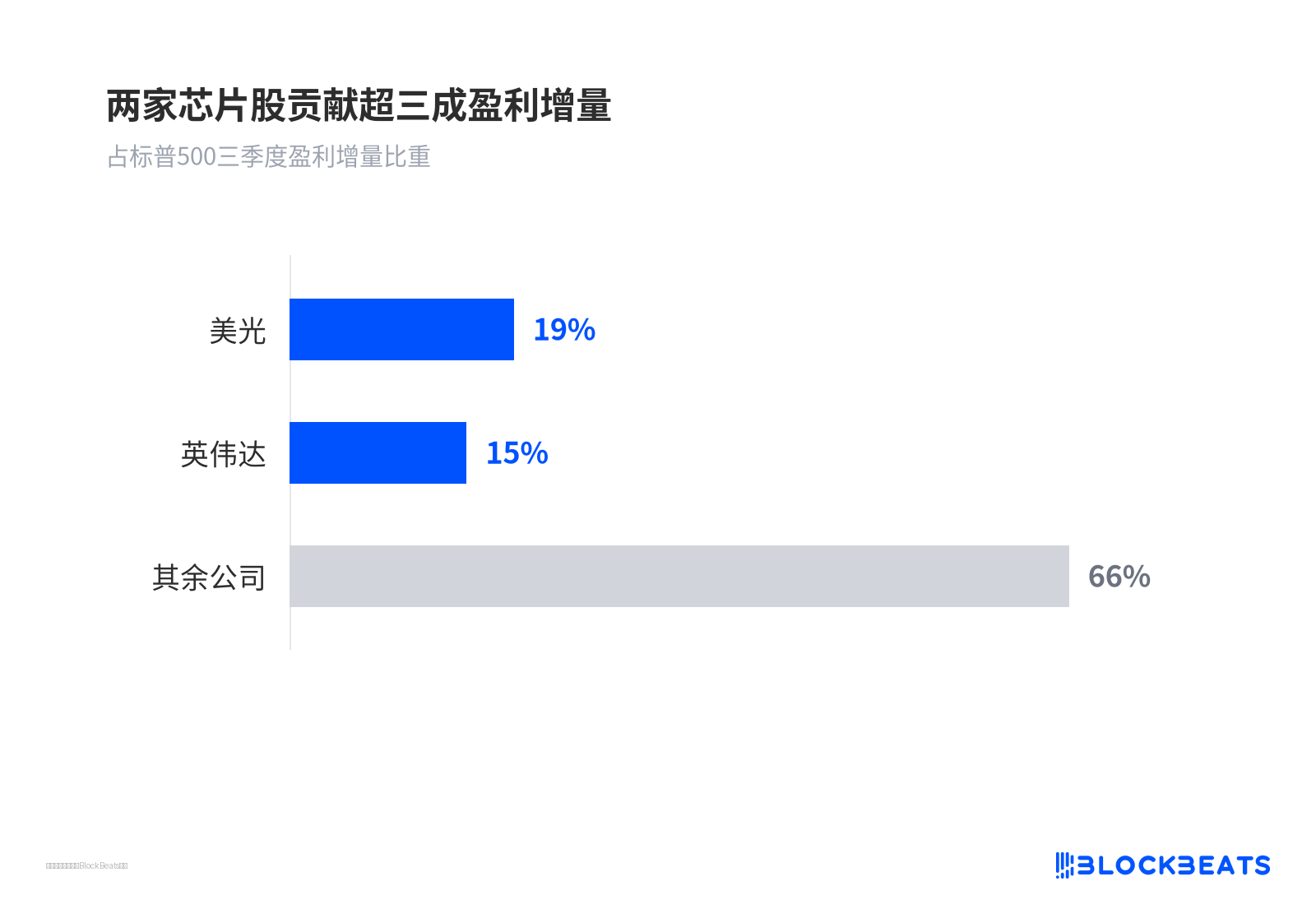
Two chip stocks contribute more than 30% of incremental earnings
The rates side is equally critical. Whether the 10-year U.S. Treasury yield can hold steady at its current level, how inflation data land, and the outcome of November's midterm elections will all affect whether Goldman Sachs' barbell structure still holds. In particular, the rate-sensitive and high-dividend leg is essentially a bet that rates will no longer rise.
Before these two points become clear, Goldman Sachs' overweight and Citi's risk reduction can both be true at the same time. They answer different questions: the former asks whether the odds for the earnings season have improved, while the latter asks whether positioning in a high-level market is too crowded. What will determine the winner is the earnings numbers themselves, as well as the actual constraint that long-end rates place on the valuation anchor.
Join the official Coincamps community:
Telegram: https://t.me/coin_camps
Recommended
In-Depth Guide: How to Turn Your iPhone Into a Secure Cold Wallet?
Oct 14, 13:00
OnePoint BFG CIO Warns: Bond Market Is Underestimating Inflation Risk
Oct 14, 12:53
JPMorgan Research Analysis: Microsoft Maia 300 Inference Performance Up 40%, Million-Chip Deployment Cuts Costs
Oct 14, 11:44
Google Launches Gemini 4 Argon Model with Million-Token Output Support and 80% Off Launch API Pricing
Oct 14, 11:39
Character.AI Files for Bankruptcy, Disney Eyes $20 Million Acquisition, Users Left With Only Psychological Aid
Oct 14, 11:26
Weekly buying hits lowest level of the year; whether Strategy remains in the index will be decided this week.
Oct 14, 10:53