
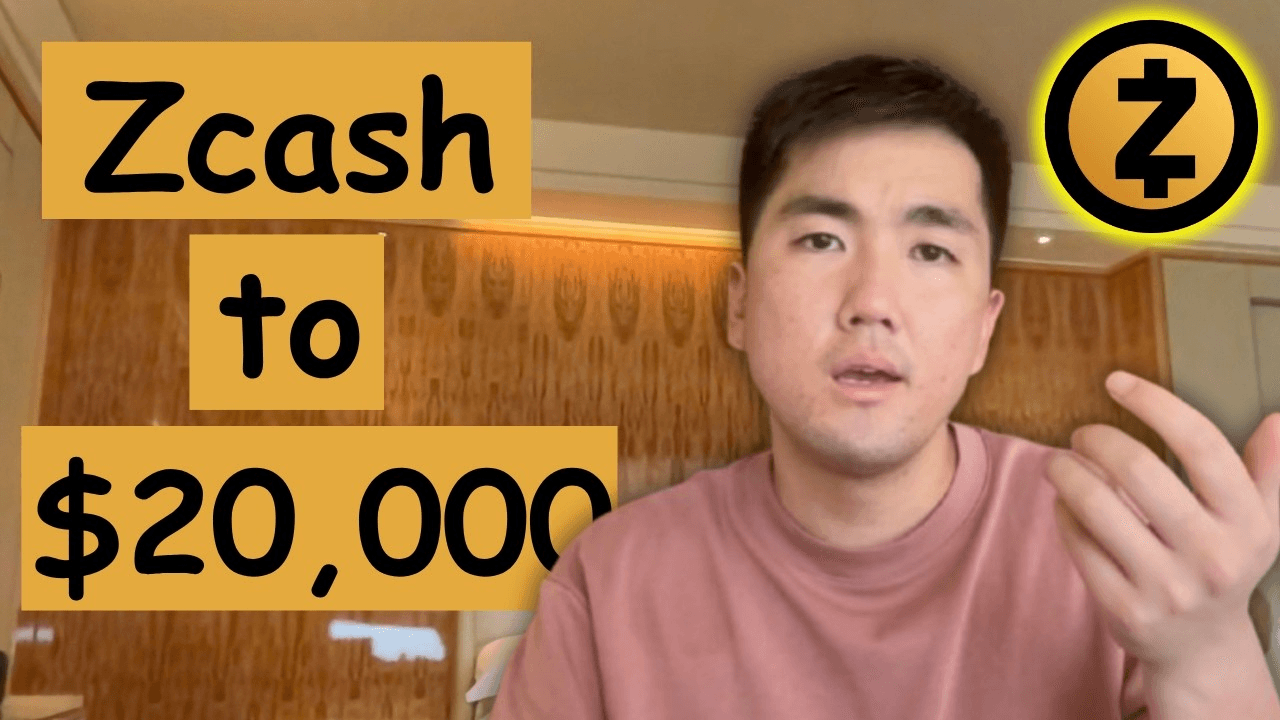
Podcast Notes | Taiki Maeda: Continues to Be Bullish on ZEC Targeting $20,000, Buying “Quantum-Resistant” Insurance for Bitcoin
Compiled & Edited: TechFlow

Guest: Taiki Maeda (Independent Researcher, Zcash Bull)
Podcast Source: Taiki Maeda (https://www.youtube.com/watch?v=kBcJNSxAY5w)
Original Title: How Zcash Flips Bitcoin
Air Date: 2026-10-09
Key Takeaways
- The Cyclical Nature of Flipping Narratives: In every bull cycle since 2017—BCH in 2017, ETH in 2020, Solana in 2024—there has always been an asset that rallied hard enough to convince people it could unseat the incumbent. Alpha comes from identifying the challenged incumbent and betting on the challenger, a dynamic some refer to as "late-mover advantage."
- Last-Mover Advantage: Niche Dominance Meets Grand Endgame: Peter Thiel argues in 《From 0 to 1》that you should aim to be "the last great innovator," first dominating a narrow niche before expanding toward a long-term vision. Two assets in crypto fit this profile perfectly: Hyperliquid (its niche is perpetual futures, its endgame is serving as infrastructure for all finance) and Zcash.
- Zcash’s Niche and Endgame: Its niche is privacy coins; its endgame is to fulfill Satoshi Nakamoto’s original vision for Bitcoin: peer-to-peer electronic cash. Meanwhile, Bitcoin has been actively "frozen" into digital gold.
- Project Tachyon: A Dual Approach: It introduces scalability (pushing TPS from thousands into the tens of thousands) and makes Zcash quantum-resistant. Both must be coupled because post-quantum signatures are 10 to 30 times larger than current ones; implementing quantum resistance alone would severely bloat the entire chain.
- Timeline Pushed Back to Q1 2027: The lead developer originally planned an年内 delivery, but the June orchard pool vulnerability and a potential infinite minting bug slowed progress. Zooko’s recent remarks at an event could serve as a short-term catalyst.
- Changeability vs. Immutability: Zcash can evolve alongside emerging threats like quantum computing and privacy demands, whereas Bitcoin sacrifices adaptability for strong immutability; security budgets (network sustainability mechanisms akin to EIP-1559 where transaction fees are burned and redirected to emissions) represent another missing piece in Bitcoin.
- A 2028 Thought Experiment: Zcash is quantum-resistant and heading toward tens of thousands of TPS, while the Bitcoin community fractures over Q-Day. Capital allocators pivot to non-sovereign stores of value. Naval’s quote—"Bitcoin is insurance against fiat; Zcash is insurance against Bitcoin"—becomes the core metaphor.
- Investment Philosophy (Druckenmiller): Never invest in the present; imagine the world in 12, 24, or 36 months and invest in that future instead. Zcash is currently priced in at roughly a 1.5% flip probability, but Taiki believes its right tail is severely undervalued. With nine to ten years of underperformance, Zcash is one of the closest things to Bitcoin’s "flawless birth."
II. Highlighted Insights
- "Truly understanding why Zcash will rise can make us substantial profits. Many assume it’s solely pumped by a privacy narrative, but that’s merely the tip of the iceberg."
- "Zcash’s endgame is to realize Satoshi’s original vision for Bitcoin: peer-to-peer electronic cash. Bitcoiners actively chose to freeze Bitcoin. The whitepaper explicitly states electronic cash, yet they’re content with making zero changes and turning it into digital gold."
- "You cannot solve quantum without solving scalability. Post-quantum signatures are estimated to be 10 to 30 times larger than current ones. Implementing only quantum resistance would cause terrible chain bloat, which is why Tachyon’s value lies in executing both."
- "When investing, never ever invest in the present. Imagine the world in 12, 24, or 36 months and invest in that reality, because most of what is happening today is already reflected in prices."
- "If Zcash were destined to fail, it should have zeroed out after June’s orchord FUD. Yet it survived and approached all-time highs. The market is telling you there’s something significant here."
- "If the maximum expectation for Zcash is merely 10% or 20% of Bitcoin’s market cap, we will never reach it. No one will chase buying when it sits at 9.9%."
III. Main Content
1. Bottom Line First: A Personal Bet on Zcash Flipping Bitcoin
Taiki Maeda: My personal price target for this cycle is $20,000 per Zcash by the end of the bull run. To understand how that’s possible, we must first study the "flipping narratives" across every cycle since 2017. There is always one asset that rallies so aggressively that investors genuinely believe it can unseat the incumbent. In 2017 it was BCH’s block size war, with many truly convinced BCH would flip Bitcoin; in 2020 it was ETH using the DeFi supercycle to attempt flipping Bitcoin, billed as ultrasound money; in 2024 it was Solana potentially flipping ETH via the meme supercycle. The key isn’t whether you personally believe it, but that enough people will believe it to drive price action. Studying historical cycles reveals that alpha comes from identifying the challenged incumbent and then betting on the challenger attempting to steal market share. Some call this "late-mover advantage."
2. Last-Mover Advantage: Niche Dominance Meets Grand Endgame
Taiki Maeda: Peter Thiel’s excerpt on "late-mover advantage" in 《From 0 to 1》fits perfectly. The gist is that first-mover advantage lets you capture share while competitors scramble, but "being first" is merely tactical, not the objective. The real goal is generating cash flow in the future, becoming the last great innovator in a given market, and enjoying monopolistic profits for years or decades. The method resembles chess; as grandmaster Capablanca famously said, to succeed, you must first study the endgame. Two assets in crypto perfectly embody this, mirroring my own portfolio. The first is Hyperliquid, which dominates the perpetual contracts niche. Its long-term vision is building infrastructure that houses all finance. Ambitious, yes, but if it succeeds, token holders see remarkable returns. The second is Zcash. I want to spend more time here because Zcash’s asymmetry is absurdly mispriced—it’s a deeply misunderstood asset. I guess your first reaction is probably "no way, bro," or maybe you think I look like I’m asking for it, but think carefully: Bitcoiners actively chose to freeze Bitcoin.
3. What Zcash Gets Right: Fulfilling Satoshi's Original Intent
Taiki Maeda: Zcash has dominated the privacy coin niche, while its long-term vision—its endgame—is to fulfill Satoshi Nakamoto’s original intent for Bitcoin: peer-to-peer electronic digital cash. The whitepaper explicitly stated peer-to-peer electronic cash, yet Bitcoiners are content with making zero changes, letting it become digital gold. That isn’t inherently bad; I still hold Bitcoin and believe it’s a highly valuable asset. But every cycle features assets challenging the incumbent’s market position and stealing share. As quantum threats approach and consumer demand for privacy shifts, this opens exactly the wedge Zcash needs to compete for market share and capital flows. And the most critical protocol upgrade—one almost nobody discusses—is called Project Tachyon. It might be one of the most influential upgrades in crypto history.
4. Project Tachyon: Scalability and Quantum Resistance Must Be Coupled
Taiki Maeda: It accomplishes two things. First, it introduces scalability, paving the way for Zcash to leap from thousands into the tens of thousands of TPS. Second, it makes Zcash quantum-resistant. Crucially, these two things must be implemented together. You cannot solve for quantum without addressing scalability, because post-quantum signatures are estimated to be 10 to 30 times larger than non-post-quantum ones. Building a chain that solves only for quantum would introduce severe bloat issues. That’s precisely why they must be coupled—that’s Tachyon’s value. The timeline remains uncertain. During an April interview, the lead developer overseeing this expressed hope for an年内 delivery, but the June orchard pool vulnerability and a potential infinite minting bug pushed a 2027 Q1 timeline into greater realism. I’m recording this in Singapore right now, and there’s a major Zcash event coming up in a few days. If Zooko takes the stage and outlines a concrete Tachyon roadmap, even that single event could trigger a massive move higher for Zcash.
5. Changeability vs. Immutability, and the Security Budget
Taiki Maeda: An analyst on X correctly framed how to understand Zcash: the biggest difference between Bitcoin and Zcash isn’t privacy or quantum, but that Zcash can "change" while Bitcoin cannot. It’s a trade-off. Bitcoin’s rigidity buys stronger immutability guarantees and a fixed supply, while Zcash adapts far better to the latest threats and user demands like quantum computing and privacy. Moreover, Zcash holds an edge beyond this: the security budget problem. What happens after all 21 million Bitcoin are mined? I genuinely don’t know the answer. In our circle, people either say "we’ll cross that bridge later" or propose "stealing Satoshi’s coins before quantum computers arrive and injecting them into the tail emissions to pay miners." But what happens after the theft? By contrast, the Zcash community is actively debating a "network sustainability mechanism," similar to EIP-1559, where a portion of transaction fees are burned and transferred into emissions. At least they’re having the conversation. Apply Jevons’ paradox: if Zcash becomes incredibly cheap and fast at tens of thousands of TPS, adoption will surge, generating sufficient transaction fee incentives to reward miners packaging blocks. This is the puzzle piece Bitcoin lacks and Zcash is actively filling.
6. A 2028 Thought Experiment: When Zcash Diverts Bitcoin's Capital Flow
Taiki Maeda: Close your eyes and imagine 2028, a reasonably plausible horizon. Project Tachyon has launched, Zcash is quantum-resistant, and it’s advancing along its scalability roadmap (starting at 5,000 TPS, with lab estimates projecting 10k, 20k, even 30k TPS). Meanwhile, Bitcoiners are torn apart over Q-Day: one faction is terrified, arguing "Bitcoin won’t appreciate anymore due to Q-Day, let’s just steal Satoshi’s coins and deal with consequences later"; another insists this destroys Bitcoin’s flawless birth and refuses any changes, saying "let them steal if they want." Community infighting makes large-cap allocators hesitant to deploy significant capital into Bitcoin as a store of value. Coincidentally, 2028 is also an election year. After witnessing Trump capitalize on meme coins, perhaps the opposing party will emerge, bringing heavier rhetoric targeting specific asset classes or imposing steeper wealth taxes. Regardless of your stance, it could happen, and high-net-worth individuals will seek non-sovereign stores of value that escape capital controls. Zcash emerges as a viable candidate.
7. Reflexivity: Self-Reinforcing Prices and the Insurance Thesis
Taiki Maeda: The market currently prices Zcash’s "flip probability" at roughly 1.5%, simply because its ratio to Bitcoin hovers around 1.5%. I believe that ratio is far too low; the market severely underprices Zcash’s right tail. From a simplified perspective, Zcash rising from $400-$500 to $1,000-$1,200 might just stem from growing privacy awareness, which alone could attract Crypto-Native capital. But what I believe will drive its parabolic curve is catalysts like Tachyon. If Zooko takes the stage in the coming weeks and delivers a viable roadmap stating, "By late 2027 we’ll hit X KTPS," I wouldn’t be surprised if it instantly sends Zcash significantly higher, because people will start saying, "Wait, Zcash offers privacy plus scalability while Bitcoin doesn’t; Zcash has a quantum roadmap while Bitcoin lacks one. Why shouldn’t it command a higher valuation?" Naval noted that Bitcoin is insurance against fiat, while Zcash is insurance against Bitcoin. It pays sometimes, fails sometimes. You don’t even have to bet on a full flip; you can act like a Bitcoin whale by selling 2% of your holdings to buy Zcash as a hedge, doing so without stressing your balance sheet. For buyers to justify purchasing Zcash as it reaches double-digit percentages (10%, 20%) of Bitcoin’s market cap, marginal buyers must genuinely believe it can flip Bitcoin, because that implies it still has 5x upside relative to Bitcoin. Interestingly, on-chain data already shows legacy Bitcoin whales converting BTC into Zcash. While you’ll rarely hear Bitcoin maxis voluntarily sell BTC for Zcash, some rational maxis argue, "What’s the harm in selling 2% of my Bitcoin to buy Zcash? Consider it insurance."
8. Investment Philosophy and Self-Positioning
Taiki Maeda: Stanley Druckenmiller captured this best: "When investing, never ever invest in the present. Imagine the world in 12, 24, or 36 months and invest in that reality, because most of what occupies your mind today is already reflected in the price." To secure alpha in the AI era, you must think critically from first principles, identify what others overlook, and invest in that future. If you’re right, you win massively; if you’re wrong, you get harvested. Life operates this way. I’m framing this episode as both a prediction of the world and a note to my future self. By late 2028, I might be sipping cocktails watching this video, either thrilled I called it right or laughing at how profoundly wrong I was, watching Bitcoin hit $1M while Zcash goes to zero. But I consider the latter extremely unlikely. If Zcash were destined to fail, it should have zeroed out after June’s orchard FUD. Instead, it survived and approached ATHs. The market is signaling value through price action. Zcash is one of the most misunderstood assets. Those veteran OGs, largest Bitcoin bulls, and Ethereum holders cling to biases dating back two years, but Zcash with Tachyon is no longer the same project. With nine to ten years of subpar price performance and proof-of-work emissions, Zcash is among the closest analogs to Bitcoin’s "flawless birth." I will trim positions as it rallies because it represents the majority of my net worth; holding blindly to $20k is irresponsible. Yet the mere imagination of "Zcash displacing Bitcoin" is enough to push anyone past their psychological threshold.
Join the official Coincamps community:
Telegram: https://t.me/coin_camps
Recommended
JPMorgan Research Analysis: Microsoft Maia 300 Inference Performance Up 40%, Million-Chip Deployment Cuts Costs
Oct 14, 11:44
Google Launches Gemini 4 Argon Model with Million-Token Output Support and 80% Off Launch API Pricing
Oct 14, 11:39
Character.AI Files for Bankruptcy, Disney Eyes $20 Million Acquisition, Users Left With Only Psychological Aid
Oct 14, 11:26
Weekly buying hits lowest level of the year; whether Strategy remains in the index will be decided this week.
Oct 14, 10:53
Bitget UEX Daily | Major US stock indices closed lower; banking sector earnings were mixed; AI chip stocks continued to face pressure
Oct 14, 10:46
Barclays Research Report Analysis: S&P 500 Earnings Forecast Up 26.5%, Beating Earnings Estimates Is Key to Stock Price Performance
Oct 14, 10:39