
DeepSeek, Huawei, 'Must Succeed': 160,000 Fireflies Illuminate the Wasteland

The original title: "DeepSeek, Huawei, 'Must Succeed': 160,000 Fireflies Shine Into the Wilderness"
The original author: Dongcha Beating
In 2019, the most expensive asset in China's quantitative circle was not in Lujiazui, but in the server room of an office building in Hangzhou.
1,100 GPUs, for which High-Flyer paid nearly $200 million in real money. The racks were lined up, occupying an area close to a basketball court. There was no day or night in the server room; the only background sound was the harsh whine of high-speed fans.
The people managing the machines gave this cluster a codename: "Firefly."
The name was light, but the calculation behind it was extremely realistic. In a year when large models had not yet become a prominent discipline, 1,100 cards ran day and night without rest, with the sole task of calculating the next basis point of alpha for their owner from massive tick data before the next day's opening auction.
A pure money-printing machine.
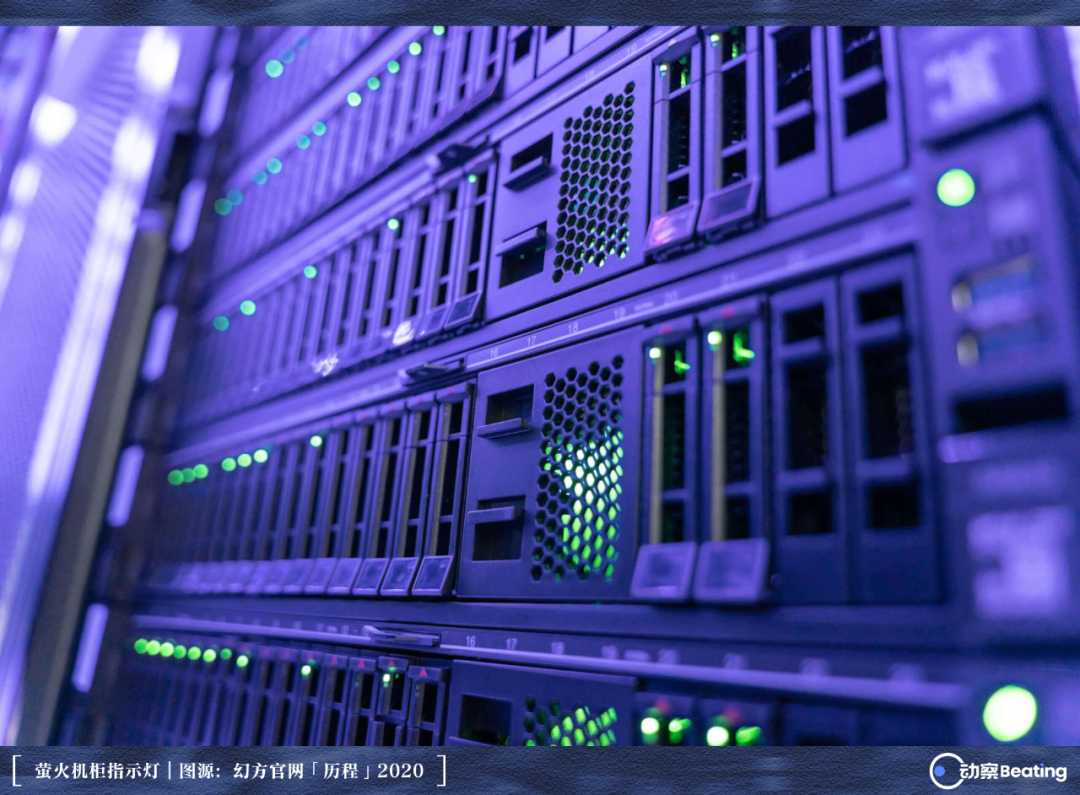
In the same year, more than 1,000 kilometers away in Shenzhen, Huawei was added to the Entity List. The world's most advanced process nodes and semiconductor IP were completely shut off on that day.
Both groups were paying for unknown variables.
High-Flyer believed in algorithms. A few young people from Zhejiang University only wanted to turn huge electricity bills into excess returns on the books before the market reacted; the self-developed chips in Huawei's hands were a costly Plan B, whose best fate was originally never to be used in its lifetime.
At that time, they had no intersection with each other at all.
No one could have expected that the cluster of computing power lit in Hangzhou late at night for the secondary market would, a few years later, travel all the way south and finally land in the silicon wafers of that old warehouse in Shenzhen.
Firefly
For a long time, Liang Wenfeng had almost no public face in China's tech world.
He was born in Zhanjiang, Guangdong, scored first in the city in the college entrance examination, and then went north to Zhejiang University to study machine vision. During the most frenzied years of the mobile internet, most of his smart peers rushed to big tech companies to do recommendation algorithms, or squeezed into the CV track to work on facial recognition.
Liang Wenfeng chose something that seemed completely unsexy at the time: teaching machines to trade stocks.
The business logic was actually extremely dry: in the thousandth of a second when a matched trade is completed, turn chaotic high-frequency data into excess returns on the books. He and a few classmates from Zhejiang University built this quantitative institution called High-Flyer to a managed scale of more than RMB 100 billion.
Liang Wenfeng fundamentally distrusted human judgment. Traders compete on reflexes, analysts compete on connections, but High-Flyer completely flipped the script—they believed in machines, and only machines.
In 2019, they built "Firefly No. 1" with 1,100 GPUs; by 2021, the bet had quintupled. High-Flyer shelled out 1 billion yuan, sweeping up tens of thousands of Nvidia A100s in one go, with a data center covering ten basketball courts. This was later known as "Firefly No. 2."
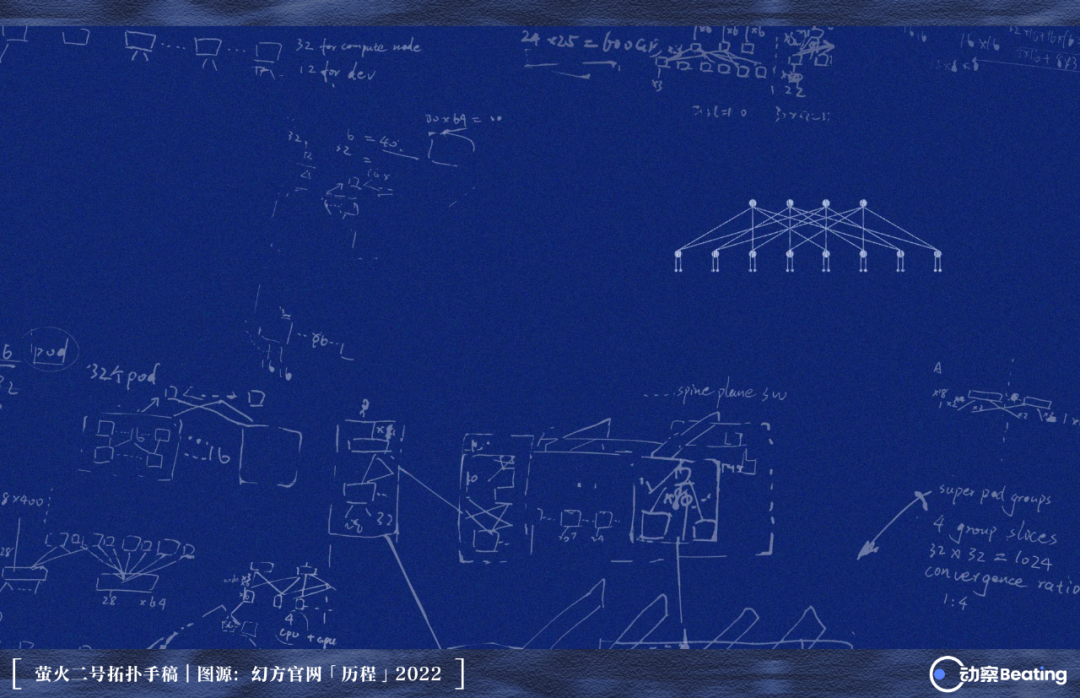
At the time, many thought he was insane. A quantitative fund, hoarding a pile of energy-hungry metal, why sink billions into infrastructure with no apparent rationale?
Until October 2022, when the U.S. Department of Commerce issued a ban that completely sealed off the most advanced computing channels. Liang Wenfeng had quietly bought up all the chips he needed before the iron curtain fully closed.
He is the kind of person who walks far ahead of his time.
Ren Zhengfei took a completely different path. He built things first, tossed them into the shadows, and then waited quietly.
That wait lasted a full fifteen years.
Ren Zhengfei is a full forty years older than Liang Wenfeng. In 1987, this 43-year-old man from a small county in Guizhou, with 21,000 yuan scraped together from various sources, founded Huawei in a cramped residential room in Nanyou, Shenzhen.
The rest is history—starting as a distributor of switches from Hong Kong, China, moving to self-developed communications equipment, and then sweeping the globe with 5G base stations and smartphones. The business footprint expanded enormously, but there was a hidden thread that Ren Zhengfei buried deep, rarely dissected under the spotlight.
In 2004, Huawei established a wholly-owned subsidiary called HiSilicon.
HiSilicon was founded for one purpose: to make chips. The ultimate metric Ren Zhengfei set for this team was simple—if external supply were ever cut off, Huawei needed a fallback. In an era when global division of labor was held as gospel, pouring money into this bottomless heavy industry seemed extremely counterintuitive to most.
On December 1, 2018, Canadian police detained his daughter Meng Wanzhou at Vancouver airport.
From that moment on, HiSilicon—a subsidiary that had been hidden underwater for fourteen years—was forced to surface in an extremely brutal manner. It was no longer a seemingly redundant "idle move," but the only lifeboat for the entire giant ship.
On May 16, 2019, the U.S. Department of Commerce entity list took effect.
In the early hours of the next day, HiSilicon President Teresa He Tingbo wrote in a company-wide letter that all the backup plans that had lain dormant for years were officially activated overnight.
Three months later, Huawei unveiled the "Ascend 910."
The contrast between the two scenes was stark. Firefly was locked away in a temperature-controlled server room in Hangzhou, with the outside world knowing nothing beyond the numbers on the books; Ascend, meanwhile, was thrust into the center of the spotlight, subjected to the industry's scrutinizing and critical gaze.
People on both ends were spending enormous cash flows in advance for something that had not yet happened.
It was just that the gate would close faster than anyone had anticipated.
The Blunt Knife
The first thing to be cut off was the terminal business.
In September 2020, TSMC halted wafer foundry services, and the 5-nanometer Kirin 9000 became a swan song. Huawei held first-tier chip design capabilities, yet could not find a single foundry anywhere in the world willing to take its orders.
The real shadow war shifted to the server rooms.
Ascend was pushed to the front line. But in the face of Nvidia's mature CUDA ecosystem, almost no commercial customers were willing to pay for an unproven domestic system. Since single-chip computing power could not catch up to Nvidia at the physical limit, Huawei simply switched to a solution defined by extreme engineering brute force.
If one chip wasn't enough, they would forcibly link thousands of slightly inferior chips into one cluster.
The cost of this approach was soaring power consumption and spinning electricity meters, but Huawei accepted the bill. China has no shortage of cheap green electricity, nor of engineers in batches who can chew through hard problems. This was an extremely clumsy, resource-devouring path—one that only they could afford to take.
On another track, Liang Wenfeng faced his own major test.
In October 2022, export controls took effect, with Nvidia's A100 and H100 completely banned from sale to China. After that, all that flowed into the country were the precisely neutered special-edition A800 and H800.
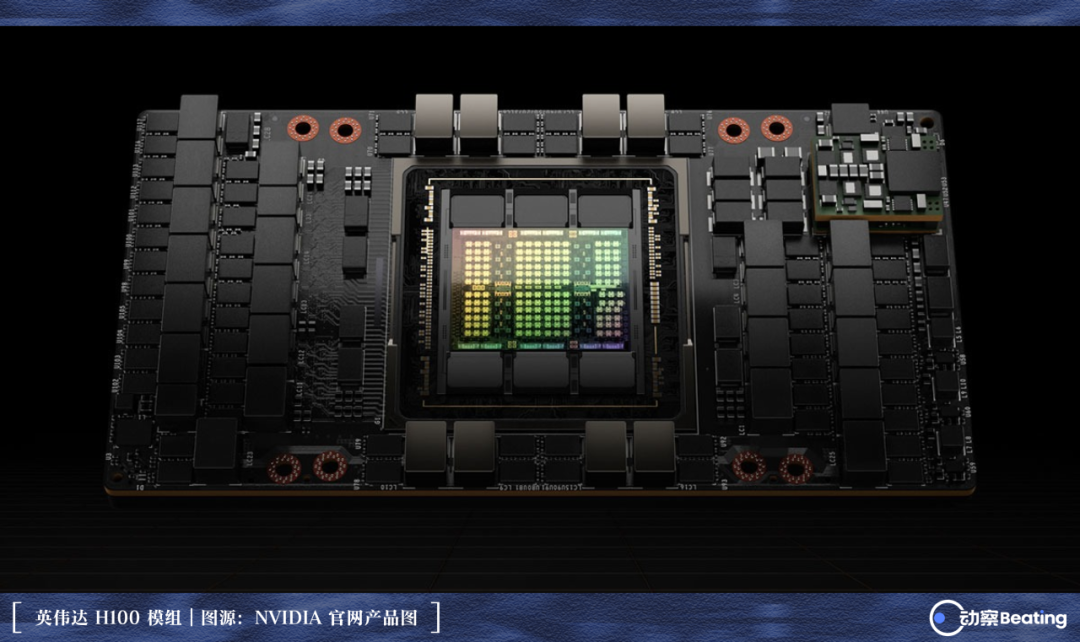
Domestic tech giants and startup teams fell into unprecedented FOMO. Some scoured the market for second-hand cards, others looked for underground computing pools in Southeast Asia. Liang Wenfeng did not join the buying frenzy. He had already prepared his cards well in advance.
But stockpiling ahead of time could only solve the immediate fuel problem. A colder reality lay ahead: from now on, even if you pay several times the premium, you will never again be able to buy the fastest blade of the same generation globally.
When the tool itself falls short, what do you use to create something that rivals your competitors?
Forcing a craftsman to use a blunt knife to carve precision patterns indistinguishable from those made with a sharp blade.
Everything DeepSeek did afterward was to push this engineering capability of carving with a blunt knife to its limit.
By the end of 2024, they had trained DeepSeek-V3, whose overall performance rivaled that of top-tier labs, using only 2,048 Nvidia H800 chips with their interconnect bandwidth slashed, at a cost of about $5.576 million.
This cost ledger stunned Silicon Valley. To reach the same level, leading overseas labs typically need to deploy tens of thousands of top-tier GPUs and burn tens of millions to hundreds of millions of dollars.
DeepSeek won on a set of almost brutally rigorous engineering discipline, squeezing every megabyte of compute and memory bandwidth dry.
Geopolitical blockades did not strangle them; instead, they forced out the company's most moat-worthy core asset. But everyone is clear that running on castrated Nvidia chips means the knife handle is ultimately still in the hands of Californians.
The narrow gate ahead has only one left.
Later, people gave this path a word full of compromise: domestic substitute. But this is hardly a shrewd choice of cost-effectiveness; it is clearly a way out carved through sheer grit after being choked by the throat.
Hook Punch
If Huawei's counterattack was a dull trench war, what Liang Wenfeng threw was an unreasonable hook punch.
In 2024, DeepSeek first used extremely aggressive token pricing to blow through the prices of the entire large-model commercial API market, forcing peers to revise their pricing sheets overnight.
On January 20, 2025, DeepSeek open-sourced DeepSeek-R1 without warning, a model with deep reasoning capabilities, with a publicly disclosed training cost of only a few million dollars, just a fraction of top Silicon Valley budgets.
The capital market quickly completed its pricing. Seven days later, when U.S. stocks opened on Monday, Nvidia's market value evaporated by nearly $590 billion in a single day, setting the largest single-day market value drop for a single listed company in U.S. stock market history.
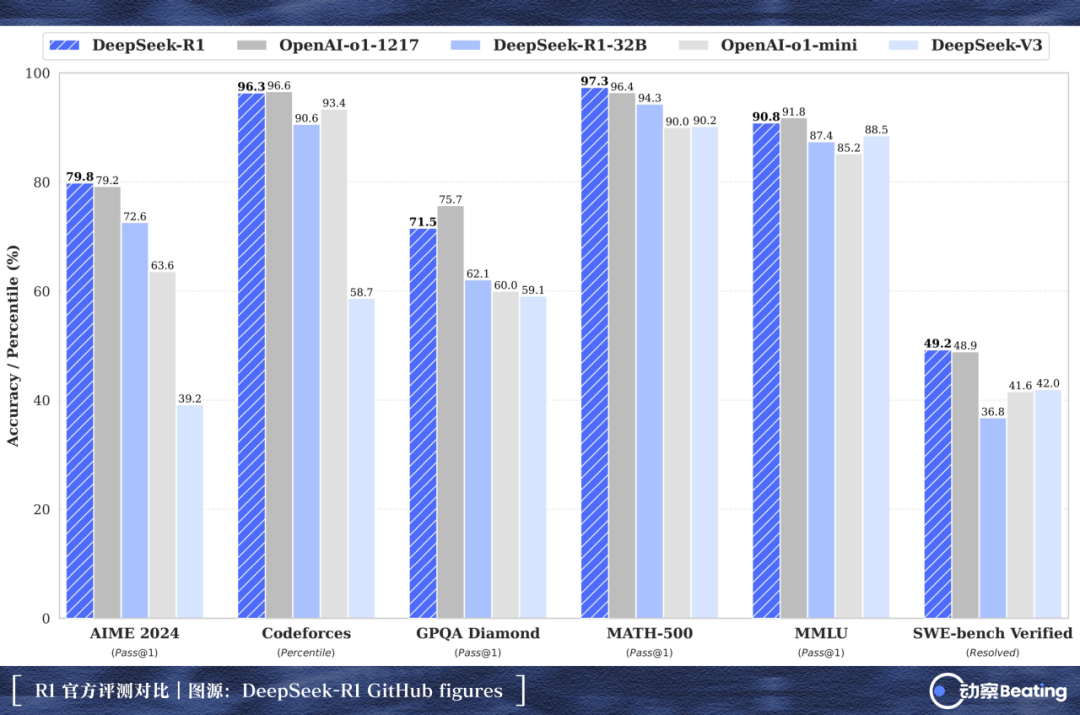
What is more interesting is DeepSeek's capital structure. While the large-model track was frantically grabbing Middle Eastern hot money and strategic investment from big tech companies, DeepSeek never took a single cent from external institutions. The cash flow that High-Flyer earned penny by penny through high-frequency algorithms in the secondary market became the provisions for Liang Wenfeng's bold bet.
The aftershocks of R1 toppling Nasdaq have yet to subside, and Huawei has simultaneously launched the full deployment images for R1 and V3 on the Ascend community.
It runs.
The conclusion that "domestic chips simply can't run cutting-edge models" was shattered on this day.
However, according to our understanding, the deep binding between DeepSeek and Huawei actually began much earlier than outsiders saw. It wasn't until early 2025 that Huawei suddenly discovered that DeepSeek had long been secretly conducting extremely deep adaptation and stress testing on Ascend's underlying environment behind everyone's backs.
The hardware people weren't even among the first insiders of this mysterious lab.
The generational gap remains enormous. The single-card floating-point computing power of Ascend 910C is only about one-third that of Nvidia's flagship B200. Unable to compete on a per-card basis, Huawei chose to continue brute-forcing it in engineering architecture, using thousands of high-spec optical fibers to forcibly link 384 910C chips into a massive "supernode," barely pulling total computing power up to the same level through network topology.
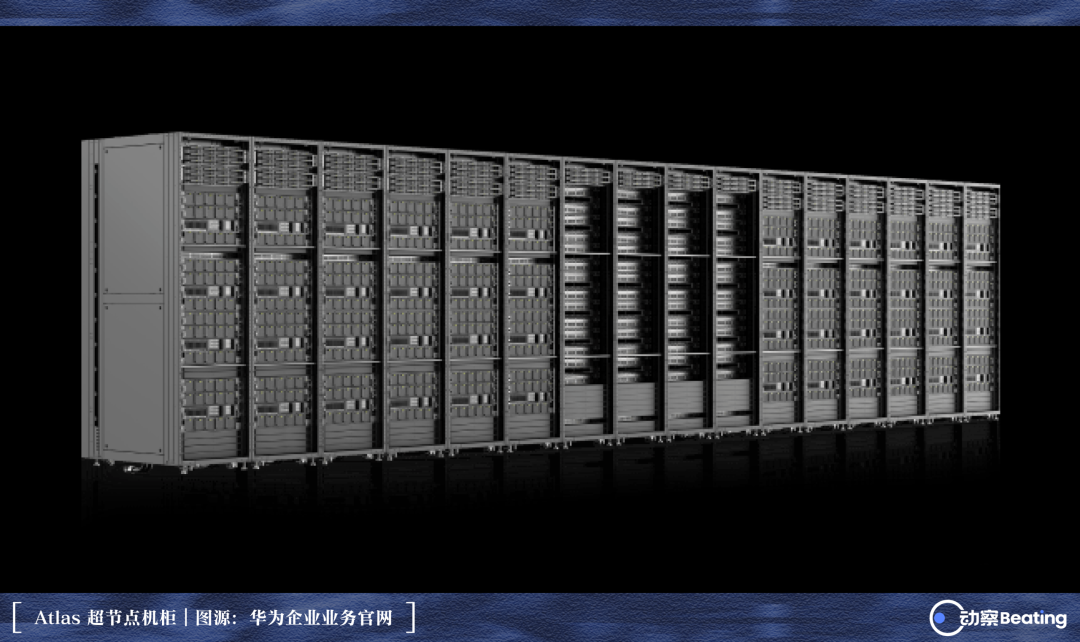
The cost is obvious: terrifying power consumption four times that of Nvidia's architecture.
But China's energy endowment happens to accommodate this kind of consumption. On the inland Gobi Desert, wind and solar power are cheap enough.
The posture isn't exactly graceful, but at least it can run. The same impenetrable iron curtain finally pushed two parties who originally had no intersection at all in front of each other.
Liang Wenfeng's model runs on Nvidia chips that could be cut off at any time; while Huawei has built the largest-scale AI chip in China and urgently needs a world-class model to endorse the actual combat power of this infra.
Two puzzle pieces, fitting perfectly together at this moment.
The most solid alliances in the business world have never been because of shared ideals.
They're all forced into existence.
Must Succeed
In 2026, DeepSeek rarely sought external funding.
Before this, Liang Wenfeng had never bowed to the capital markets. Even in the dullest years, High-Flyer's cash flow was more than enough to support a dozens-strong AI lab.
When a geek who never lacks money suddenly speaks up asking for money, there's only one reason. The boulder he wants to push has grown so massive that no personal pocket could possibly contain it.
What he aims to do is team up with Huawei to completely migrate the next-generation flagship model onto a purely domestic computing power base.
In a total financing pool of up to $7.4 billion, the largest single check came from Liang Wenfeng himself, at 20 billion yuan, directly accounting for nearly two-fifths of the total.
But money is often the easiest variable to solve in hard industry.
The real tough nut to crack is the software stack. Uprooting the model from Nvidia's CUDA ecosystem, which has dominated the industry for nearly two decades, and migrating it to Huawei's CANN architecture is tantamount to tearing down the entire building and rebuilding it.
This is not a move in the conventional sense. You have to use another set of unfamiliar tools to rebuild the same building from the foundation on flat ground. The underlying operators must be manually rewritten and reconstructed one by one, numerical precision must be realigned across tens of millions of inferences, and even the stack traces thrown during compilation errors are completely unfamiliar.
Workstations in Hangzhou and Shenzhen stayed lit late into the night. A large number of engineers, facing development documents full of unknowns, worked through the night manually tuning operators until the glaring red lines on the terminal screen were eliminated one after another in the early morning.
Reactions soon came from across the ocean.
On April 15, 2026, Jensen Huang said on Dwarkesh Patel's podcast that if DeepSeek is the first to successfully run and release its next-generation flagship on Huawei's Ascend platform, "that would be catastrophic for the United States."
Huang, who has fought hard battles for more than 30 years and rarely shows emotion in public discourse, uttered the word catastrophic for the first time.
The loss of orders for tens of thousands of chips is not fatal to him. What truly unsettles him is the rules.
For 20 years, the world's top model teams have had an unspoken iron law.
The best algorithms must run on Nvidia's CUDA ecosystem. That is the deepest moat he has built.
And now, for the first time, a first-tier outlier has publicly refused to pay for this set of rules.
Once a moat like this is breached in a blind spot, the water can never be held back again.
Liang Wenfeng did the math: to train a model that reaches top overseas benchmarks, about 50,000 of Nvidia's latest flagship GPUs would be needed; switching to Huawei's Ascend 950 series, that number would need to balloon to a full 200,000.
A four-to-one hardware attrition rate, plus at least a two-year generational lag.
What's even more constricting is the current capacity supply. The single-batch quota Huawei can currently spare for DeepSeek is only about 16,000 chips.
With such meager筹码, there's simply no possibility of going head-to-head on parameter scale.
But he still bet the entire company's training infrastructure wholly on Huawei chips. This is the biggest bet since DeepSeek was founded.
According to The Information, citing people familiar with the matter, Liang Wenfeng said only one thing at the time:
"It must succeed."
The Grassland
The end of this road lies on a stretch of grassland in Inner Mongolia.
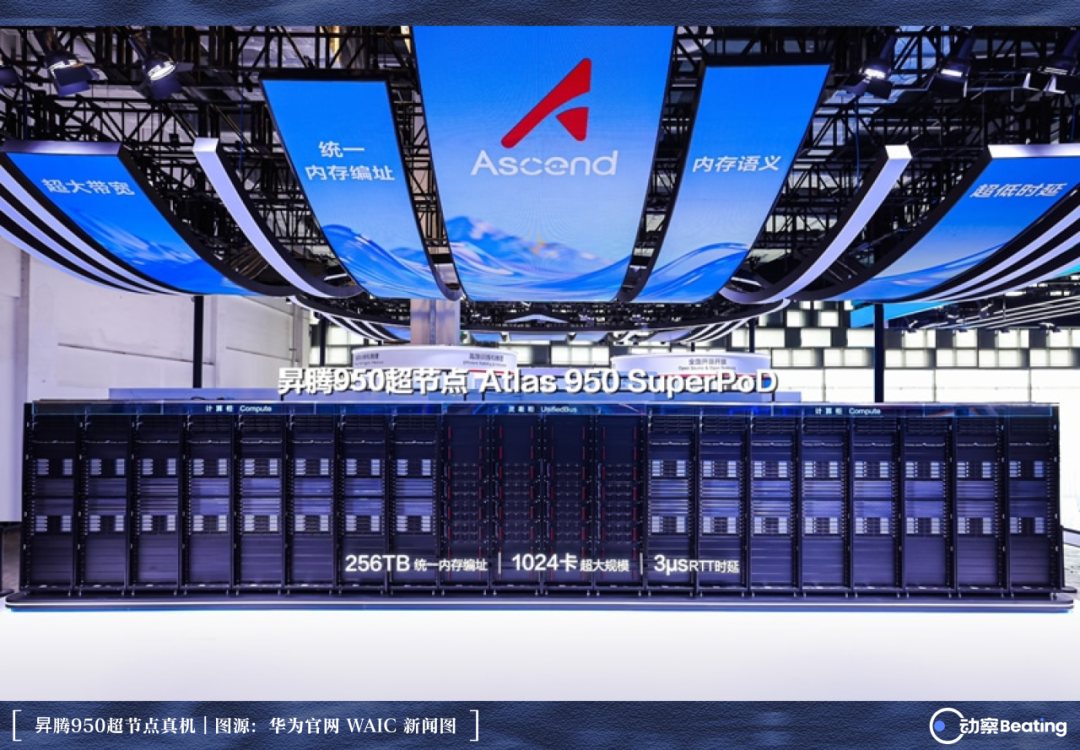
In September 2026, DeepSeek was reported to be planning a super-large data center in Inner Mongolia, which will directly pack in a full 160,000 Huawei Ascend chips.
The entire campus's energy consumption is planned at the GW level. The core model of this batch of chips is the Ascend 950DT, each single chip hard-packing 144GB of ultra-large memory, relying on extreme intra-chip bus to distribute tokens without any delay at the very moment the model completes inference.
This specific model was actually projected onto the big screen by Rotating Chairman Xu Zhijun back in September 2025 at Huawei Connect. From the 950PR and 950DT to the later 960 and 970, Huawei has set its computing power evolution pace at one generation per year.
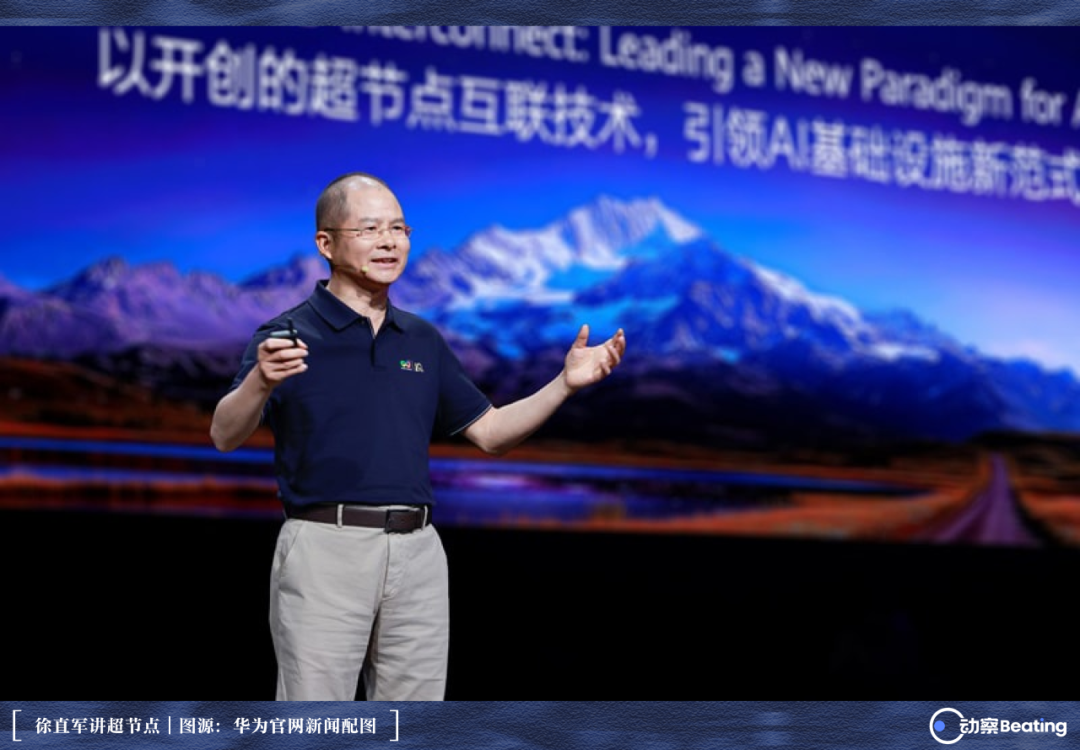
When Xu Zhijun was outlining the product roadmap line by line on stage, global partners sat in the audience; but Liang Wenfeng, who a year later would stake his entire fortune on this batch of cards, was not in the venue at the Expo Center at that time.
These chips will ultimately light up a stretch of grassland.
There is almost nothing on the grassland except howling winds and unobstructed scorching sun. But in this brutal computing power equation, cheap green electricity has become the most critical variable.
An economy whose lifeblood is choked off in advanced process technology now has only wind, solar, and a boundless, nearly zero-cost wasteland left as its chips.
Liang Wenfeng knows all too well the weight of these 160,000 chips. When he said "it must succeed" in front of investors, he personally burned all his retreat routes.
He has been proud his whole life. He doesn't mingle in circles or chase trends. When he first set out to build large models, his original intention was extremely pure—he had had enough of the Chinese tech community only being able to pick up scraps of wisdom behind Silicon Valley.
For such an extremely arrogant technical founder to be willing to make these four words explicit already means he has laid all his cards on the table.
Proud, and with no other choice.
From orders landing, production line scheduling, to the data center being powered on and lit up, it takes at least a long cycle of a year and a half. How much can ultimately be delivered depends on the fragile and narrow upstream manufacturing yield. No one can guarantee it.
Deep in the grasslands of Inner Mongolia, the long wind howls across from the far horizon. The air is dry and transparent, and looking up late at night, one can see the entire complete Milky Way.
160,000 chips will eventually light up one by one in the wind and sand of the northwest. Before the vast grasslands, those faint indicator lights are still as tiny as they were in a Hangzhou data center late at night years ago.
But in such a long cycle, the lights still have to be turned on.
As for whether these 160,000 points of faint light will ultimately connect into a brightly lit expanse, or be scattered by the strong wind across the vast Gobi.
This question can only be left to time itself to answer.
-END-
Join the official Coincamps community:
Telegram: https://t.me/coin_camps
Recommended
Behind AVAX's Surge: 'Wall Street On-Chain' Becomes the New Main Theme
Sep 23, 12:12
Vitalik's Speech at Wanxiang Blockchain Week: Blockchain is Ending the Era of 'Everyone Repeating Everything'
Sep 23, 11:36
Pendle's 'Yield Black Hole' Ambition: Betting on Stablecoins, RWA, and Perpetual Contracts
Sep 23, 10:39
Frontier Models Ignite Price War | Rewire Morning News Brief
Sep 23, 10:33
Helping You Solve Your Troubles, Muse Might Be the AI That Ordinary People Need
Sep 22, 17:51
Quant Trader Takes on $40 Billion Kalshi Empire, Tearing Off the Fig Leaf of Trading Volume Fraud
Sep 22, 17:12