Franklin Templeton: The Next Generation of Agents Has Arrived
As open-weight AI models grow more capable, the value and differentiation of products may gradually shift to the Harness. It is the software layer built around models that provides context, tools and memory, and routes user requests to the most suitable model.
Julian Love, Managing Partner of Franklin Templeton's crypto business, argues for building a neutral, decentralized on-chain Harness, and explores what this shift could mean for AI users, developers and the broader blockchain ecosystem.
General-purpose Personal Agents are entering the consumer space. But managing money may require a dedicated agent, one whose incentives, regulatory qualifications and operating infrastructure differ from those of general-purpose products.
Today, users have to piece together financial information scattered across many places themselves. Most people manage money across different apps and accounts, cannot see a unified picture of their finances, and must complete every action manually.
In the future, people may only need to reach out to a single agent. Users can communicate with it through text message, voice, an app or email, and it can also proactively contact users through those channels. It understands the user's complete financial situation and takes action across accounts to help users achieve their goals.
Personal Agents such as Instinct, Muse and Grok Bot are good at handling everyday money-related affairs, but they were not purpose-built to manage money, and most of their business models encourage users to spend more.
A dedicated financial agent may be better suited to this role. General-purpose agents often earn more when users spend more, whereas a financial agent may need to succeed by helping users spend less.
Crypto infrastructure is well suited for agent use. On-chain agentic finance has already begun building the foundational components a financial agent needs, including agent wallets, programmable permissions, automated vaults and machine payments.
For most people, managing money means managing a series of accounts. A person's financial life may involve a checking account at a bank, a 401(k) through an employer's retirement plan provider, a brokerage account, two or three credit cards, policies from different insurers, and a high-yield savings account opened elsewhere to earn a better rate.
Each account has its own login, app and alerts, and each offers the user different advice. They do not talk to one another. A household's complete financial picture exists only in the user's head, and only when the user has time to gather all that information together.
This burden makes users slow to act, or causes them to miss things altogether, ultimately costing them a fair amount of money.
Two developments are beginning to change this.
Personal Agents — AI assistants — can now understand a user's intent expressed in everyday language, weigh different options, and communicate with the user across various channels.
On-chain agentic finance, meanwhile, is building the foundational components that let software autonomously hold and move money and earn a return on it.
The former provides the capacity to understand; the latter provides the capacity to execute. Neither alone can solve the problem.
This article argues that the future of personal finance may be a single unified entry point: the user reaches the same agent through whichever channel suits them — text message, voice, an app or email — and the agent can also proactively contact the user through those channels. It understands the user's complete financial situation, grasps the user's goals, and takes action across accounts to help achieve those goals.
This article also argues that the party filling this role may not be today's leading general-purpose Personal Agents, but rather specialized financial agents running on crypto infrastructure, because the business models of general-purpose Personal Agents tend to encourage spending.
Next, this article will look at how people manage money today, what Personal Agents can and cannot do, why a dedicated financial agent may be better suited to this role, and why crypto infrastructure suits agentic finance.
How People Manage Their Personal Finances Today
Despite nearly 20 years of fintech development, many people still manage their finances mainly through manual operations: opening apps one by one to check balances, moving money between institutions to pay bills, keeping due dates in their heads, and reconciling everything in a spreadsheet when they have time.
Each product works well on its own. What is truly laborious is the work of connecting them.
Where the problem lies:
No unified view. Net worth, cash flow and progress toward goals are scattered across different institutions, and those institutions do not share data with one another.
Reactive rather than proactive. People usually discover a fee, an interest-rate change or a missed opportunity only after they have already paid the price.
Advice is either expensive or too generic. Personalized financial planning is priced mainly for the wealthy; everyone else gets generic tips.
Decisions are constantly deferred. When every action requires researching, logging into an account and transferring money, people often simply choose to do nothing.
Ideas never become actions. "I should save more" often remains just a thought, because no tool can turn it into a plan and carry it out.
Personal Agents: Why Personal Finance May Need a Dedicated Agent
The first technology that promises to change this situation is the Personal Agent.
Personal Agents are general-purpose AI assistants that act on the user's behalf. They can answer questions, conduct research, draft content and organize affairs, and increasingly they can take actions within the user's apps.
As things stand, when applied to personal finance, they are very good at handling everyday money-related affairs, but they are not well suited to directly managing money.
The Leading General-Purpose Agents
2026 is the year general-purpose Personal Agents break through.
Users can reach Instinct by text message or phone and have it make reservations, purchases and subscription cancellations on their behalf. Meta's Muse can send emails, book travel, fill out forms and complete checkouts, both within its own app and in WhatsApp. SpaceX AI's Grok Bot gives each agent its own cloud computer, letting it log into the user's existing apps and operate them like a person would.
All of these agents have already touched money-related matters: making payments, canceling charges, negotiating bills. The battle over Personal Agents has only just begun, with Meta — owner of 3.6 billion daily active users — a startup valued at $10 billion, and SpaceXAI all competing to become the agent people are willing to entrust their daily lives to.
How far these agents can participate in money management remains an open question. Several factors suggest that a new class of dedicated financial agents may be better suited to this role: they are as easy to use as today's Personal Agents, but were built around money management from the start.
Incentives: Follow the Money
The most important factor is economic interest. Companies building general-purpose agents typically earn more when users spend more, with revenue potentially coming from advertising, transaction fees or merchant commissions.
A personal finance agent, by contrast, often needs to succeed by doing the opposite.
About 98% of Meta's revenue in the second quarter of 2026 came from advertising. At its September Connect conference, Zuckerberg said Muse will remain free for most users, and that Meta expects to eventually make money by taking a small fee from shopping, bookings and other transactions completed through Muse. At the same time, Meta also announced new partnerships with retailers including Walmart, Best Buy, Gap, Sephora and Wayfair.
Instinct's founder said the product processes about $1 billion in transactions annually, more than half of it related to travel. At the end of September, Instinct began pushing curated product, dining and travel recommendations to users through a feature called Instinct Selections. Some early users complained that they had not asked for those recommendations.
Grok Bot is sold through SuperGrok and Cursor subscriptions. However, its parent company's IPO filing lists advertising as a core monetization channel for the AI business, and says the company plans to weave advertising into real-time conversations.
An agent whose revenue grows with transaction volume can be an excellent shopping concierge, but may be a financial adviser with a conflict of interest. The job of a personal finance agent is often to persuade the user not to buy something, and its business model must be able to support that behavior.
Beyond incentives, two other factors point to the same conclusion.
First, moving money, recommending investments and managing debt involve licensing and suitability requirements, and in some cases fiduciary duties. So a general-purpose agent company that wanted to take on this work would need to build a regulated financial business alongside its consumer tech business.
Second, personal finance prizes specialist depth over breadth. A general-purpose agent needs to handle a thousand kinds of everyday tasks well enough; a financial agent must reconcile every account, calculate tax consequences based on the user's actual holdings, sequence debt repayment, and make sure every number it calculates is exactly right.
That requires purpose-built systems for understanding, verifying and executing information — the technology stack this article describes later — rather than simply bolting a financial skill onto a general-purpose agent.
Which Capabilities Carry Over
The leading personal finance agents will likely borrow from what makes today's Personal Agents successful: no new interface to learn, text message and voice as the primary communication channels, proactive outreach to users, and memory of the user's information.
The shape of this product is gradually becoming clear. What remains undetermined is who will win users' trust as the party providing this service when money is the topic.
The most likely end state is a division of labor: the user's general-purpose Personal Agent manages daily life, the financial agent manages money, and the two coordinate with each other.
Communication between agents is already emerging; Instinct's network for coordinating different users' agents is one example. So when a user asks the agent they use every day whether they can afford a trip, the question can be handed off to the financial agent that actually knows the user's financial situation.
In this model, the general-purpose agent plays the butler, and the dedicated financial agent plays the chief financial officer.
Key takeaway: Personal Agents are good at handling everyday money-related affairs, but their business models, regulatory qualifications and broad functional positioning make them not entirely suited to directly managing money. An agent with a similar user experience but purpose-built for financial management may be better suited to this role.
Agentic Finance: Why Crypto Infrastructure Suits AI Agents
The second development is agentic finance: software that can autonomously hold and move money and earn a return on it.
Traditional finance already has similar products, such as robo-advisers, automatic cash sweeping and scheduled bill payment. But these products are all confined within a single institution, and they are designed for human account holders, not for software acting on a user's behalf.
For structural reasons, the more meaningful progress is happening on-chain.
Crypto infrastructure is open by default. An agent can have its own wallet and interact directly with any protocol through code, without impersonating a user's login and without waiting for different systems to be integrated.
This infrastructure can encode rules in code. So limits set by the user are not merely rules the agent is asked to follow; they can also be enforced by the wallet. If the agent makes a mistake or is manipulated, the transaction cannot go through.
This infrastructure runs around the clock, stablecoins settle in seconds, and tokenized assets can generate yield 24 hours a day.
It is also verifiable, because every action is recorded on a public ledger that users can check for themselves.
This infrastructure carries real risks too, including smart contract vulnerabilities and stablecoin depegs. Managing those risks on the user's behalf is likewise part of the agent's job.
Yet it is precisely these characteristics that have made the foundational components of agentic finance appear on-chain first. Today, most of these applications serve traders and crypto-native users.
Taken together, however, they form the foundation a personal finance agent needs in order to execute actions.
Key takeaway: Crypto infrastructure already enables agents to carry out a wide range of operations under user-verifiable rules, and on-chain agentic finance is building the tools needed for execution. What is missing is an agent that can use these capabilities to manage a person's entire financial life.
The Future: A Single Unified Entry Point
If the way people use Personal Agents is combined with the capabilities on-chain agentic finance is building, and applied to a product designed specifically for money management, the outline of a solution emerges: an agent that knows the user, can reach the user through various channels, and can operate all of the user's accounts.
In this model, users no longer need to integrate their accounts themselves. Users can talk to the same agent through whichever channel is most convenient at the moment: a text message while waiting in line at the grocery store, a voice message while driving home, the app when they need to dig deeper, or email when there is a document to handle.
When something needs attention, the agent will also proactively reach out to the user — whether a bill is coming due, an interest rate has changed, or progress toward a goal has drifted off plan.
From Intent to Outcome
The standard for measuring this product is simple: can it take a goal expressed in everyday language all the way through to a final result?
Here is a common goal used to illustrate the process.
What Needs to Be Built
Delivering this kind of experience cannot mean simply layering a chatbot on top of a bank account. The product must do all three of the following well, and none can be missing.
Expert and proactive
Understand financial products, strategies and opportunities in depth, not just with general knowledge.
Anticipate needs before the user notices a problem, such as a falling interest rate, an upcoming bill, or the emergence of a lower-priced insurance product.
Translate the user's intent and goals into concrete financial outcomes.
Keep driving toward those outcomes continuously, rather than waiting for the user to ask.
Continuous and connected
Share a single memory across all channels, so a conversation the user started by text can continue by voice without starting over.
Keep information automatically up to date as transactions post and account balances change, with no manual updating by the user.
Establish secure, authorized connections with every institution the user uses.
Run continuously in the background and proactively reach out to the user when something needs attention.
Trust by design
Explain every recommendation in plain language, including the trade-offs involved.
Require user approval for high-impact actions, while routine actions execute automatically within limits set by the user.
Keep a complete record of what the agent did and why, and let users review it.
Keep the user in control at all times: permissions can be changed or revoked at any time.
Why Now
This kind of product is gaining wider acceptance.
This year, early users began messaging agents by text and watching them complete tasks. The underlying infrastructure has also emerged: models capable of financial reasoning, expanding open banking connections between financial institutions, and payment infrastructure that agents are already using.
At the same time, the companies best positioned to reach and serve consumers directly — today's general-purpose Personal Agent providers — face a structural conflict of interest when it comes to money management.
That leaves an opportunity for dedicated players, but the opportunity may not last long.
Such a player may choose to build its product on crypto technology first. With US stablecoin legislation formally in effect, on-chain infrastructure can support real operations from the product's launch, while traditional accounts can be brought in over time through open banking.
The first personal finance agent to win users' trust, reach users through various channels, and genuinely help users deploy their money to achieve their goals is very likely to define this product category.
What is worth watching are the teams that can combine the ease of use of Personal Agents, on-chain execution capability, and financial-grade trust mechanisms.
Join the official Coincamps community:
Telegram: https://t.me/coin_camps
Recommended
BIT: Joins Hands with AMINA to Expand Switzerland's Digital Asset Market
Nov 2, 22:46ZachXBT: EU Institution Suspected of Losing Over $106 Million in Hack, Hackers Transferring Funds via ETH and Monero
Nov 2, 21:31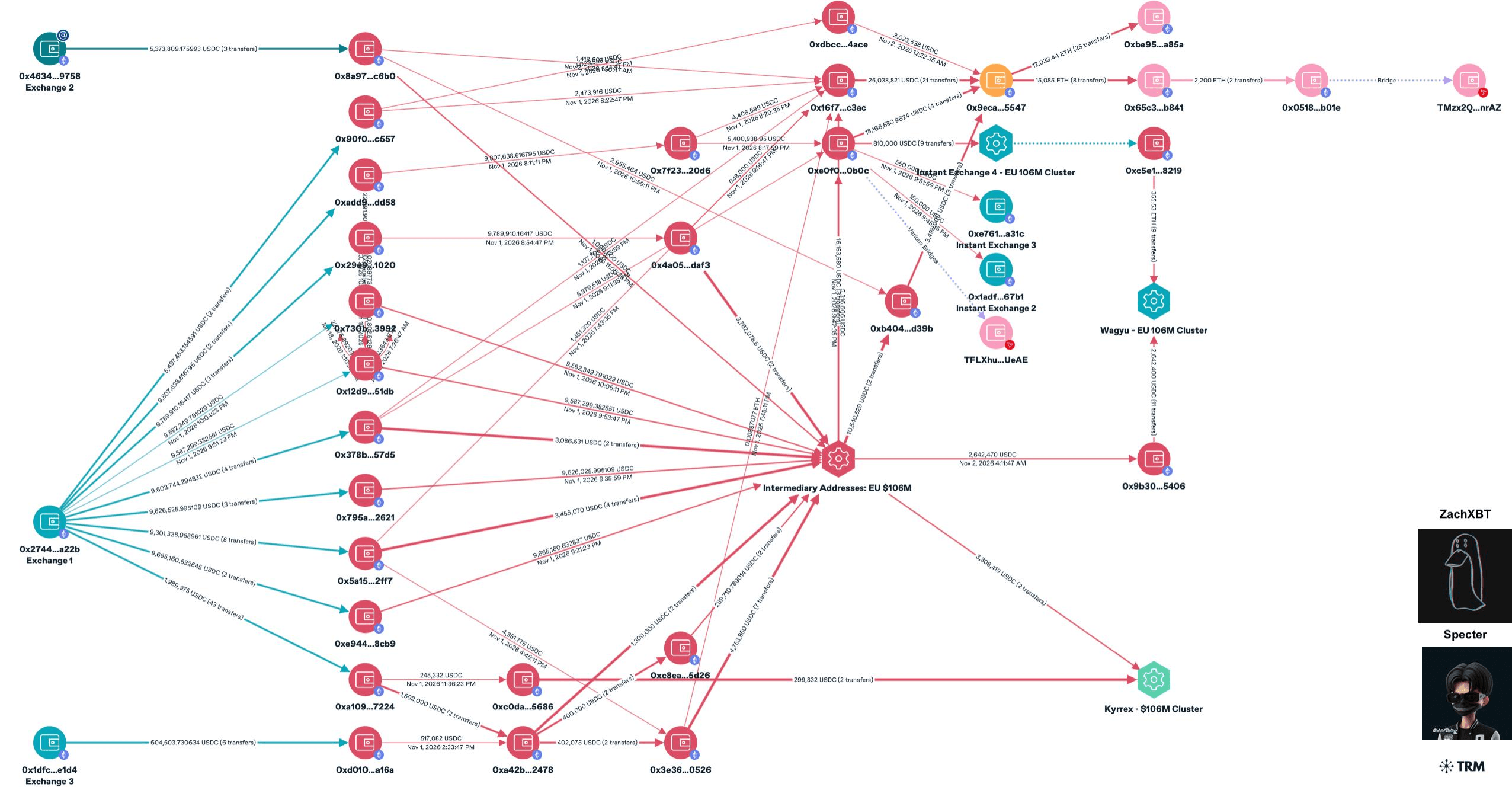
Polygon Agent Spend Controls: Budgets, Expiry, Limits
Nov 2, 21:30
Stealing $11.8 Billion in a Decade: How North Korea Became the Crypto World's Top Predator
Nov 2, 21:30Marvell Announces $115 Billion Acquisition of Lumentum to Build Optical Interconnect Giant in AI Computing Era
Nov 2, 21:19
Sequoia Partner: SpaceX Stands on the Eve of an NVIDIA-Style Growth Explosion, With Starship, AI Computing Power, and Direct-to-Cell Satellite Connectivity Severely Undervalued
Nov 2, 20:52