153 Popular Apps Block Doubao: When AI Agents Clash With the Mobile Internet's "Walled Garden"
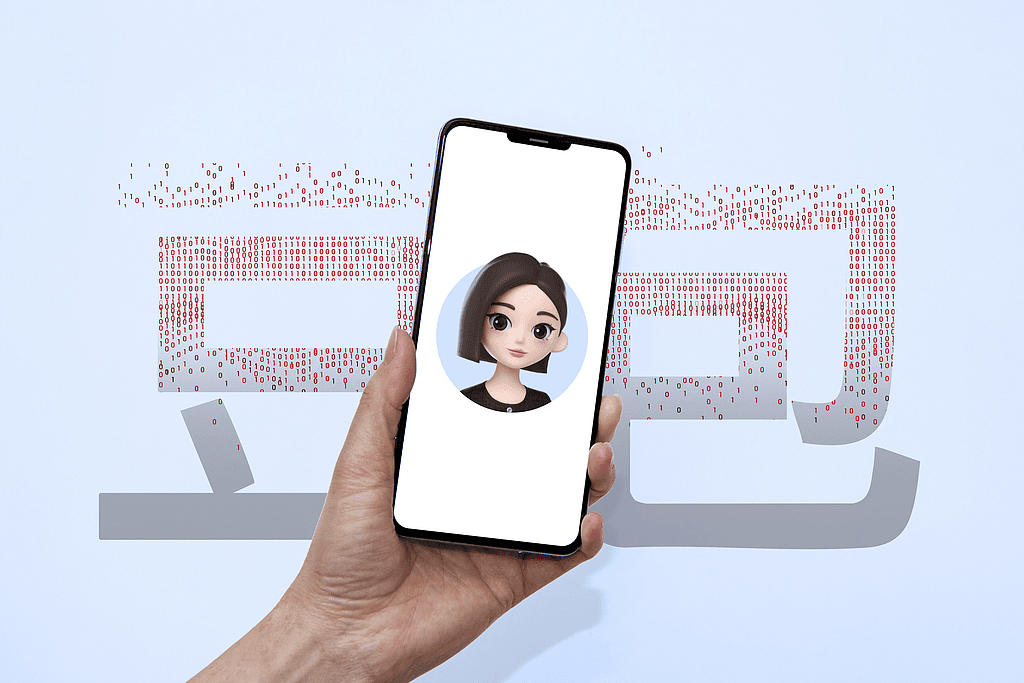

With the expiration of the 30-day public notice period today for the Screen Automation Operation Declaration Agreement (SAEP) launched by Doubao Phone Assistant, ByteDance's aggressive expansion in mobile AI Agents has reached a critical milestone.
Starting today, Doubao Phone Assistant abandons its previous cautious stance requiring active authorization from third-party apps, officially shifting to a reversed-rule model of "default open, unless explicitly refused." However, emerging alongside the platform's unilateral opening of rules is a substantial boycott list: the officially published refusal list has grown to 153 applications, with almost the entire Tencent and Alibaba ecosystems represented. Meituan, Pinduoduo, and even AI peers such as DeepSeek and Kimi have also joined in declaring "no" to Doubao.
A battle for control over OS-level AI Agent operation rights, mobile traffic entrances, and private domain data assets is being fought head-on.
1. Rule Reversal: From "Active Access" to "Mobile robots.txt"
In the traditional mobile ecosystem, applications are isolated and operate independently. ByteDance's Doubao Phone Assistant, deployed via hardware terminals, relies on cross-application simulated operations based on GUI (Graphical User Interface) as its core weapon—completing complex tasks such as cross-app ticket booking, price comparison, and food ordering for users through underlying screenshots, multimodal semantic parsing, simulated screen clicks, and text input.
Previously, due to controversies surrounding compliance and data security, Doubao stepped back around the launch of its second-generation devices, introducing a 30-day public notice agreement. Now that the notice period has expired, Doubao's underlying logic has undergone a fundamental overhaul:
For applications that do not explicitly declare refusal, the system will progressively unlock Agent operation capabilities based on risk levels.
This is equivalent to Doubao attempting to establish a set of rules analogous to the web-era robots.txt at the mobile operating system level. However, there is an essential divergence between the two:
- The web's robots.txt merely regulates the crawling of publicly accessible webpage content, with search crawlers not infiltrating user interactions;
- The mobile SAEP protocol, conversely, equips the AI Agent with the user's "hands and eyes" to directly execute automated operations within private, login-required application interfaces.
Although the SAEP developer documentation emphasizes fine-grained permission controls—allowing application providers to open only content editing while prohibiting one-click publishing, or individually blocking login page screenshots and intercepting sensitive operations such as check-ins and asset transfers, while retaining the right to exit at any time—mainstream super apps have unhesitatingly pressed the "total refusal" button.
2. Map of the Boycott Coalition: Who Is Defending Their Ecological Silos?
According to the latest refusal list, applications rejecting integration exhibit highly concentrated ecological characteristics:
- Social & Entertainment Foundation (65 Tencent apps): Comprehensive defenses are erected at core strongholds such as WeChat, QQ, and Honor of Kings. As a national-scale instant messaging platform and private traffic pool, WeChat has long maintained a zero-tolerance policy toward non-native automated interactions.
- Transaction & Business Closed Loop (23 Alibaba apps): Applications directly involving financial assets and transaction chains, such as Taobao, Alipay, and DingTalk, have completely barred access.
- Vertical Lifestyle Services & Content Communities: Platforms commanding massive user transaction behaviors and content consumption time, including Meituan, Pinduoduo, Xiaohongshu, Kuaishou, Didi, and Zhihu, quickly followed suit.
- Financial Security Bottom Line: Financial institutions represented by ICBC directly refuse based on strict constraints regarding capital risk management and financial compliance.
- Subtle Tacit Understanding Among AI Competitors: The synchronized refusal of native large model applications like DeepSeek and Kimi is highly revealing. It shows that even as fellow pioneers riding the AI wave, they maintain extreme vigilance against direct interaction interception and user context extraction at the device layer.
3. Life-and-Death Battle of Super Apps: Why Must They Say "No"?
Major platforms collectively refuse despite the risk of segmented user experiences, driven by three non-negotiable bottom lines:
- Dehydration of Business Models and Fragmentation of Traffic
The commercial value of super apps rests on "user session duration, interface exposure, ad clicks, and transaction closed loops." If a user simply tells their phone, "Find me the cheapest latte and place the order," Doubao's Agent completes price comparison, selection, and payment in the background without user intervention. Users no longer browse splash ads, recommendation feeds, or promotional pop-ups. This reduces the app to a mere "backend execution conduit," subjecting its prized monetization architecture to a devastating dimensional downgrade.
- Black Swan-Level Risk Control and Accountability Vacuums
While GUI simulation offers flexibility, it is highly susceptible to misclicks when confronting complex dynamic pop-ups, anti-fraud mechanisms, and anomalous interactions. Should an AI Agent commit an error during automatic transfers, limited-time flash sales, or content publishing, who ultimately bears the liability—the device manufacturer, the large model platform, or the third-party app? In the absence of clear national legal frameworks, application providers absolutely dare not surrender operational control.
- Invisible Appropriation of Data Assets
GUI automation relies on real-time parsing of screen imagery. For Xiaohongshu's post layouts, WeChat's chat histories, and Taobao's personalized recommendation interfaces, screen captures themselves constitute high-fidelity data streams. Tech conglomerates will never permit a competitor's OS assistant to intrusively pry into their core commercial data fortresses under the pretext of "user service."
4. Industry Reflection: The Endgame for GUI Agents Is Not "Unilateral Conquest"
The rule reversal of Doubao Phone Assistant amounts to a probing offensive against the mobile internet's "walled gardens." Yet, the rejection by 153 mainstream applications demonstrates that forcefully pushing "top-down" automation purely through device-side privileges struggles to breach the moats defended by tech giants.
Following these direct confrontations, the true era of AI smartphones may be forced toward an alternative trajectory:
- Brute-force, invisible screen interception can only serve as a stopgap measure;
- A mature collaborative infrastructure based on standardized APIs, benefit-sharing mechanisms, and trusted security isolation (TEE/security sandboxes) must be established between platforms and applications.
If developers cannot reap tangible benefits from traffic revenue sharing and data rights, AI agents will remain perpetual onlookers dancing in shackles, forever operating outside the prohibition lists of mainstream tech corporations.
Join the official Coincamps community:
Telegram: https://t.me/coin_camps
Recommended
PancakeSwap Plans to Pass 88% of Fees to LPs, Slashing Daily CAKE Emissions by Nearly 70%
Oct 14, 16:39
Starknet Launches "Shadow Accounts": Main Wallet Fully Decoupled from DeFi Interactions, First Integration Goes Live Today
Oct 14, 16:25
Solana Set for October 21 Alpenglow Upgrade: Finality Reduced to 150ms, TPS Bloat to Be Significantly Eliminated
Oct 14, 16:12
EV Sales Stall as Funds Flow to Drones: Pentagon Requests $74 Billion, FedEx Drops $300 Million for Orders
Oct 14, 16:08
Wharton Survey of 1,400 Employees: Corporate AI Investment Surges, But Only 27% Track How Much Money It Generates
Oct 14, 16:06
Frontier Large Models Lose Favor: Usage Share of Top Models on OpenRouter Drops from 55% to 14%
Oct 14, 16:04