
Hong Kong Dollar Stablecoin 'Great Exodus'

Original Title: "Hong Kong Dollar Stablecoin 'Great Retreat'"
Original Author: Joe Zhou, Foresight News
"We are not optimistic about the Hong Kong Dollar stablecoin," a source close to the regulatory authorities bluntly told me, "Being optimistic about stablecoins does not mean being optimistic about the Hong Kong Dollar stablecoin—they are two completely different things."
He paused and added, "How can we let the least willing, least motivated institution lead the Hong Kong Dollar stablecoin, and sideline the most motivated, most innovative institution?"
This is not personal bias. I have learned from multiple participants in the Hong Kong Dollar stablecoin business that the allocation of the first two Hong Kong Dollar stablecoin licenses has already reflected the embarrassment of this "passive defense" style of regulation: Standard Chartered Bank-led Anker Point Financial Technology Limited took the initiative, while another licensed institution "simply did not want to do it"—this is already an open secret in the industry.
At the same time, companies such as Ant Group, JD Technology, and Circle Tech, which are eager to explore the Hong Kong Dollar stablecoin scene, have not been able to truly enter the game, or do not have core leadership.
"Participate but not optimistic." Two individuals from different institutions but both close to the Hong Kong Dollar stablecoin business almost echoed each other.
Currently, the situation of the Hong Kong Dollar stablecoin presents three subtle forms: one type of institution is optimistic about the stablecoin race but holds a reserved attitude towards the Hong Kong Dollar stablecoin, yet has to "secure a position"; another type of institution is not enthusiastic about stablecoins themselves but is reluctantly entering the field pushed by regulations; and there is another type of institution with willingness, resources, and use cases, but is shut out due to their identity.
This misalignment is precisely the most authentic footnote to the "Great Retreat" of the Hong Kong Dollar stablecoin.
One License, Two Attitudes, Three Reactions
Standard Chartered is proactive, HSBC is passive—one license, two attitudes.
In September 2025, 36 institutions eagerly submitted applications for a Hong Kong Dollar stablecoin license, creating a buzz. Yet, over the past year, as of today in August 2026, few people proactively mention the Hong Kong Dollar stablecoin.
The excitement has faded, and only two real players remain: Standard Chartered and HSBC. A brand-new business model has ultimately been handed over to institutions primarily focused on traditional business models. The market sentiment is as cold as ice.
On April 10, 2026, the Monetary Authority issued the first two Hong Kong Dollar Stablecoin licenses to Anchorage Fintech Limited (a joint venture of Standard Chartered Bank (Hong Kong), Hong Kong Telecom, and Animoca Brands) and HSBC Hong Kong Limited. However, according to industry insiders, the two institutions have very different attitudes towards the stablecoin.
Standard Chartered demonstrated a certain level of proactiveness and began laying out a global stablecoin strategy. On July 2, 2026, Standard Chartered, in partnership with USDC issuer Circle, jointly announced the launch of an institutional-grade USDC one-stop access service. On August 12, 2026, Anchorage Fintech initiated the first phase of the Hong Kong Dollar Stablecoin HKDAP issuance, currently only open to institutional distributors and professional investors such as HashKey and OSL, with plans to potentially expand to retail users as early as the end of 2026, depending on the market conditions.
HSBC, on the other hand, had a different story. "HSBC is passive, only acting under pressure," a industry insider frankly told the author. Compared to Standard Chartered's proactive approach, HSBC's Hong Kong Dollar Stablecoin project is notably lagging behind, with a scheduled launch in the second half of 2026.
Behind this delay is HSBC's cautious consideration of stablecoin business based on real benefits.
"HSBC is more inclined to promote tokenized deposits rather than stablecoins," a source close to HSBC revealed.
The fundamental reason is that stablecoins directly conflict with HSBC's core business. Data shows that about 85% of HSBC's payment business revenue comes from interest income based on deposits, with the payment business itself accounting for about 22% of its total revenue in 2025. HSBC's core business model is to attract low-cost deposits, earn the interest rate spread through lending and investments – issuing stablecoins would divert bank deposits and shake its foundation.
Moreover, the compliance stablecoin issuance business itself is far from a "gold mine": income highly depends on the interest rate environment, while profits are eaten away by issuance, custody, distribution, and other channels. For HSBC, which relies on the core of deposit and lending spread and holds a massive amount of customer deposits, actively going all-in on stablecoins would erode its deposit base, failing to generate substantial profits and lacking intrinsic business drive.
In addition to Standard Chartered and HSBC, the response of 13 licensed crypto exchanges to the Hong Kong Dollar stablecoin is also quite intriguing.
Standard Chartered and HSBC take on the issuance role, while distribution, custody, and other processes rely on licensed crypto exchanges such as HashKey, OSL, EXIO, Panthertrade, and others. However, from the information available to the author, the attitudes of these exchanges can generally be divided into three categories.
First Reaction: No Expectation. "From a business perspective, there is no opportunity for institutions to profit from the Hong Kong Dollar stablecoin in China. Moreover, licensed cryptocurrency exchanges in Hong Kong are currently experiencing continuous losses."
"No expectation," he said.
Second Reaction: Withdrawal while Watching. According to the author's understanding, initially at least three licensed cryptocurrency exchanges were testing the Hong Kong Dollar stablecoin with Anchorage FinTech, but some exchanges have started to withdraw, unwilling to exert more effort in various tests.
Third Reaction: Tactical Aggressiveness, Strategic Wait-and-See.
"Not aggressive from a strategic standpoint, but aggressive on a tactical level," said another individual from a licensed cryptocurrency exchange in Hong Kong. The practitioner revealed that the team is actively testing and cooperating with the issuer of the Hong Kong Dollar stablecoin, but from the overall company strategy perspective, "everyone knows this is not a business with a visible profit opportunity at the moment."
Euro Anxious, Yen Clumsy, Won Slow, HKD Dragging, All Playing Catch-Up
The dilemma of the Hong Kong Dollar stablecoin is not unique to Hong Kong. Looking at the bigger picture, non-USD stablecoins in various global financial centers are almost uniformly playing catch-up.
Euro Anxious, Yen Clumsy, Won Slow, HKD Dragging—One winner, four followers, each with their own difficulties.
Starting with the Euro stablecoin, as the second-largest currency in terms of reserves after the USD, it appears quite anxious.
The Euro is the world's second-largest payment currency and reserve currency—SWIFT data shows that in June 2026, the Euro accounted for 21.88% of the global payment share, second only to the USD; in global foreign exchange reserves, the Euro accounts for about 20%, firmly in second place. A currency that holds a 22% share in international trade and finance, with its stablecoin holding only 0.22% in the global market—a difference of exactly 100 times.
Seeing the rapid development of the USD stablecoin, Europe became anxious and plans to launch a MiCA-compliant Euro stablecoin in the second half of 2026. The consortium has now expanded to 37 financial institutions, covering 15 European countries, including major European banks such as BNP Paribas, ING Group, UniCredit, Banco Exterior de España, and Rabobank.
However, while the alliance of 37 banks appears formidable, the reality is more thunder than rain. The market value of the Euro stablecoin is only $674 million, accounting for 0.3% of the global stablecoin market. And the majority of this 0.3% share is still held by a U.S. company. Circle's EURC holds about $430 million, occupying 64% of the entire Euro stablecoin market.
“A Yen-Backed Stablecoin is Foolish,” said an industry insider bluntly.
“It's not a matter of technology; it's the institutional design that narrowed the path from the beginning.” “Right now, there is also no liquidity,” he added.
In June 2026, SBI Holdings officially launched JPYSC, Japan's first Ethereum-based Yen-backed stablecoin supported by a trust bank. Mitsubishi UFJ, Sumitomo Mitsui, and Mizuho—Japan's three largest banks—also announced their joint development of their own Yen-backed stablecoin, planning to commence commercial transactions in the 2026 fiscal year. However, the issue is that Japanese regulations have confined stablecoins to the trust bank system—the issuer must be a trust bank, the reserve assets must be custodied in a trust bank, and redemptions must also go through a trust bank. After this series of operations, the stablecoin has been turned into an “electronically-handcuffed electronic certificate of deposit,” with little to no relation to the programmability of blockchain.
It's not that Japan cannot create stablecoins—it's that what they have produced so far is nothing to be excited about.
“A Won-Backed Stablecoin is Slow, Stagnant. It's not that businesses don't want to do it; it's that regulations haven't settled,” said.
After the completion of the pilot project by the nine major issuing institutions, Busan Bank's pilot transactions on the Kaia Chain had a 100% success rate, with processing times of less than 1 second. The infrastructure between Kakao and Circle is also set up—companies are all ready, but the regulations are still at a standstill.
What's the holdup? It's over “who will issue.” The Bank of Korea insists on “banks holding 51% or more of the shares” to issue stablecoins, causing strong backlash from the industry, who believe “this is not stability, it's stagnation.” This is because South Korea's Banking Act stipulates that the maximum percentage of shares a bank can hold in another company is 15%—to reach 51%, you would need to bring together at least 4 to 5 banks. This alone is creating obstacles for the market.
The Financial Services Commission's bill has been postponed from Q1 to the “second half of the year” multiple times. Money cannot wait. South Korea has seen stablecoin outflows for 18 consecutive months, totaling over $1 billion—unable to issue domestically, users can only convert to USD stablecoins and transfer them out.
The “slowness” of the Won-backed stablecoin is not an issue of capability but of decision-making.
On the other hand, the Hong Kong Dollar-backed stablecoin is waiting, procrastinating. It's waiting for the U.S. clarity act, waiting for banks to slowly take action. Market evaluation: The Hong Kong Dollar-backed stablecoin was the first to be licensed, had the coldest start, and possesses a license but lacks enthusiasm.
However, the more significant issue is that those with use cases cannot enter, yet those without insist on making it. Ant Group wants to do it, JD.com wants to do it, HashKey wants to do it—they have the willingness, the drive, and the use cases, but they are all being kept out. The Hong Kong Dollar-backed stablecoin was never on the offensive from the start but on the defensive. Because others have done it, Hong Kong had no choice but to follow suit.
The global stablecoin market is nearly $308.3 billion, with the US Dollar stablecoins accounting for 98%. The strength of the US Dollar is one of the reasons, while the slowness in other regions is also a significant factor. Meanwhile, the Hong Kong Dollar stablecoin has found itself in an awkward position.
Original Article Link
Recommended
BofA Analysis: Micron's $100 Billion Cash Flow, Can It Navigate the NAND Cycle?
Aug 14, 13:17
X Publicizes Full Recommendation Algorithm, How to Write Posts for High Exposure
Aug 14, 13:14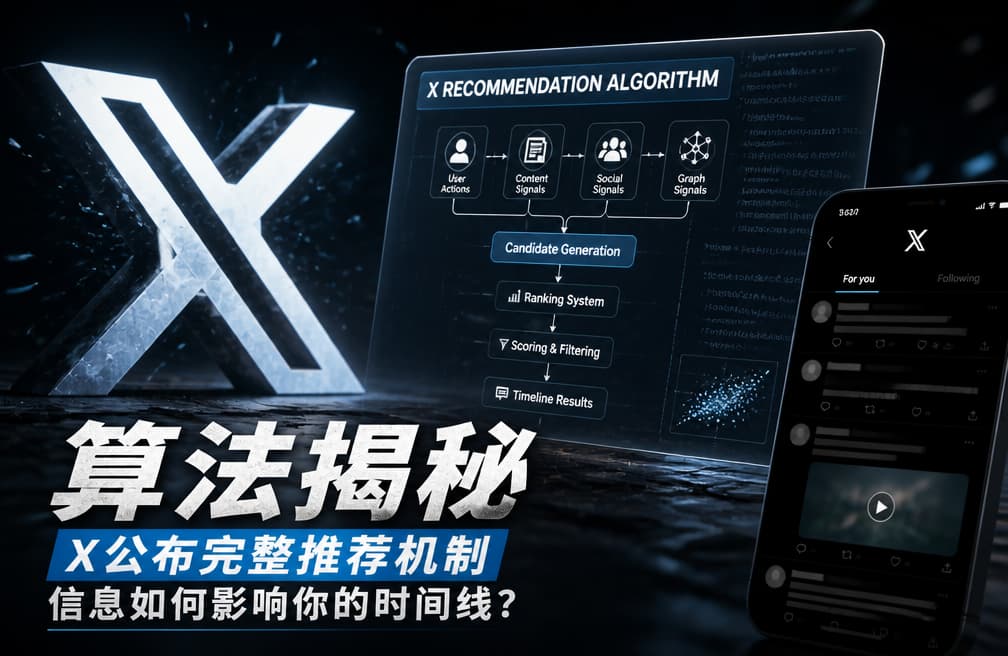
A $2.25 billion Green Bond, How Jane Street's Lease Made Its Way into the Financing Structure
Aug 14, 13:08
Before the AI Bubble Bursts, 'Big Short' Makes $100 Million from Subscription Fees
Aug 14, 12:48
Miner Outlook for the Second Quarter: Battling for AI Data Centers, Are They Making Money Yet?
Aug 14, 12:14
Still remember NFTs? The price of the new project has surpassed Bored Ape Yacht Club!
Aug 14, 11:49