A Tax Cash Cow — So Why Are Data Centers Being Rejected by US Voters?
Original headline: "This Data Center Cash Cow: Why Is It Being Rejected?"
Source: Blockworks
Author: Byron Gilliam
Compiled by: BitpushNews
In the eyes of the US tax authorities, an airport is a giant ATM.
Airports first generate property tax, income tax and payroll tax. But that is only the entry fee.
Take Pittsburgh International Airport: parking carries an extra 11.5% tax (on top of the regular sales tax). At Chicago O'Hare, "patent operating recovery fees" and "customer facility fees" add up to 50% to the cost of an order.
At every airport, departures pay a 7.5% federal excise tax on the fare, a $5.30 "segment" fee per takeoff and landing, a $4.50 "passenger facility charge" per departure airport, and an $11.20 TSA fee per round trip. All told, a $150 fare may require another $60 in fees and taxes.
The numbers add up fast. In 2025, Dallas Fort Worth International Airport paid roughly $14 billion in federal taxes, $5 billion in state taxes and $34 billion in local taxes.
(The airport also levies a 5% "venue tax" on passengers to help fund the Dallas Mavericks' basketball arena.)
But what about the planes that fly into and out of Dallas? They may not have paid a single cent.
Specialized leasing companies own roughly half of the world's commercial aircraft fleet, and most of these companies are legally registered in Ireland, where the corporate income tax rate is 15%.
This is of course a very good deal, and the planes can negotiate such terms because they can move easily.
Dallas Fort Worth International Airport is located only in Dallas-Fort Worth.
This is the "Ramsey principle" of primary taxation. Immovable assets such as airports, power plants, oil fields, hotels and parking garages are taxed the heaviest, because they have no bargaining chips. No matter how much they are taxed, they cannot leave. Movable assets such as aircraft, cargo ships, intellectual property and wealth are taxed the lightest; they can shop around for a better deal.
So tax collectors are usually eager to attract large immovable assets. Such as data centers.
Yet taxpayers are so enthusiastic.
The Nasdaq plunged this week because the midterm election results showed that data centers may no longer be welcome in the United States. There were 47 ballot measures across the country giving voters a chance to restrict or ban data centers in their communities. Of those, 46 passed.
This is unwelcome news for a tax system that has so far failed to complete the value-added tax.
In Richland Parish, Louisiana, tax revenue from Meta's data center funded $50,000 bonuses for public school teachers. In Hoffman Estates, Illinois, revenue from Microsoft's data center will help build a new fire station. In Effingham County, Georgia, tax revenue from the OpenAI data center will help fund a 40% cut in local property taxes. In Loudoun County, Virginia, property tax revenue generated by data centers has come in year after year over the past decade.
Loudoun County estimates that for every $1 of services a data center consumes, it collects $26 in taxes.
Judging by the market's reaction to the election assessments, you would think no one is willing to accept such a deal anymore.
But that may not be the case.
The data center in Harwood (North Dakota) is at least still welcome — it is the only place where voters rejected a ballot measure restricting construction. They seem satisfied with the data center being built. "For our small town, the sales tax and property tax are simply unbelievable," Mayor Blake Hankey said this morning, adding that the data center is expected to create more than 200 jobs.
Harwood's population is 820.
Data centers are also still very popular in Alabama, and incoming governor Tommy Tuberville is eager to close deals. "We're going to get data centers," Tuberville said earlier this year. "The tax revenue these things bring for schools, law enforcement, everything is unbelievable."
The governor-elect also said he would fold data centers into the state's tiers. Like local utilities, data centers will be taxed at the highest 30% of their property value.
Imagine paying 30% of your home's value in taxes every year!
If you like being as immovable as a data center, you may have to own one too.
Let's look at some charts.
People have spoken:
In Nottingham, New Hampshire, a data center permit moratorium passed with 90.3% of the vote. In Spring Township, Ohio, zoning narrowly passed with 52.6% of the vote. Still, the one vote that favored data centers over restrictions is significant: Harwood, North Dakota, rejected the measure by a vote of 3 to 1.
Polling:
The data center issue extends beyond the specific measures. Nationwide, about 56% of voters left data centers out; they were a key or important factor in their vote for Congress.
That is not solving the problem.
AI and data centers ranked far below the cost of living, the Iran war, ICE and corruption.
So why?
Respondents said their concerns about data centers' water use were "the impact on resources," including water and electricity use. Fortunately, a modern data center's water volume is roughly comparable to a local restaurant, and in some cases they have even lowered consumers' electricity bills.
Top growth rate:
The Tax Foundation estimates that a data center in Santa Clara, California, would generate about $33 million in revenue and about $22 million in taxes. The actual growth rate is as high as 67%! (I would welcome a data center like that in my backyard :).)
Excluding property tax:
When a money-making project cannot move, the taxes pile up layer by layer. In addition to property tax, corporate income tax and sales tax, data centers are also subject to gross receipts tax (taxed on revenue — yikes) and tangible personal property tax (taxed on the value of everything inside the data center, such as servers, GPUs and spare potatoes).
Made in America:
The United States holds most of the world's data center capacity. But that may not last long. If data centers are unwelcome in the US, they will take places like Malaysia more seriously. Or outer space! That makes Elon Musk's plan to build data centers in space seem less far-fetched.
Has the jobs apocalypse never arrived?
AI does not seem to have put many people out of work. After this morning's data release, economist Jason Furman said: "This may be one of the best — or the best — job markets we have ever seen."
The tech apocalypse arrives:
Thursday's 4.4% selloff in the S&P 500 was one of the worst 0.5% down days on record.
This may be the right reaction: the stock market has already levered up on hyperscalers' massive investments in big data centers, and data centers will now be harder to build.
But I believe someone will be willing to take their money. If not, we still have outer space.
I wonder what the top growth rate on the moon is?
Join the official Coincamps community:
Telegram: https://t.me/coin_camps
Recommended
Largest IPO in History Faces AI Panic: Valuation Shrinks by 500 Billion, Anthropic’s Listing Impasse
Nov 7, 22:32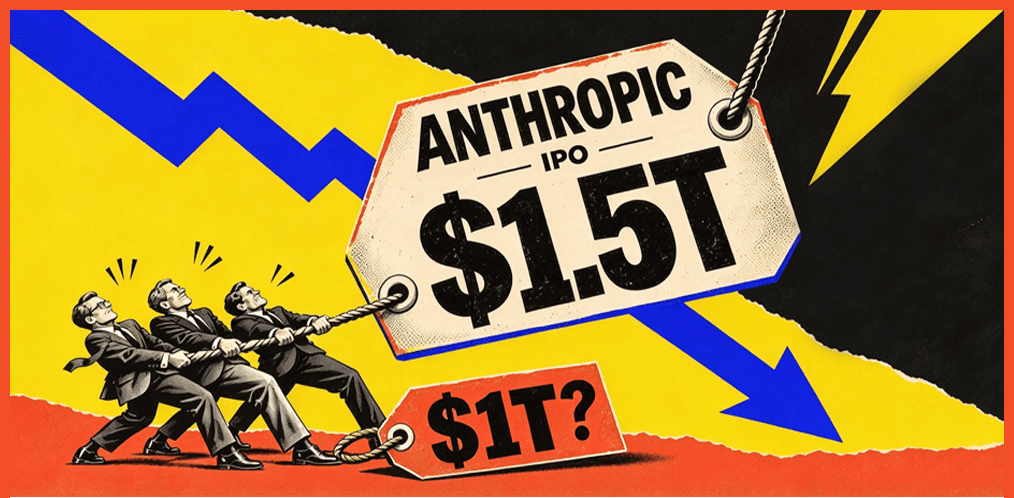
Request Finance Review 2026: Fees, Rails, Fit
Nov 7, 21:14
Intel: OpenAI Secures $11B Funding at $1.25T Valuation, Tesla Halts Cybertruck to Shift to Cybercab Production
Nov 7, 21:03
Operation Economic Outcast Severs MEXC Global's Access to the U.S.Financial System
 LayerPulseNov 7, 20:28

CFTC Regulatory Breakthrough: Prediction Market Kalshi Launches 50 Single-Stock Perpetual Contracts, First-Day Morning Trading Volume Exceeds $300 Million
Nov 7, 17:32
As the U.S. “Magnificent Seven” face their AI costs, who can still afford it?
Nov 7, 16:54