Largest IPO in History Faces AI Panic: Valuation Shrinks by 500 Billion, Anthropic’s Listing Impasse
TechFlow Guide: The severe sell-off of US tech stocks in early November and tightened regulatory scrutiny on data center infrastructure policies are pushing the frenzy around AI assets into a stark reality test.
As a landmark event once poised to set a global capital markets financing record, Anthropic’s listing process concerns not only the valuation of a frontier model developer, but also serves as a core barometer for observing how the secondary market prices the genuine commercial returns of frontier AI companies.
Dropping from an expected $2 trillion down to the $1.1 trillion range, while grappling with massive compute liabilities and personnel turbulence, the setbacks surrounding this mega IPO reflect capital’s comprehensive shift from mere narrative-driven stories to a ruthless scrutiny of balance sheets and real-world commercial loops.

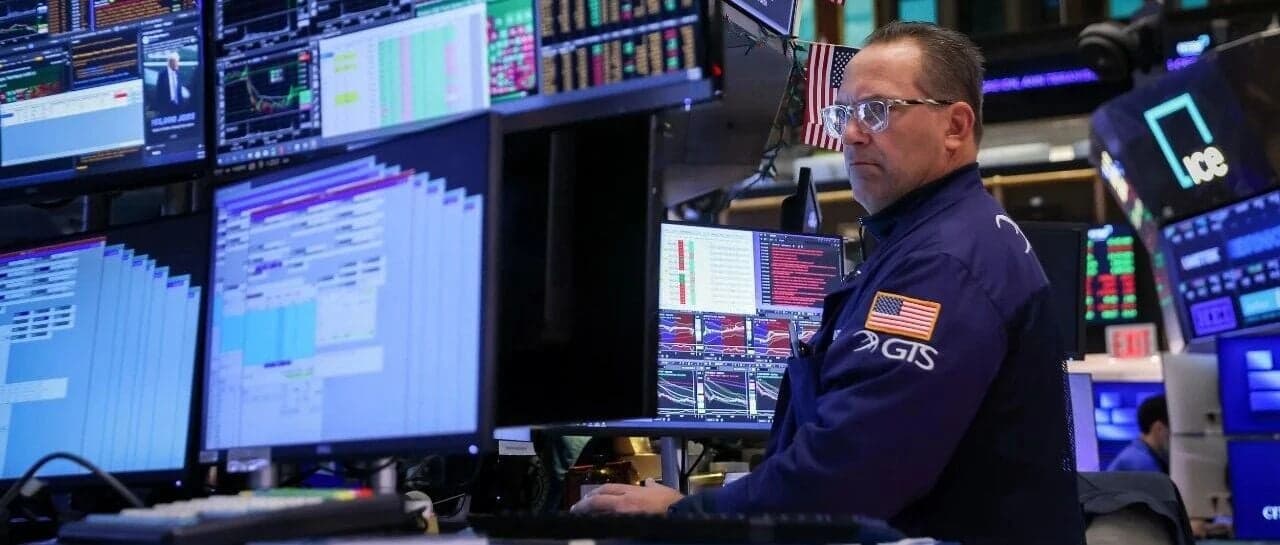
On Nov. 5, a “blue wave” swept through Wall Street, sending all three major US stock indexes plunging in tandem as AI, semiconductor, and data center-related stocks faced concentrated selling pressure.
The next day, tech stocks staged a modest rebound, with the Nasdaq Composite rising 1.09% and the Philadelphia Semiconductor Index recovering approximately 4.2%, though the Nasdaq still logged a cumulative weekly decline of roughly 3.4%.
Yet-unlisted Anthropic sits right in the eye of the AI storm. Without a real-time ticking stock price, it faces equally rigorous scrutiny.
According to foreign media reports, on the prediction market Kalshi, traders have lowered the probability of Anthropic completing its IPO within the year from nearly 90% before the US midterm elections to under 60%. Some potential investors even doubt whether Anthropic can reach the previously discussed $1.5 trillion valuation target.

Chart: Probability trend of Anthropic's IPO landing time on the Kalshi prediction market
Adding insult to injury, Anthropic has experienced consecutive internal leadership changes. Within two weeks, three key members departed from Claude Code, with former product head Cat Wu and Austin Lau, the company’s first growth-marketing hire, subsequently joining rival OpenAI.
As the tech stock downturn worsens, doubts surrounding this trillion-dollar IPO are mounting.
Blue Storm Sweeps US Stocks, AI Sector Becomes Hardest Hit in Sell-Off
On Nov. 5, US stocks plummeted across the board. The Dow Jones fell 1,833 points (3.44%); the S&P 500 dropped 4.36%, marking its largest single-day decline since the US tariff shock in April 2025; the Nasdaq declined 5.52%, recording its steepest single-day drop in 19 months.
The AI supply chain emerged as the primary casualty of the sell-off. The Philadelphia Semiconductor Index plunged approximately 12.3% in a single day, its worst drop since March 2020. NVIDIA fell roughly 9%, and AMD tumbled about 17%. CoreWeave dropped around 10%, while Nebius slid roughly 15%, with both companies seeing their share prices cut in half from their Oct. 6 peaks. Microsoft fell 3.6%, while Amazon and Alphabet each declined 2.2%.

Chart: Heatmap showing a broad-based plunge in US tech and semiconductor sectors
Note: Price change data for some individual stocks may vary across different market terminals. Figures in the chart may slightly differ from those cited in the main text.
The stock market’s color scheme contrasts sharply with electoral politics. One of the primary drivers behind this sell-off stems from market fears that the incoming US Congress and local governments may impose restrictions on AI data center construction. Given the massive electricity and water consumption of data centers and their impact on local infrastructure, these projects have become a critical issue in US local politics.
UBS estimates that roughly 30% of the new data center capacity originally slated for the US by 2028 could be impacted by potential construction halts.
Amid this sell-off, Anthropic’s upcoming IPO has become a crucial window into the broader AI market.
Anthropic operates as both a massive buyer of computing power and a model developer that sells AI services directly to enterprises and consumers. Whether the colossal investments in AI will ultimately convert into sustained revenue and profits—a key investor concern—must be answered by examining the operational performance of such companies.
Extreme volatility in the stock market has also complicated pricing for this transaction. Institutional investors weigh existing tech valuations, earnings forecasts, and market risk to determine at what price they are willing to subscribe to new shares. With AI-related stocks broadly declining, even those who remain bullish on Anthropic’s long-term prospects may demand lower offering prices or reduce subscription amounts.
Anthropic was previously expected to raise up to $100 billion. Such a massive issuance requires attracting sufficient institutional participation. If subscription demand falls short, the company may need to lower its valuation, scale back fundraising targets, or delay its listing until market conditions stabilize.
On Nov. 5, according to foreign media reports, some potential investors questioned whether Anthropic could launch its roadshow during the week of Nov. 9 and complete its listing within November. Some believe the previously discussed valuation of approximately $1.5 trillion remains too high and are seeking a larger discount. Anthropic declined to comment.
This transaction, once poised to set a global IPO financing record, now faces dual pressures: institutional investors continue to drive down valuation expectations, while the originally projected timeline for listing is coming under scrutiny.
However, it should be noted that Anthropic has not yet announced formal offering prices or a listing date. The company only stated in its prospectus that it “plans to conduct a public offering promptly after the effectiveness of the SEC registration statement.” The prior November listing schedule primarily stemmed from sources familiar with the matter.
Valuation Slides from $2 Trillion to $1.1 Trillion, Listing Timeline Questions Mount Among Institutions
In fact, Anthropic’s valuation pressure has been persistent. The $2 trillion valuation estimate merely made a brief appearance in September this year, with capital market sentiment seemingly cooling along with the temperature.
On Oct. 14, Anthropic held its Investor Day, revealing third-quarter financial data to potential backers. Company revenue grew approximately 45% quarter-over-quarter to $16.8 billion, maintaining robust expansion, though significantly slower than the Q2 quarter-over-quarter jump of roughly 145%. The following day, media outlets reported that some investors began revising Anthropic’s IPO valuation expectation downward from the previous ~$2 trillion to $1.5 trillion.
The $500 billion valuation premium evaporated just ahead of the actual listing. Some media commentary suggested Anthropic might have missed its ideal timing; had the company gone public in June amidst peak revenue growth momentum, it might have secured a more favorable valuation.
On Nov. 2, Anthropic updated its prospectus with supplementary third-quarter results: quarterly revenue reached $16.956 billion, a roughly 47% quarter-over-quarter increase, alongside long-term compute procurement and lease commitments totaling $895.4 billion. On the same day, reports indicated that institutional investors preparing to participate in the IPO hope to cap the valuation between $1.5 trillion and $1.6 trillion.
Today, even this discounted figure is facing scrutiny.
According to foreign media reports, amid the worsening tech stock outlook, some potential investors are discussing a $1.2 trillion to $1.3 trillion valuation range, with others even considering pushing the estimate down to $1.1 trillion.
Other reports suggest that certain investors are waiting for Anthropic’s October revenue figures to assess whether the company’s income growth can rebound following the Q3 slowdown. This data point has not been separately disclosed in the prospectus updated on Nov. 2.
Meanwhile, Anthropic also faces a talent war orchestrated by its competitors.
On Nov. 3 (US time), former product lead for Claude Code, Cat Wu, announced her resignation, ending her nearly two-year tenure at Anthropic. She played a key role in evolving Claude Code from an internal experimental tool into a commercial product, making her one of its most representative figures. Just two days later, Wu announced she would join OpenAI to lead product management for its core products, reporting to Tibo Sottiaux.
Austin Lau, Anthropic’s first-ever growth marketing hire, also announced his move to OpenAI on the same day. Previously, he helped build the user growth framework for Claude and was responsible for driving adoption. Earlier this year, Anthropic specifically highlighted how he used Claude Code to develop marketing tools that slashed ad creative production time from 30 minutes down to 30 seconds.
Ironically, just as Anthropic and OpenAI were locked in fierce battles for the enterprise market, the ones defecting to OpenAI happened to be two individuals who previously helped Anthropic acquire users. One drove Claude Code toward commercialization, while the other focused on expanding Claude’s user base. Now, both have joined forces with their former rival.
Interestingly, Anthropic recently emphasized its talent retention strengths in its prospectus. The company stated that over the past twelve months leading up to Sept. 30, its overall “regrettable attrition rate” remained low at roughly 1%. However, this metric does not yet account for the departures of key personnel since late October.
Regarding the reasons for leaving, neither party offered explanations directly tied to the IPO’s prospects. Cat Wu explicitly clarified that the ability to exit-sell company shares ahead of time did not factor into her decision to depart.
Racing Against OpenAI for Funding, Rivals Compete for Billion-Dollar Checks
As Anthropic’s IPO valuation continues to slide, OpenAI is hardly immune to the contagion.
On Oct. 19, foreign media reported that OpenAI was accelerating efforts to raise approximately $30 billion, aiming to lock in investor capital before Anthropic’s listing with a target valuation exceeding $1.4 trillion. However, by Oct. 30, OpenAI’s fundraising target had already shrunk to roughly $20 billion, with its valuation goal trimmed to $1.25 trillion. By Nov. 6, it was revealed that OpenAI had completed an initial tranche of about $11 billion in funding, with the remainder still being raised.

Chart: Foreign media reports confirming OpenAI has secured $11 billion in funding at a $1.25 trillion valuation
While OpenAI rushes to secure funding ahead of Anthropic’s debut, Anthropic hopes to leverage its IPO to break financing records. Now, both companies face market-imposed price suppression. They are battling for the same pool of investors and navigating similar financing headwinds.
Anthropic remains one of the few holdouts in this wave of AI listings, while most other AI companies planning to go public this year have opted to temporarily step away from the fundraising race.
As of Oct. 22, data center operator Switch, AI infrastructure firm Nscale, and SoftBank-backed SB Energy had all postponed their IPOs, while NVIDIA-backed Firmus and Blackstone-backed AirTrunk REIT withdrew or suspended their offering plans. Reports indicated that some companies were unwilling to compete against Anthropic for institutional capital and attention at the time. Many large-scale investors remain bullish on Anthropic, viewing it as one of the rare opportunities to directly invest in a frontier AI firm.
Just two weeks later, Anthropic’s own issuance schedule came under doubt.
Unlike established chipmakers and cloud computing giants, direct developers of frontier models like OpenAI and Anthropic still lack public market valuation benchmarks. Anthropic was once tipped to become the first frontier AI model company listed on US exchanges, making its issuance outcome highly anticipated.
If the listing proceeds smoothly, even with a valuation lower than earlier projections, the capital markets will finally gain the opportunity to directly price such companies. Investors will be able to gauge what valuation is truly warranted for a frontier AI business based on Anthropic’s revenue growth, profitability, and compute costs. This will provide a crucial benchmark for non-listed AI firms like OpenAI.
$900 Billion Compute Liabilities Weigh Heavy, AI Valuation Logic Faces Reconstruction

Chart: Official promotional poster from Anthropic
Notably, an IPO postponement would not immediately thrust Anthropic into a cash crunch. According to its latest prospectus, as of Sept. 30, the company still held approximately $131.9 billion in cash and short-term investments, providing a substantial financial buffer.
However, if the IPO remains stalled and alternative financing channels simultaneously tighten, the situation would become considerably more precarious.
Anthropic has committed to nearly $900 billion in long-term compute procurement and leasing agreements, with approximately $69.8 billion scheduled to mature by the end of September 2027. Should financing costs continue climbing and fresh capital prove hard to secure, the company may be forced to decelerate expansion efforts or even revise certain investment plans. Data center operators, chip vendors, and financial institutions relying on Anthropic’s future orders could also face spillover effects.
For Anthropic, missing a single listing window might mean waiting for another. But if the capital market alters its fundamental valuation logic for the entire AI industry, the next opportunity may not necessarily be as favorable as the current one.
Join the official Coincamps community:
Telegram: https://t.me/coin_camps
Recommended
A Tax Cash Cow — So Why Are Data Centers Being Rejected by US Voters?
Nov 7, 22:30Request Finance Review 2026: Fees, Rails, Fit
Nov 7, 21:14
Intel: OpenAI Secures $11B Funding at $1.25T Valuation, Tesla Halts Cybertruck to Shift to Cybercab Production
Nov 7, 21:03
Operation Economic Outcast Severs MEXC Global's Access to the U.S.Financial System
 LayerPulseNov 7, 20:28

CFTC Regulatory Breakthrough: Prediction Market Kalshi Launches 50 Single-Stock Perpetual Contracts, First-Day Morning Trading Volume Exceeds $300 Million
Nov 7, 17:32
As the U.S. “Magnificent Seven” face their AI costs, who can still afford it?
Nov 7, 16:54