AAVE Considers Token Burn, PUMP Continues Buybacks: Where Do the Repurchased Tokens Ultimately Go?
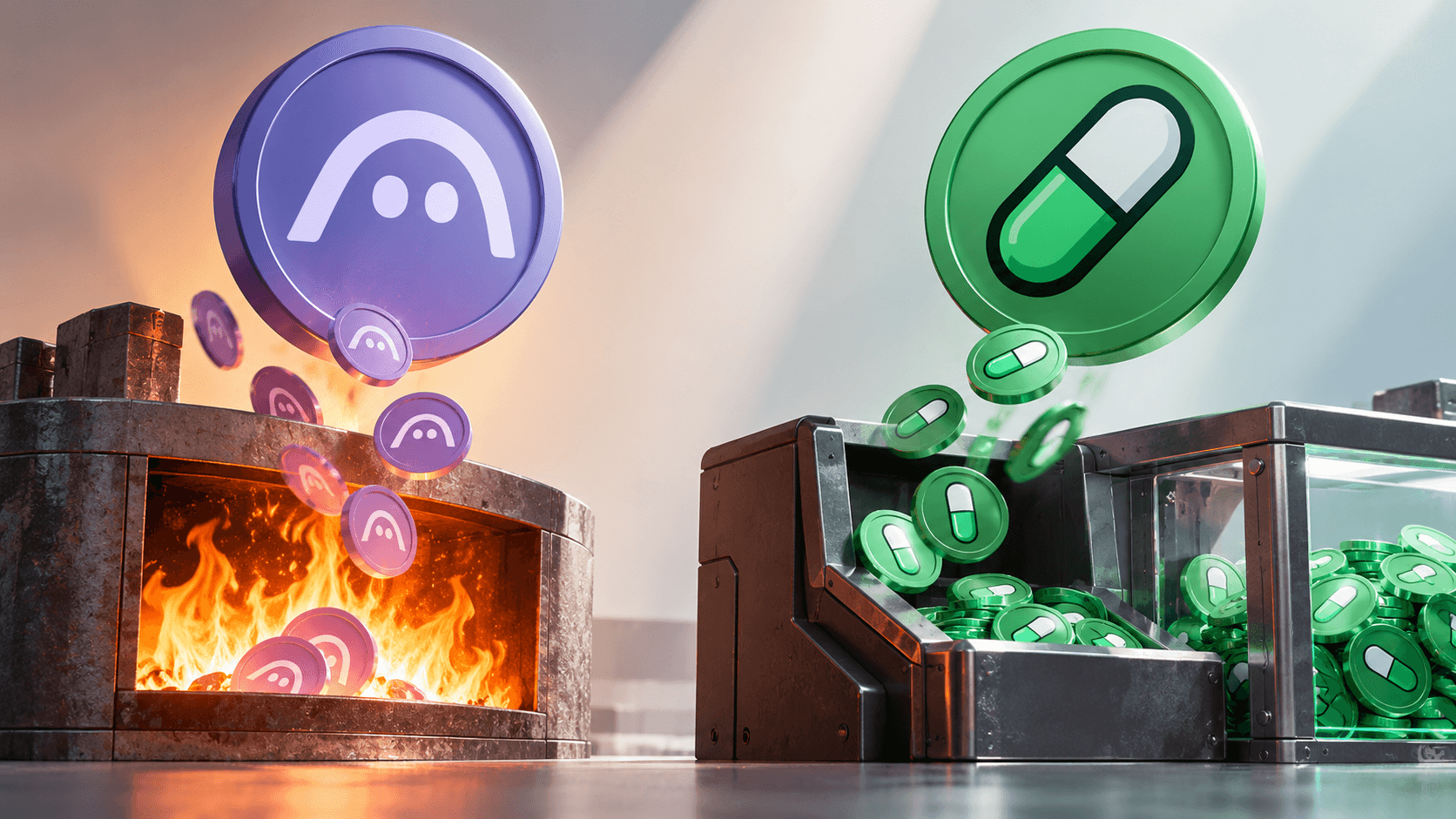
On September 29, Aave founder Stani Kulechov posted that the team is "considering" adding a token burn mechanism to Aavenomics 3.0; following the news, AAVE rose over 11% in a single day.
On the same day, Pump.fun's automated buyback contract continued to operate systematically, using 50% of platform revenue to purchase PUMP from the open market and permanently burn it daily.
Buyback-burn has become the most important narrative and fundamental driver of this cycle, yet different projects execute it in vastly different ways.
The 4 Possible Outcomes of Buybacks
When crypto projects say "buyback," investors instinctively analogize it to stock buybacks: a company uses profits to repurchase its own shares, reducing the number of outstanding shares, thereby naturally increasing per-share value.
But in the crypto world, where tokens go after being bought back can lead to at least four completely different outcomes, each carrying vastly different implications for token holders.
Into Treasury/Ecosystem Reserves. Tokens disappear from the open market but not from the total supply. They are deposited into a DAO treasury or ecosystem reserve address and can be redeployed at any time via governance vote. This is more like moving money from one pocket to another; while it reduces selling pressure in the short term, the long-term supply does not truly contract.
Permanent Burn. Tokens are sent to an address where no one holds the private keys, permanently removing them from the total supply. This is the only operation truly analogous to stock cancellation. However, even then, if a project has a large amount of tokens waiting to be vested, the burn rate may simply cannot outpace the release pace.
Transferred to Specific Reserves/Funds. Tokens are deposited into an address with a defined purpose, such as an insurance fund, liquidity pool, or staking rewards pool. The questions to ask are: Does this address have withdrawal rights? Is there a lock-up period? Will it flow back to the market in other forms in the future?
Distributed to Stakers. Repurchased tokens are distributed to stakers as yield. This represents real yield for stakers but dilution for non-stakers. The more critical question is: Do these yields actually come from the protocol's genuine business revenue, or are they merely additional emissions on top of the token itself?
Aave: Bought 200,000 Tokens, All Still in the Pocket
Aave's buyback story can be divided into three phases.
In April 2025, the Aave DAO approved a structured buyback plan: executed by the financial committee, purchasing approximately $1 million worth of AAVE from the open market weekly, with an annual budget of roughly $50 million. By February 2026, the program had spent a cumulative ~$42 million, buying over 205,000 AAVE tokens, representing 1.28% of the total supply.
Where did these tokens go? All were transferred to the Aave Ecosystem Reserve. This reserve is used to pay for staking incentives, developer grants, and provider fees, meaning these tokens could be redeployed at any time.
In March 2026, the DAO voted to cut the annual buyback budget from $50 million to $30 million. Buybacks were temporarily paused from April to June. On June 27, Aavenomics 3.0 went live, replacing the previous committee-executed manual model with an on-chain automated mechanism, currently auto-purchasing about 292 AAVE tokens daily.
Now Stani is talking about "considering a burn." But as of publication, there is no governance proposal, no burn ratio, no execution timeline, and no specific parameters. As Cointribune noted: the market heard the word "burn" and buying pressure followed. But between "considering" and "deciding" lies an entire governance process.
Pump.fun: Burned 36% of the Circulating Supply, Now What?
Pump.fun took a completely different path.
From token launch through April 2026, Pump.fun used 100% of platform revenue to buy back PUMP. This is one of the most aggressive buyback commitments in the crypto industry. On April 28, 2026, the team burned all accumulated repurchased PUMP in one lump sum, worth approximately $370 million, accounting for 36% of the circulating supply. Simultaneously, they announced a shift to a 50% revenue buy-and-burn model (automatically executed via an irreversible lock-up contract for one year), with the remaining 50% allocated to business development.
By late July 2026, Pump.fun had cumulatively spent around $414.6 million to buy back and burn 153.73 billion PUMP tokens.
Yet the PUMP price remains flat on the floor. Dropping from its $0.004 launch price to around $0.0013, it is down approximately 89% from its all-time high of $0.01214.
Why hasn't a project burning "real money" seen its price take off?
Analysis from 8Blocks hits the nail on the head: Pump.fun's buyback volume covers only about 2% of daily trading volume. More critically, PUMP lacks essential utility within the product. When users create meme coins, trade, or use PumpSwap on the platform, they do not need to hold or consume PUMP at any stage of the process. There is a missing mandatory transmission chain between platform growth and token demand.
Additionally, since team and early investor tokens are still being vested according to schedule, the burn rate cannot outpace the new release rate. Net circulation has not truly contracted.
Pump.fun has taught the entire industry a lesson: buyback and burn mechanisms can achieve textbook-level transparency and irrevocability, but if the token itself lacks intrinsic demand, no amount of supply-side manipulation can create lasting price support.
Hyperliquid: The Model Currently Closest to a "Textbook Case"
For comparison, Hyperliquid's HYPE provides a nearly entirely different sample.
Hyperliquid's Assistance Fund allocates 97% to 99% of protocol trading fees to automatically purchase HYPE from the open market. In December 2025, validators officially classified the HYPE held by the Assistance Fund as "permanently burned," removing it from both circulating and total supplies.
As of September 2026, a cumulative ~48.42 million HYPE tokens have been burned, representing 4.84% of the 1 billion total supply. The acquisition cost was approximately $1.321 billion, currently valued at around $4.366 billion based on market price. The annualized buyback intensity stands at roughly 7% of market cap, which is 4 to 5 times the burn rate of Ethereum's EIP-1559.
HYPE is currently trading near its all-time high, with a market cap of approximately $14 billion. Hyperliquid's YTD revenue for 2026 stands at around $429 million.
Why did HYPE rise while PUMP did not, despite both employing buy-and-burn mechanisms? At least two structural differences account for this.
HYPE has genuine functional utility within the Hyperliquid ecosystem: staking, governance, and Gas fee payments. There is a direct transmission path between platform growth and token demand. Furthermore, Hyperliquid's trading volume is sufficiently large ($493 billion liquidated in Q1 2026), generating enough fees for the buyback scale to materially impact supply.
However, HYPE is not without risks. The buyback mechanism is a protocol strategy, not a smart contract commitment, meaning it could theoretically be modified or paused at the governance level. Additionally, only about 22% of HYPE is currently in circulation, with the remainder unlocking over several years.
The 2026 Buyback Landscape: Where Did the $638 Million Go?
According to Rhythm data, from January to August 2026, crypto projects cumulatively spent approximately $638 million on token buybacks, a 17% year-over-year increase.
Nearly 90% of this amount came from just two entities: Hyperliquid and Pump.fun.
The remaining buybacks are scattered across projects in the Sky ecosystem (approximately $26 million in SKY buybacks), Uniswap (began burning UNI with protocol fees starting December 2025), among others.
But of the $638 million spent, how much actually reduced token supply? How much was merely shuttled back and forth between treasuries and the market? How much was completely offset by vesting schedules? These are questions that should be interrogated under every "buyback" headline.
A Checklist to See Through Any Buyback Narrative
When a project announces a "buyback," token holders need to verify at least five things:
Where does the buyback funding come from? If it comes from the protocol's genuine business revenue (fees, interest, royalties), it is healthy. If it comes from treasury token reserves or additional emissions, it is simply moving money from left to right hand.
Where did the repurchased tokens go? Permanent burns (sent to verifiable zero addresses) are the only operations that genuinely reduce supply. Transfers to treasuries, ecosystem reserves, or discretionary funds all retain the possibility of being redeployed.
Can the buyback speed outpace the vesting schedule? If a project has a large volume of team, investor, or ecosystem incentive tokens awaiting release, burning 1,000 tokens weekly while unvesting 100,000 monthly results in a net effect of inflation rather than deflation.
Is the execution mechanism irreversible or adjustable? Pump.fun's lock-up contracts are superior to Aave's former committee-led model. But even Hyperliquid's Assistance Fund could theoretically see its parameters adjusted via governance.
Does the token itself have intrinsic demand? This is the most easily overlooked yet fundamental question. For tokens without usage scenarios, buybacks merely fend off selling pressure rather than creating buying pressure. Eventually, when buyback budgets are exhausted or vesting cliffs hit, prices will still fall.
Stani's single tweet driving an 11% rally shows just how desperate the market is for the "burn" narrative. But the gap between desire and reality is often exactly what separates profit from loss.
Join the official Coincamps community:
Telegram: https://t.me/coin_camps
Recommended
Hyperliquid will use $15 million USDC revenue for HYPE buybacks; buybacks will no longer rely solely on trading fees.
Oct 3, 18:27
Grayscale Zcash Spot ETF Sees $93.56M in Single-Week Redemptions: Honeymoon Period Turns Sharp, Once Held Nearly 3.5% of Supply
Oct 3, 16:41
After resuming withdrawals, funds did not fall but rose instead. How did Bitget turn the situation around in five days?
Oct 3, 16:32
SEC Clears 3x Leveraged Bitcoin and Ethereum ETPs: Listing Rules Approved, Trading Still Pending Activation
Oct 3, 16:22
Funds Rose Instead of Fell After Withdrawals Were Resumed: How Did Bitget Turn Things Around in Five Days?
Oct 3, 16:11
CryptoPunks Trading Volume Surges Nearly 12X in a Week: Rare Variants Sell for Millions Again, Market Rally Decoupled from ETH
Oct 3, 13:36