
Twenty Years of the Chinese Internet and the Summer of Office Agent

Original Title: "Twenty Years of the Chinese Internet, and the Summer of Office Agent"
Original Author: Beatling from PingWest
In Hangzhou, there are two office buildings facing each other across the street. On the rooftop of one building, just before the Spring Festival in 2026, a red and gold statue of Sun Wukong was erected, next to the lightning bolt symbol of DingTalk. On the rooftop of the other building is the logo of Feishu. The day the Sun Wukong statue was erected, photos quickly spread on social media, and many people jokingly said that this was the most straightforward business competition, with DingTalk seemingly trying to outshine Feishu.
These two companies have been at it for ten years. From whose messages have been read to documents, spreadsheets, and client lists, the battle eventually reached the rooftop.
However, the two hands of the monkey on the rooftop were empty, without a weapon. The thing it was going to pull out would be revealed at a launch event over a month later.
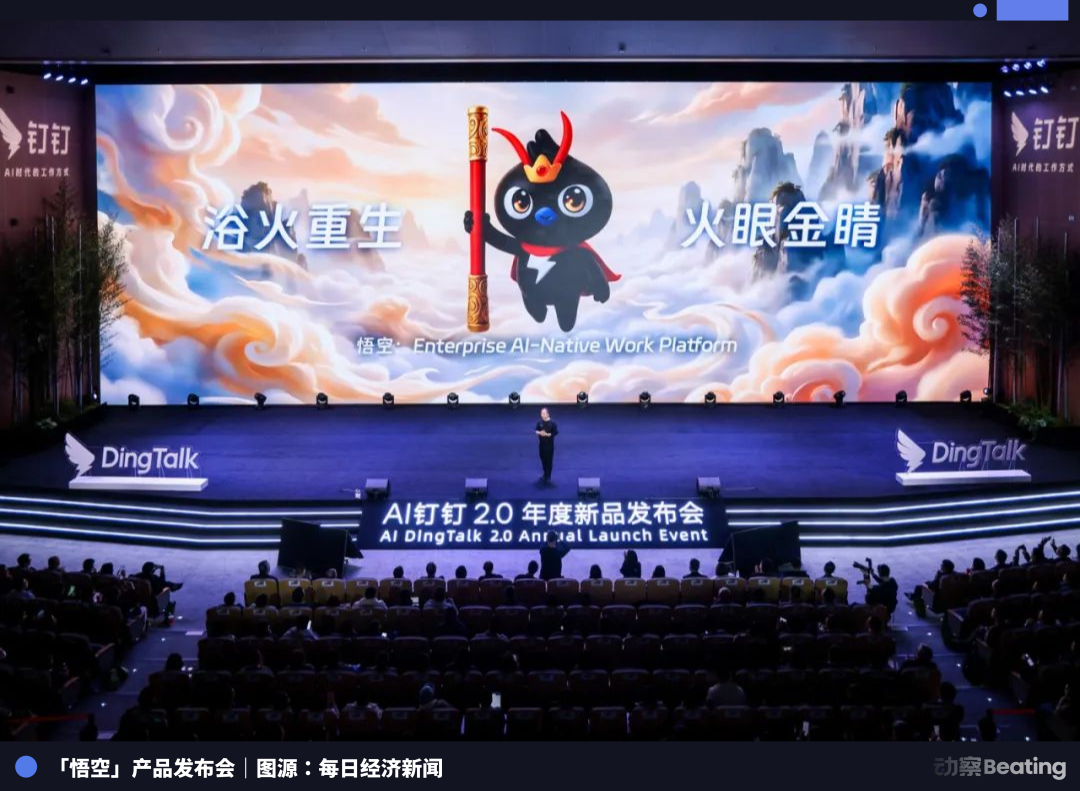
On March 17, in Xixi, Hangzhou, the founder of DingTalk, Wu Zhao, took the stage at a launch event. He created DingTalk in 2015, left in 2021, and was invited back in 2025. On this day, he was going to introduce a new AI assistant named Wukong, and the logo used was exactly the monkey on the rooftop.
Alibaba CEO Wu Yongming was sitting in the audience. Wu Zhao said that he wanted to break DingTalk apart and reforge it with AI. In the past, it was people using DingTalk, but from now on, it would be AI using DingTalk.
When talking about the logo, he took off the gold hoop from the monkey's head, saying it was already the Victorious Fighting Buddha.
Applause erupted in the audience.
The mischievous monkey who made a scene in the Heavenly Palace did not reach the Mountain of Flowers and Fruit. He was trapped under the Five Elements Mountain for five hundred years, and when he came out, he had an additional circlet on his head. He rolled on the ground, cursed all the way, and his temper was gradually tamed. The one who truly reached the Mountain of Flowers and Fruit was another monkey who no longer sought to be a king.
The Victorious Fighting Buddha was the new name Sun Wukong received after completing that journey. To get there, the original monkey had to be dealt with.
This story about Wukong is also about DingTalk.
Although the event appeared to be the release of an AI product, what was truly at play was DingTalk itself. DingTalk transformed over a thousand foundational capabilities into AI-accessible commands. Previously, employees had to click through approval processes, schedules, and business systems layer by layer on the screen, while Wukong could bypass this and directly read data, control tools, and continue tasks seamlessly.
What Wu Zhao was handing over was not just an entrance but also the decade-long internal organs of this company.
However, just eighty-six days later, on June 11, he left DingTalk. This event was somewhat dramatic, but looking back at the past twenty years of the Chinese internet, it is not unusual.
The companies that have truly lived through cycle after cycle have almost all done the same thing: when the old business is still profitable and the old product is still at the top, they personally hand over the next knife to their own people.
In these twenty years of the Chinese internet, no one has survived by sticking to their old selves.
To survive, you must first kill your former self.
Killing the Self at its Peak
These internet giants have been practicing this skill for a long time.
October 2010, Shenzhen. Zhang Xiaolong wrote a letter to Pony Ma, saying that QQ belonged to the computer, and Tencent needed a communication tool born on mobile. Tencent did not directly assign this task to the QQ team. Three internal groups started simultaneously, with QQ, QQ Contacts, and QQ Mail each developing a product. The team that completed it first would take the credit.
That year, QQ was at its peak.
January 21, 2011, Guangzhou. The team working on QQ Mail launched WeChat 1.0.
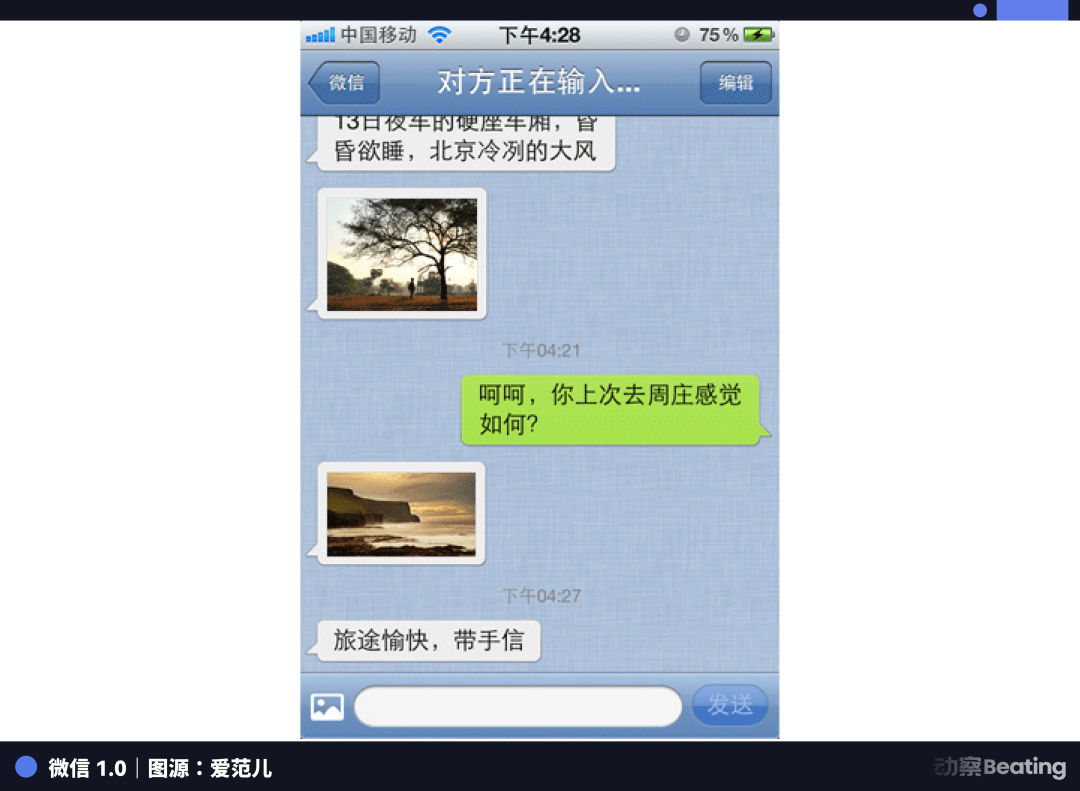
Tencent made the first move. Two years later, a similar scenario unfolded in Hangzhou.
In 2013, Jack Ma said that the Alibaba Mobile Team's responsibility was to kill Taobao.
That year, Taobao was center stage.
Two years later, Mobile Taobao became the main battlefield for Singles' Day. While the Taobao name remained, the screen where people made purchases had changed, and few people sat in front of a computer to open the Taobao website.
In another five years, it was Beijing's turn.
August 2018, Zhichun Road. The Today's Headlines sign was taken down from the Zhonghang Building and replaced with "ByteDance." Today's Headlines can still be accessed, updated, and still has users and ads.
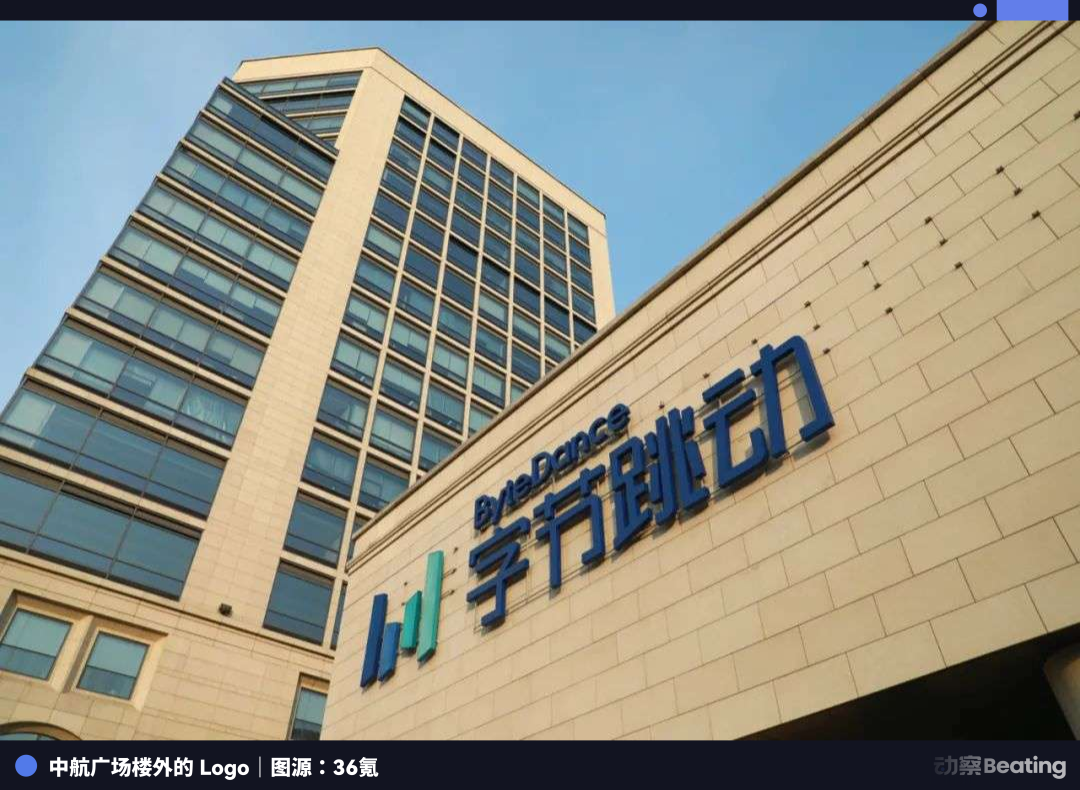
That year, Today's Headlines was still a national app.
It's just that TikTok had already surpassed it. Three months later, Chen Lin was appointed CEO of Today's Headlines, and Zhang Yiming's official title changed from "Founder and CEO of Today's Headlines" to "Founder and CEO of ByteDance."
All three rounds are the same.
The thing that needs to be cut into is making money, attracting all the attention. It seems to be the last place in the whole company that should be touched. But if you wait for it to deteriorate on its own, the company will age along with it. So, while it's still strong, you have to take action, pass the baton to your own people, let something new grow from the inside, and then slowly phase out the old.
Master of the Loser
But DingTalk was not created at the peak.
In 2014, Hangzhou, 176 Wenyi West Road. In an old apartment by the lake garden, six Alibaba employees sat around a table for a weekly meeting. They had just taken down Laiwang. Laiwang was Alibaba's social product aimed at challenging WeChat, costing the company a huge sum of money. Each employee was required to bring in one hundred external users per month. Jack Ma personally promoted it, and figures like Liu Chuanzhi, Robin Li, and Jet Li were invited to join. For a while, many people had Laiwang on their phones, installed it, used it for two days, and never opened it again.
The apartment they retreated to was almost considered a ancestral home within Alibaba.
In 1999, Jack Ma and seventeen comrades pooled together fifty thousand in that place to establish Alibaba. Later, when Xixi Park was built, they even re-enacted the interior of this house.

However, this time, the new direction that emerged from the apartment was not decided in a strategic meeting.
Laiwang failed to lure ordinary users away from WeChat. So, they changed direction and tapped into the basic anxiety of Chinese bosses, such as whether anyone read their messages and if tasks were being completed.
Features like instant messaging, read receipts, corporate directories, attendance tracking, approvals—those headaches for numerous employees—struck a chord with managers back then.
Later on, DingTalk was always said to be made for bosses. But at that time, those who were truly willing to pay for a set of management software were these people. There are millions of small companies in China, where bosses run the business, do payroll, and track progress themselves. Before DingTalk appeared, all they had was a WeChat group and almost nothing else.
In January 2015, DingTalk went live. In the first year, it had over a hundred million users, and within three years, it exceeded three hundred million.
An army defeated in Laiwang, which was taken down, thus created a handy weapon.
Later, this weapon struck down many people, including those who created it.
The One Who Came Back to Dismantle Themselves
Wuzhao left DingTalk in 2021.
That year, Alibaba promoted the "Cloud-DingTalk Integration" strategy, aiming to sell DingTalk and Alibaba Cloud together to large clients and undertake custom projects. However, Wuzhao insisted on standardized products for small and medium-sized enterprises. Differences that were only on paper turned into multiple unresolved discussions during meetings. After leaving, he founded H2O2 to work on cross-border products and small smart hardware.
Four years later, the wind direction completely changed.
In February 2025, Alibaba announced a 380 billion yuan investment over the next three years to build AI infrastructure. Wu Yongming referred to DingTalk as one of Alibaba's most important AI applications for enterprises. On March 31, Alibaba acquired the shares of H2O2's investors, and Wuzhao returned to the position of DingTalk's CEO for the second time.
Ten years ago, he created DingTalk from the ashes of failure. This time, he was brought back to dismantle what he had once built.
In his first week back, Wuzhao did not fully rely on the customer list prepared by the business departments but instead led his team to visit Beijing, Guangdong, and East China. Upon his return, he personally reviewed DingTalk's product managers one by one. In a ten-minute session with each manager, a random feature was selected, and the manager was asked to explain clearly why it was designed that way.
Ten minutes is very short, so short that there was hardly any room for preamble. As soon as they began speaking, it was evident whether the feature had been well thought out. According to reports, very few people passed this impromptu review. Wuzhao's final assessment was that while DingTalk had implemented many AI features, it had failed to define the future.
Next was the "Ground Operation." Product, research and development, and operations teams took turns spending two hours each day doing customer service.
Prior to this, the backend data looked great, with a transfer rate to live agents of only 15% and all ratings being five stars. However, when agents actually answered calls, they heard a different story. Some callers said their questions were dodged, some mentioned that requests made a year ago had seen no progress, and some couldn't even find the option to speak to a live agent.
After a reassessment, customer satisfaction was found to be only 30%. A few months later, this number had risen to 80%, with costs reduced by 90%.
Wuzhao did indeed fix some things. He could easily see through the data fabricated by a large company, compelled product managers to listen to customer complaints, and genuinely raised satisfaction from 30% to 80%.
The issue was that the methods he used to fix the product were quickly applied to fixing people as well.
Then, the screws of the entire machine tightened more and more. Clocking in at nine, there were daily morning and evening meetings, and after lunch breaks, they had to be in work mode by 1:15 PM. Managers were required to learn Python, the tech team measured lines of code in reverse, and product managers had to visit three enterprises weekly, sometimes even using the scripted line "Sorry, I only have DingTalk" in external communications. Reports mentioned that he did rounds at 10 PM and would give thumbs up to those still working late.
Teng Yaxin joined DingTalk at this moment.
She was a product manager with the nickname Yousu. During her interview, Wu Zhao focused on a user acquisition task. Starting from her father, then mother, then grandparents, and finally asking if she really couldn't find six family members who could join DingTalk.
Competition
On Yousu's first day at work, she was assigned to a confidential project with the codename O. Later, she learned that O stood for ONE.
By the project's second week, the lead designer left. By the fourth week, the senior fellow who had recommended her to the team was transferred elsewhere. Among all the product managers who had spent a full three months on ONE, there were only three people, and she was one of them. People kept changing, new team members had to start from scratch, but the release date was never postponed.
On August 25, 2025, during DingTalk's tenth-anniversary event, Wu Zhao unveiled five new products. DingTalk A1 was a 3.8mm thick recording card that could stick to the back of a phone. Its AI transcription feature supported 72 languages, and AI Forms and AI Q&A were also introduced.
ONE was placed right in the center. It aimed to rearrange messages, schedules, meetings, approvals, and documents to change from "people seeking tasks" to "tasks finding people." But as they moved forward, the first obstacle they encountered was DingTalk itself.
One employee brought up the example of Country Garden during a presentation, hoping to use ONE's card to dynamically dispatch tasks to security guards and cleaners. According to Yousu's notes, Wu Zhao did not agree with this direction. He wanted ONE to serve bosses and managers, just like DingTalk.
The focus quickly shifted to data.
ONE's daily active users once stabilized around three million, but then the retention rate plummeted. The team transformed it from an information consolidation tool into a base that could accommodate various agents, with a row of icons piled up at the bottom of the screen. Both internally and externally, there were doubts about the product. After retracting the idea of a comprehensive solution, the product returned to simplicity, with an empty home screen indicating that all urgent tasks had been completed. According to Yousu's data, the next-day retention rate increased from just over 10% to nearly 30%. Just before the entrance was closed, the peak retention rate once exceeded 45%.
It was like taking its first steps and then being repositioned. In early 2026, ONE was dismantled and relegated to DingTalk's subsidiary screen, and Wukong became the main entrance.
With the entrance changed, DingTalk's anxiety did not dissipate. Soon, it found a new reference point just across the street.
Over two months later, on the night of April 2, DingTalk's senior manager and product director received a notice that they were not allowed to leave before midnight. It wasn't for a meeting or a software release. They had to see what time the building opposite, Feishu, turned off its lights.
This showdown is certainly more than just about whose light stays on later.
A year ago, DingTalk's CEO, Xie Xin, mentioned attendance software at a public event. He said, if an office tool only collects clock-in data every day, accumulating a million clock-ins in a year, AI can probably only predict which employees will be late tomorrow. He didn't call anyone out by name, but the audience knew who he was referring to. In another interview, he claimed that DingTalk's form product is ahead by at least twelve months.
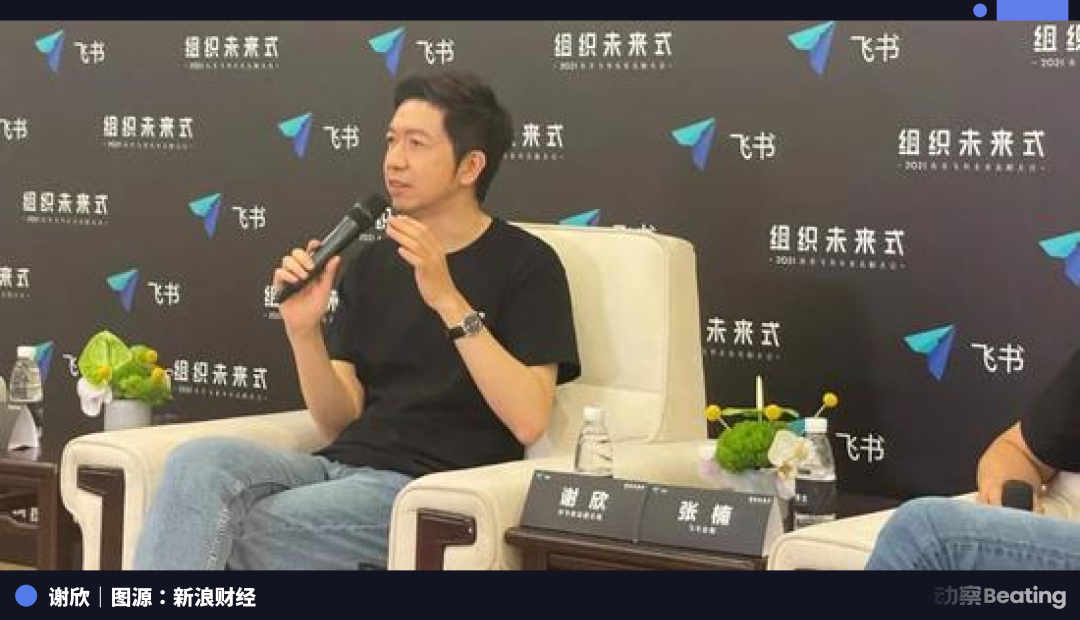
One company excels in management, while the other excels in collaboration. These are two different solutions to the same problem, with both sides answering earnestly. DingTalk asks who hasn't implemented a decision yet, while Feishu wants to document how a decision was made so that a newcomer arriving three months later can understand why things were decided the way they were.
Yousu recorded her experiences in all these days.
On June 4th, she posted "Immersed in DingTalk" on Alibaba's intranet, totaling 75,000 words, 105 pages, divided into eight chapters, covering the product's conception, positioning, design, users, agility, order, battle, and long-term strategy.
Changing of the Guard
On June 8th, in Hangzhou, former DingTalk Vice President Wang Jiamin wrote "Immersed Outside DingTalk." He expressed his hope to revive DingTalk without resorting to draining everyone's energy.
On June 10th, in Hangzhou, the Alibaba Partnership Committee criticized DingTalk's management style on the intranet, stating that it does not align with Alibaba's culture.
On June 11th, in Hangzhou, Wuzhao stepped down. It was his second time leading DingTalk, totaling 437 days.
He returned to dismantle the old DingTalk, but ended up being dismantled by the same means, including himself.
But the surgery on DingTalk did not stop there.
Twenty-one days later, Wukong, QoderWork, and MuleRun were handed over to the successor, Chen Yuxin, for integration. QoderWork handles desktop execution, MuleRun emerged from within Alibaba Cloud, and Wukong was personally launched by Wuzhao. On August 3rd, the Alpha office suite containing these three components began public testing.
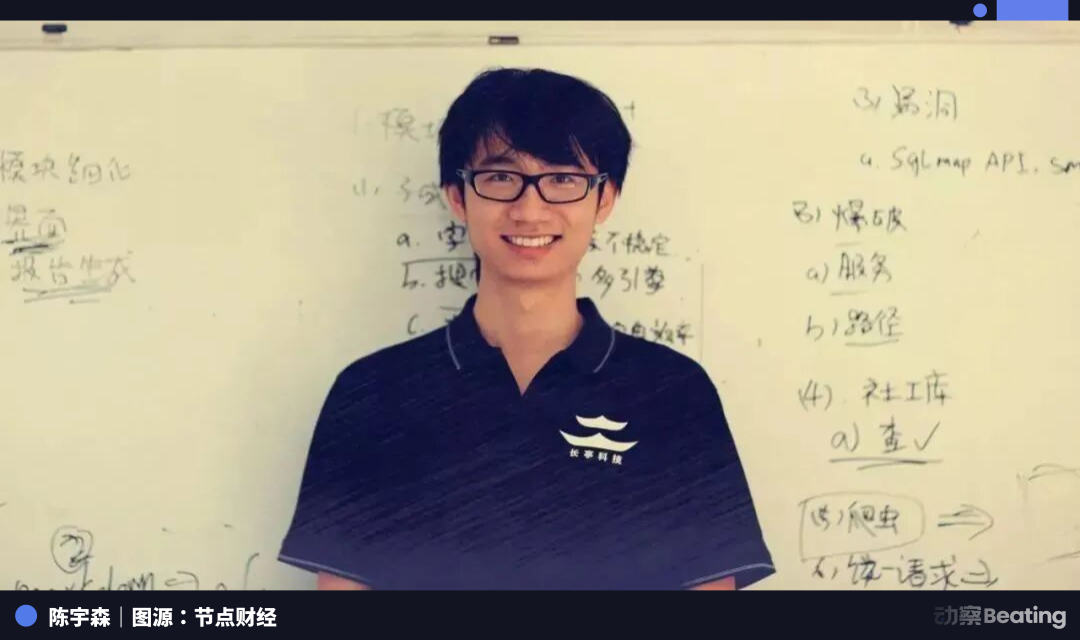
From shedding the golden hoop to being included in the Alpha suite, it took 139 days. The Monkey King is still standing on the rooftop. The person who named it has already left, and it now has a different name, marking a new beginning.
At around the same time, the company across the street also began to make moves.
Beijing, July 30. ByteDance split DingTalk in two. The product team joined Lark, ByteDance's AI assistant, with Xin Xie reporting to the Lark lead, Qi Zhao; the sales, marketing, and customer service teams moved to Volcano Engine, ByteDance's cloud business, under the leadership of Dai Tan. The announcement stated that DingTalk's existing products and services will remain unchanged.
"Remain unchanged."
Eight years ago, when the Aerospace Building changed its sign, Toutiao did not disappear either. It could still be launched, still had users, still had advertisements. The real change was the power behind the name. Toutiao transformed from a company back into a product, and ByteDance stood above it.
Today, a similar situation has befallen DingTalk.
However, DingTalk is a bit different this time. Its revenue is still increasing, customers are still renewing, and Xin Xie continues to lead the product. Data obtained by Caijing indicated that by 2025, DingTalk's revenue exceeded 3 billion RMB, with a year-on-year growth of over 100% in the second quarter of 2026, during which more than 90% of new customers purchased DingTalk's AI products.
While DingTalk is undergoing a passive transformation, it is currently succeeding.
This actually resembles those truly crucial turning points in the past twenty years. When a business has already lost, making changes usually only involves cleaning up the mess; the real challenge is when it is still profitable, still growing, and yet you choose to hand over the next level of power.
Beijing, August 6. ByteDance held its second all-hands meeting of the year, where Ruibo Liang listed TikTok and Lark as the two main pillars, with both Qi Zhao and Dai Tan present. Xin Xie, who joined ByteDance in 2014 and was the first HR head, shifted from reporting directly to founder Ruibo Liang to reporting to Qi Zhao.
At this point, the changes in DingTalk were no longer just about a reporting line adjustment. ByteDance is redefining who will be at the top of the hierarchy in the next phase.
Tencent is also tightening its focus.
Earlier this year, several Agent products sprouted within the company. Apart from WorkBuddy, there were also QClaw and Marvis, and externally, this internal competition was referred to as the "Battle of a Hundred Shrimps." By July, QClaw's relevant businesses and some teams were incorporated into the department where WorkBuddy resides.
Multiple Tencent insiders informed the media that Pony Ma frequently attended WorkBuddy's product meetings, where team requests for computing power, technology, and marketing resources were consistently approved. There are internal rumors that it could become the third strategic-level product after QQ and WeChat. On August 8, WorkBuddy's advertisements sprawled from Beijing's Zhichun Road to Shenzhen's High-Tech Park, displaying in subway corridors, office building elevators, and streaming on mobile devices even at night.
Zhichun Road. Eight years ago, today's headlines took down their own sign on that road.
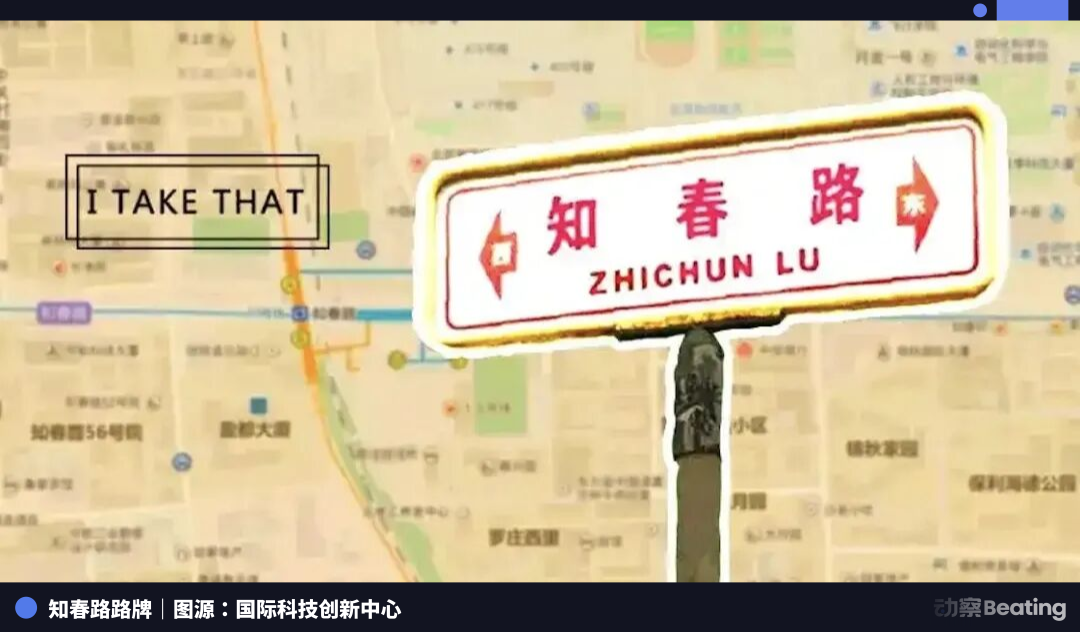
This summer, similar adjustments are still spreading outward.
Baidu integrated the R&D personnel and resources of its internal assistant Dodo into the Office Agent, with Wenzibook and Wangpan (Library and Cloud Storage) already placed under the same business group to provide content and users for GenFlow. Meituan, on the other hand, incorporated its LongCat model into CatPaw, delving into code, fulfillment, and enterprise operations, with fulfillment being the heaviest line handling the daily dispatch of hundreds of thousands of delivery drivers and millions of merchants.
At this point, it is difficult to see these changes as mere product adjustments by individual companies. The tech giants are all moving the users, permissions, data, and organizational relationships accumulated over many years in their old businesses towards the Agent.
Improvement
Lao She wrote "Teahouse," and Wang Lifa spent his whole life improving.
In the late Qing Dynasty, he replaced the square tables and benches with small tables and rattan chairs. Later, he partitioned the apartment to rent to students. When he couldn't continue storytelling, he even thought about adding a few female attendants. The tighter life became, the more frequent his improvements, always saying, "I am all about improvement."
The Yutai sign outside has never been changed, but the tables and chairs inside have been replaced several times. The paper sign on the wall that says "No Discussing State Affairs" is getting bigger.
Wang Lifa was willing to change everything, but the set of rules under the sign was never touched. In the end, improvement did not bring him a way out.
During the era of the Chinese internet, the giants often make much harsher moves than mere "improvement." They don't wait for the old to fade away. When it's really time for the knife to fall, it's often when the old is still making money, still growing, still at the top.
This summer, it's the turn of office software. Their ten years of organizational relationships, permissions, and customers are exactly the food that Agent needs the most; their ten years of product boundaries also happen to block Agent's path forward.
In the twenty years of the Chinese internet, perhaps the cruelest lesson has never been about how to defeat others.
It's about when the "yourself" that is the most profitable, the most familiar, the hardest to move starts to block the way, do you dare to strike first.
To survive, you must first kill your former self.
Original Article Link
Recommended
After CoreWeave's Revenue Doubles, AI Cloud's 'Scale Up Bill' Comes Into Focus
Aug 12, 10:03
NVIDIA Releases Trillion-Parameter Model Open-Source, AI Race Heats Up at the Forefront | Rewire News Daily
Aug 12, 09:35
Hardcore Research Report: After a Stunning Start, Frame-by-Frame Breakdown of RobinhoodChain's Revenue Potential
Aug 11, 19:53
As Crypto Platforms Rush to Wall Street, UMX is Building Depth in Trading
Aug 11, 17:58Wang Xing's Nine-Year Thousandfold Yushu: From Unable to Enter the Venue to Front Row Seat
Aug 11, 17:45
Gold Price Returns to $4350, Has the Precious Metal Pullback Ended?
Aug 11, 17:31